Summary
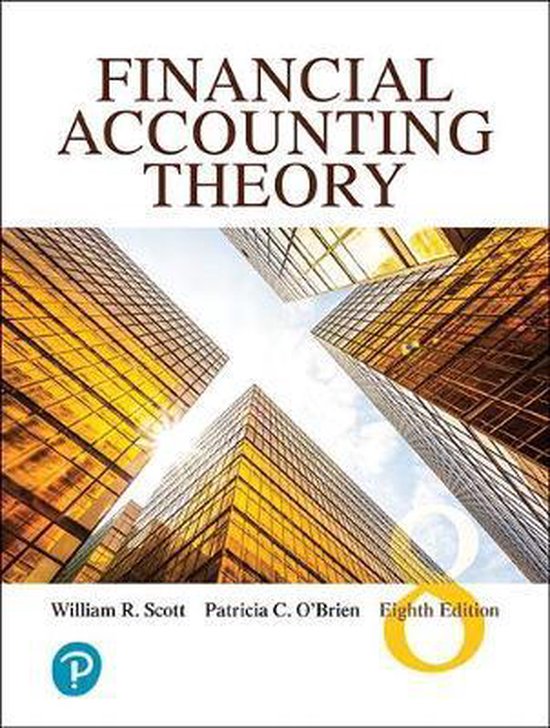
Financial Accounting Theory - Scott
Chapters 1 - 8
English
William R. Scott
9780134166681
8th edition 2019
(with calculations you can actually read)
+ 55 multiple choice questions NO answers
,Contents
Chapter 1 Introduction...............................................................................................................................................4
Conservative accounting........................................................................................................................................4
A note to ethical behaviour....................................................................................................................................5
Rules-based versus principles-based accounting standards....................................................................................5
The complexity of information in financial accounting and reporting....................................................................5
The importance of information asymmetry............................................................................................................6
The fundamental problem of financial accounting theory......................................................................................6
Regulation as a reaction to the fundamental problem.............................................................................................7
Organization of this book.......................................................................................................................................7
Chapter 2 Accounting under ideal conditions............................................................................................................9
Present value model under certainty.......................................................................................................................9
Present value model under uncertainty.................................................................................................................10
Reserve recognition accounting (RRA)................................................................................................................10
Historical cost accounting revisited......................................................................................................................11
The non-existence of true net income...................................................................................................................12
Chapter 3 The decision usefulness approach to financial reporting..........................................................................13
The decision usefulness approach........................................................................................................................13
Single-person decision theory..............................................................................................................................13
The information system........................................................................................................................................13
Information defined..............................................................................................................................................14
The rational, risk-averse investor.........................................................................................................................14
The principle of portfolio diversification.............................................................................................................15
The optimal investment decision..........................................................................................................................16
Portfolio risk........................................................................................................................................................16
The reaction of professional accounting bodies to the decision usefulness approach...........................................17
Chapter 4 Efficient securities markets......................................................................................................................19
Efficient securities markets..................................................................................................................................19
Implications of efficient securities markets for financial reporting......................................................................19
The informativeness of price................................................................................................................................20
Information asymmetry........................................................................................................................................22
Chapter 5 The information approach to decision usefulness....................................................................................24
Chapter 6 The measurement approach to decision usefulness..................................................................................28
Chapter 7 Measurement applications.......................................................................................................................32
Chapter 8 Economic consequences and positive accounting theory.........................................................................34
55 questions multiple choice....................................................................................................................................38
Part 1: Introduction..............................................................................................................................................38
Part 2: Accounting Under Ideal Conditions..........................................................................................................39
Part 3: Decision Usefulness Approach.................................................................................................................39
Part 4: Efficient Securities Markets......................................................................................................................40
Part 5: The Information Approach........................................................................................................................40
,Part 6: The Measurement Approach.....................................................................................................................41
Part 7 ADVANCED QUESTIONS FOR THE BEST..........................................................................................42
Part 8 ADVANCED QUESTIONS FOR FUTURE PRESIDENTS.....................................................................43
Part 9 ADVANCED QUESTIONS FOR YOU BECAUSE YOU ROCK............................................................43
Part 10 ADVANCED QUESTIONS FOR YOU BECAUSE LOVE YOU..........................................................44
, Chapter 1 Introduction
Securities and Exchange Commision (SEC) = Focuses on protecting investors by means
of a disclosure-based structure. The Act regulates dealing in the securities of firms that meet
certain size tests and whose securities are traded in more than one state. The SEC has the
responsibility to ensure that investors are supplied with adequate information.
Nowadays we have a mixed measurement system. Historical cost is still the primary basis
of accounting for important asset and liability classes. But standard setters have moved
steadily towards current cost alternatives to historical cost accounting.
There are two main current cost alternatives to historical cost for assets and liabilities:
1. Value-in-use: Discounted present value or future cash flow for example
2. Fair value (exit price/opportunity cost): the amount that would be received of paid
should the firm dispose the asset or liability
In 1966 the conceptual framework of the International Accounting Standards Board (IASB)
and the Financial Accounting Standards Board (FASB) was developed and is based on
decision usefulness. So, it states that the objective of financial statements is to provide
information to assist investors to make investment decisions. This conceptual framework is
the IASB/FASB Framework.
Also the development of the economics of imperfect information was important in this time.
Economics recognized that some individuals have an information advantage over others. This
led to the development of the agency theory.
The Sarbanses-Oxley Act was designed to restore confidence by reducing the likelihood of
accounting horror stories such as those just described. The Act did this by modifying
corporate governance and tightening the audit function. Also the auditor reports now to the
audit committee of the clients board of directors, rather than to management. The audit
committee must be composed of directors independent of the company.
Other provisions of the Act are that firms’ financial reports shall include all material
correcting adjustments and disclose all material off-balance-sheet loans and other relations
with unconsolidated entities.
Despite the new regulations the use of so called structured investment vehicles (SIVs) did
not decline. These vehicles were often created by lenders such as banks, mortgage companies,
and other financial institutions, to securitize their holdings of mortgages, credit card balances,
auto loans, and other financial assets. That is, the institution would transfer large pools of
these assets to the SIVs it sponsors. The SIV would pool them into asset-black securities
(ABSs), that is into tranches of similar credit quality.
Conservative accounting
The effects of the stock market crash of 1929 was a strengthening of the historical cost basis
of accounting. This raises the question of whether more recent crashes will result in a similar
movement back to a more conservative basis of accounting
Financial Accounting Theory - Scott
Chapters 1 - 8
English
William R. Scott
9780134166681
8th edition 2019
(with calculations you can actually read)
+ 55 multiple choice questions NO answers
,Contents
Chapter 1 Introduction...............................................................................................................................................4
Conservative accounting........................................................................................................................................4
A note to ethical behaviour....................................................................................................................................5
Rules-based versus principles-based accounting standards....................................................................................5
The complexity of information in financial accounting and reporting....................................................................5
The importance of information asymmetry............................................................................................................6
The fundamental problem of financial accounting theory......................................................................................6
Regulation as a reaction to the fundamental problem.............................................................................................7
Organization of this book.......................................................................................................................................7
Chapter 2 Accounting under ideal conditions............................................................................................................9
Present value model under certainty.......................................................................................................................9
Present value model under uncertainty.................................................................................................................10
Reserve recognition accounting (RRA)................................................................................................................10
Historical cost accounting revisited......................................................................................................................11
The non-existence of true net income...................................................................................................................12
Chapter 3 The decision usefulness approach to financial reporting..........................................................................13
The decision usefulness approach........................................................................................................................13
Single-person decision theory..............................................................................................................................13
The information system........................................................................................................................................13
Information defined..............................................................................................................................................14
The rational, risk-averse investor.........................................................................................................................14
The principle of portfolio diversification.............................................................................................................15
The optimal investment decision..........................................................................................................................16
Portfolio risk........................................................................................................................................................16
The reaction of professional accounting bodies to the decision usefulness approach...........................................17
Chapter 4 Efficient securities markets......................................................................................................................19
Efficient securities markets..................................................................................................................................19
Implications of efficient securities markets for financial reporting......................................................................19
The informativeness of price................................................................................................................................20
Information asymmetry........................................................................................................................................22
Chapter 5 The information approach to decision usefulness....................................................................................24
Chapter 6 The measurement approach to decision usefulness..................................................................................28
Chapter 7 Measurement applications.......................................................................................................................32
Chapter 8 Economic consequences and positive accounting theory.........................................................................34
55 questions multiple choice....................................................................................................................................38
Part 1: Introduction..............................................................................................................................................38
Part 2: Accounting Under Ideal Conditions..........................................................................................................39
Part 3: Decision Usefulness Approach.................................................................................................................39
Part 4: Efficient Securities Markets......................................................................................................................40
Part 5: The Information Approach........................................................................................................................40
,Part 6: The Measurement Approach.....................................................................................................................41
Part 7 ADVANCED QUESTIONS FOR THE BEST..........................................................................................42
Part 8 ADVANCED QUESTIONS FOR FUTURE PRESIDENTS.....................................................................43
Part 9 ADVANCED QUESTIONS FOR YOU BECAUSE YOU ROCK............................................................43
Part 10 ADVANCED QUESTIONS FOR YOU BECAUSE LOVE YOU..........................................................44
, Chapter 1 Introduction
Securities and Exchange Commision (SEC) = Focuses on protecting investors by means
of a disclosure-based structure. The Act regulates dealing in the securities of firms that meet
certain size tests and whose securities are traded in more than one state. The SEC has the
responsibility to ensure that investors are supplied with adequate information.
Nowadays we have a mixed measurement system. Historical cost is still the primary basis
of accounting for important asset and liability classes. But standard setters have moved
steadily towards current cost alternatives to historical cost accounting.
There are two main current cost alternatives to historical cost for assets and liabilities:
1. Value-in-use: Discounted present value or future cash flow for example
2. Fair value (exit price/opportunity cost): the amount that would be received of paid
should the firm dispose the asset or liability
In 1966 the conceptual framework of the International Accounting Standards Board (IASB)
and the Financial Accounting Standards Board (FASB) was developed and is based on
decision usefulness. So, it states that the objective of financial statements is to provide
information to assist investors to make investment decisions. This conceptual framework is
the IASB/FASB Framework.
Also the development of the economics of imperfect information was important in this time.
Economics recognized that some individuals have an information advantage over others. This
led to the development of the agency theory.
The Sarbanses-Oxley Act was designed to restore confidence by reducing the likelihood of
accounting horror stories such as those just described. The Act did this by modifying
corporate governance and tightening the audit function. Also the auditor reports now to the
audit committee of the clients board of directors, rather than to management. The audit
committee must be composed of directors independent of the company.
Other provisions of the Act are that firms’ financial reports shall include all material
correcting adjustments and disclose all material off-balance-sheet loans and other relations
with unconsolidated entities.
Despite the new regulations the use of so called structured investment vehicles (SIVs) did
not decline. These vehicles were often created by lenders such as banks, mortgage companies,
and other financial institutions, to securitize their holdings of mortgages, credit card balances,
auto loans, and other financial assets. That is, the institution would transfer large pools of
these assets to the SIVs it sponsors. The SIV would pool them into asset-black securities
(ABSs), that is into tranches of similar credit quality.
Conservative accounting
The effects of the stock market crash of 1929 was a strengthening of the historical cost basis
of accounting. This raises the question of whether more recent crashes will result in a similar
movement back to a more conservative basis of accounting