Tilburg University
Year 3, Block 1, 2024
PSYCH ASSESSMENT:
LITERATURE
Extensive summary of the readings for Psychological Assessment (textbooks Clinical
Assessment and Psychological Communication, see below), except the PDF on the Wechsler
Intelligence Scales (limited notes).
Week LEC/PR Readings
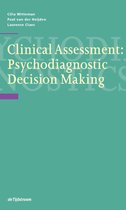
1 L1 Witteman, C., van der Heijden, P., & Claes, L. (2018). Clinical Assessment:
Psychodiagnostic Decision Making. Boom. Chapter 1
Van der Molen, H. T., Lang, G., Trower, P., & Look, R. (2020). Psychological
Communication: Theories, Roles and Skills for Counsellors (2nd edition). Boom.
Chapters 1-3
2 L2 Witteman, C., van der Heijden, P., & Claes, L. (2018). Clinical Assessment:
Psychodiagnostic Decision Making. Boom. Chapters 2-3
3 L3 Witteman, C., van der Heijden, P., & Claes, L. (2018). Clinical Assessment:
Psychodiagnostic Decision Making. Boom. Chapter 4
PDF: Handbook of Psychological Assessment (Ch. 5 Wechsler Intelligence Scales)
4 P1 Witteman, C., van der Heijden, P., & Claes, L. (2018). Clinical Assessment:
Psychodiagnostic Decision Making. Boom. Chapter 4
PDF: Handbook of Psychological Assessment (Ch. 5 Wechsler Intelligence Scales)
6 P2 Van der Molen, H. T., Lang, G., Trower, P., & Look, R. (2020). Psychological
Communication: Theories, Roles and Skills for Counsellors (2nd edition). Boom.
Chapters 2, 3, 5-7
L7 Witteman, C., van der Heijden, P., & Claes, L. (2018). Clinical Assessment:
Psychodiagnostic Decision Making. Boom. Chapters 5-6
7 L8 Van der Molen, H. T., Lang, G., Trower, P., & Look, R. (2020). Psychological
Communication: Theories, Roles and Skills for Counsellors (2nd edition). Boom.
Chapters 7-8
, Week 1
Clinical Assessment. Chapter 1: Psychological assessment: Definition and
introduction
1.1 What is psychological assessment?
Psychological assessment: A shared decision-making process in which a clinician iteratively
defines a diagnostic question, formulates and tests hypotheses about the client's
cognitive-affective functions and behaviour, and integrates the information collected from a
number of sources and using different methods based on scientific psychology in a dynamic
fashion. This results in a representation and understanding of the problem that is shared with
the client in a way that relevant indications for treatment ensue.
Four basic question categories in psychological assessment: classification, explanation,
prediction and indication, and evaluation
The assessment process
Because of the lack of gold standards and adequate feedback, it is important to configure the
assessment process as scientifically as possible.
De Groot (1969): the empirical cycle
● Observation: collection of data
● Induction: inferring what might be happening and
the formulation of hypotheses
○ Requires ample theoretical knowledge
● Deduction: deriving testable predictions
● Testing: hypotheses or predictions are tested
● Evaluation: the entire process and the outcome are
evaluated
Fernández-Ballesteros et al. (2001): formulated technical guidelines to ensure quality and
transparency of assessment, based on De Groot’s empirical cycle
,1.2 Using assessment instruments
Observation methods
This is the most commonly used method in the assessment process. A number of simple
questions guide us: Why? Who? What? Where? When? And how often?
Observation provides us with unique information that we cannot always obtain by asking
questions or taking tests. It can be helpful in mapping interactions between clients and their
context because clients themselves do not always have an overall perspective on these contexts.
There are people who observe and people who are observed: clients, informants, etc.
● Self-registration: clients observe themselves and register their behaviour
○ Often used in behaviour therapy
, ○ Advantage: enables observation of behaviour that others cannot easily observe
such as thoughts and feelings
○ Disadvantage: observations can be different in quality, because not everyone is
equally good at observing their own behaviour, e.g., children or demented elderly
● Informant reports: clinicians can ask informants (e.g., parents, caregivers, teachers) to
observe the behaviour of a client
○ Useful to consult multiple informants, though they may not reach the same
conclusion about the nature and severity of the problems
○ With internalising processes of the client, we can initially ask the client to report
on what is going on. With externalising behaviour, the observations of other
informants tend to be more useful
○ It is important to explicitly state what needs to be observed, and to stress that it
is only necessary to observe. Interpretations can be tainted by observers'
prejudices or stereotypes and easily result in judgmental errors
● Natural observations:
○ Children are often observed in their natural context - least structured/controlled
situation
○ Advantages: sequences of behaviour can be observed as they occur in everyday
situations, and researchers can get an idea of how things work at home or school
○ Disadvantages: can be very labour intensive and expensive, and people often
change their behaviour as soon as they are aware of being observed
● Experiment: behaviour is fully structured and monitored
● Between an experiment and natural setting, there are intermediate forms, like
assessment at a hospital or psychiatric centre or a roleplay
● To observe behaviour, we can start from a specific fixed time period or point in time
(time sampling) marking how often a certain type of behaviour occurs in a specific period
of time, or from the behaviour itself (event sampling)
○ Event sampling is the most suitable observation method for infrequent and/or
problematic behaviour
Standardised observation:
● Standardised observation uses evaluation scales
● Advantage: reduces the probability of judgement errors and incorrect conclusions
Year 3, Block 1, 2024
PSYCH ASSESSMENT:
LITERATURE
Extensive summary of the readings for Psychological Assessment (textbooks Clinical
Assessment and Psychological Communication, see below), except the PDF on the Wechsler
Intelligence Scales (limited notes).
Week LEC/PR Readings
1 L1 Witteman, C., van der Heijden, P., & Claes, L. (2018). Clinical Assessment:
Psychodiagnostic Decision Making. Boom. Chapter 1
Van der Molen, H. T., Lang, G., Trower, P., & Look, R. (2020). Psychological
Communication: Theories, Roles and Skills for Counsellors (2nd edition). Boom.
Chapters 1-3
2 L2 Witteman, C., van der Heijden, P., & Claes, L. (2018). Clinical Assessment:
Psychodiagnostic Decision Making. Boom. Chapters 2-3
3 L3 Witteman, C., van der Heijden, P., & Claes, L. (2018). Clinical Assessment:
Psychodiagnostic Decision Making. Boom. Chapter 4
PDF: Handbook of Psychological Assessment (Ch. 5 Wechsler Intelligence Scales)
4 P1 Witteman, C., van der Heijden, P., & Claes, L. (2018). Clinical Assessment:
Psychodiagnostic Decision Making. Boom. Chapter 4
PDF: Handbook of Psychological Assessment (Ch. 5 Wechsler Intelligence Scales)
6 P2 Van der Molen, H. T., Lang, G., Trower, P., & Look, R. (2020). Psychological
Communication: Theories, Roles and Skills for Counsellors (2nd edition). Boom.
Chapters 2, 3, 5-7
L7 Witteman, C., van der Heijden, P., & Claes, L. (2018). Clinical Assessment:
Psychodiagnostic Decision Making. Boom. Chapters 5-6
7 L8 Van der Molen, H. T., Lang, G., Trower, P., & Look, R. (2020). Psychological
Communication: Theories, Roles and Skills for Counsellors (2nd edition). Boom.
Chapters 7-8
, Week 1
Clinical Assessment. Chapter 1: Psychological assessment: Definition and
introduction
1.1 What is psychological assessment?
Psychological assessment: A shared decision-making process in which a clinician iteratively
defines a diagnostic question, formulates and tests hypotheses about the client's
cognitive-affective functions and behaviour, and integrates the information collected from a
number of sources and using different methods based on scientific psychology in a dynamic
fashion. This results in a representation and understanding of the problem that is shared with
the client in a way that relevant indications for treatment ensue.
Four basic question categories in psychological assessment: classification, explanation,
prediction and indication, and evaluation
The assessment process
Because of the lack of gold standards and adequate feedback, it is important to configure the
assessment process as scientifically as possible.
De Groot (1969): the empirical cycle
● Observation: collection of data
● Induction: inferring what might be happening and
the formulation of hypotheses
○ Requires ample theoretical knowledge
● Deduction: deriving testable predictions
● Testing: hypotheses or predictions are tested
● Evaluation: the entire process and the outcome are
evaluated
Fernández-Ballesteros et al. (2001): formulated technical guidelines to ensure quality and
transparency of assessment, based on De Groot’s empirical cycle
,1.2 Using assessment instruments
Observation methods
This is the most commonly used method in the assessment process. A number of simple
questions guide us: Why? Who? What? Where? When? And how often?
Observation provides us with unique information that we cannot always obtain by asking
questions or taking tests. It can be helpful in mapping interactions between clients and their
context because clients themselves do not always have an overall perspective on these contexts.
There are people who observe and people who are observed: clients, informants, etc.
● Self-registration: clients observe themselves and register their behaviour
○ Often used in behaviour therapy
, ○ Advantage: enables observation of behaviour that others cannot easily observe
such as thoughts and feelings
○ Disadvantage: observations can be different in quality, because not everyone is
equally good at observing their own behaviour, e.g., children or demented elderly
● Informant reports: clinicians can ask informants (e.g., parents, caregivers, teachers) to
observe the behaviour of a client
○ Useful to consult multiple informants, though they may not reach the same
conclusion about the nature and severity of the problems
○ With internalising processes of the client, we can initially ask the client to report
on what is going on. With externalising behaviour, the observations of other
informants tend to be more useful
○ It is important to explicitly state what needs to be observed, and to stress that it
is only necessary to observe. Interpretations can be tainted by observers'
prejudices or stereotypes and easily result in judgmental errors
● Natural observations:
○ Children are often observed in their natural context - least structured/controlled
situation
○ Advantages: sequences of behaviour can be observed as they occur in everyday
situations, and researchers can get an idea of how things work at home or school
○ Disadvantages: can be very labour intensive and expensive, and people often
change their behaviour as soon as they are aware of being observed
● Experiment: behaviour is fully structured and monitored
● Between an experiment and natural setting, there are intermediate forms, like
assessment at a hospital or psychiatric centre or a roleplay
● To observe behaviour, we can start from a specific fixed time period or point in time
(time sampling) marking how often a certain type of behaviour occurs in a specific period
of time, or from the behaviour itself (event sampling)
○ Event sampling is the most suitable observation method for infrequent and/or
problematic behaviour
Standardised observation:
● Standardised observation uses evaluation scales
● Advantage: reduces the probability of judgement errors and incorrect conclusions