Unit 14 Assignment C- Identification of skeletal remains
Aimee Baish
How we conducted the examination and Identification of the bones
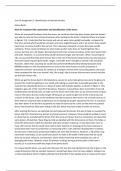
When we recovered the bones from the scene, we could see that they were human and not animal. I
was able to come to this conclusion because when looking at the bones I collected (these are shown
in figures 1-5), I could see that the coccyx and sacrum were more upright and wider, compared to
that of an animal which would be narrower and more angled forward, and in an animal, there would
have been no coccyx fused to the sacrum. This is because instead of a coccyx they have caudal
vertebrae. These caudal vertebrae are what make up their tails, they are fused together like a
coccyx, but they are a lot longer. We had also found some cervical vertebrae, which were quite short
and wide. However, in an animal they would have been longer and narrower. When recovering the
ribs, we assumed that they were human due to the rest of the bones being human, but also because
they were quite long and quite wider, longer, and wider than I thought an animal’s ribs would be.
However, rather than assuming we could have performed Mitochondrial Deoxyribonucleic Acid
(MDNA) analysis on the recovered bones to ensure they were human, but this procedure is
expensive and time-consuming. So instead, as a cheaper and less time-consuming option, we could
have compared the ribs to an animal’s ribs, like a dog’s ribs to ensure that we were correct and that
we did have human ribs.
When we got the bones back to the laboratory, we put on some latex gloves (we wore the gloves to
prevent the mud from getting on our hands and making us unwell due to possible parasites in the
mud) and we cleaned the bones in a basin of water with a plastic pipette, as shown in Figure 1. This
helped to get a lot of the mud off of the bones. However, it would have been a lot better if we had
toothbrushes and dental picks, to make sure the bones were fully clean as we still had some residual
mud on the bones that we could not get off because we could not get into all the small areas and
crevices on the bones. Like on the vertebrae we had recovered, there were a lot of small crevices on
them that we could not clean properly due to not having the proper equipment for this. It may have
also been better if we had the equipment to clean the bones at the scene so that when we packed
them, they would not have been sitting in the dirt, which may have made it harder to remove.
After washing the bones, we sketched out and measured the bones, this was to help us visualise the
bones and their dimensions as well as any trauma present. However, these could be needed in court
to show that we actually had the bones from the scene and prove that our conclusions are about the
same bones. All sketches I have (Figures 6-8) are labelled with the dimensions on them, this helps us
know the dimensions match the sketches and have not been mixed up. It may have been nicer to
have a 3D scanner that we could have used to have sketches or drawings of the bones because it
would have been more accurate than us measuring with a ruler and then drawing them ourselves,
the 3D scans of the bones would have looked a lot more like the bones. However, a 3D printer may
have been even better, as we could have used it to make a 3D model of the bones that we could
then use to draw, measure, and examine, which would mean that there would be less risk of
damaging the bones. However, these 3D printers could go wrong and miss parts of the bone’s
trauma, or it could mess with the shape of the bones itself.
For measuring the bones, we used rulers because this was the only equipment we had, it gave us the
rough dimensions that we needed, however it would have been nicer to have callipers. Callipers are
a measuring device which is highly calibrated and therefore if two people were to measure the same
, part of the same bone, they would get the exact same number, however, as rulers are not
calibrated, when using rules this is not the case. Therefore, callipers are more accurate than rulers.
Callipers also work by moving one of the two ‘jaws,’ which then clamp on to the bone. This gives a
way more accurate reading for the dimensions of the bone; they would be measured in centimetres
(cm) like a ruler would. However, for smaller bones or teeth, a Boley gauge may be an even better
instrument to use, this is because they measure in millimetres (mm) meaning it is a more accurate
reading for those smaller dimensions of trauma on bones, smaller bones, and holes in bones. Boley
gauges work in the same way as callipers, just with a different unit of measurement.
As we were sketching the bones, we were looking for any trauma present. On the bones I had
recovered, there was no trauma present, however, I was staying observant to ensure that if there
was any it would have been noted. It may have been easier to find any bone trauma by having
magnifying glasses with would help us see all the imperfections in the bone that are too small to see
normally. You would not be able to see anything in the bone marrow or dirt on the bones though.
However, do to this you could also use a microscope to look at the bone marrow in the bone to look
for any diseases or osteoporosis, and to see if the dirt on the bones has any bacteria. However, you
cannot use a microscope to look at the bone itself for any trauma, which may be difficult if you are
struggling to see it with a magnifying glass. Microscopes are also a lot more expensive than a
magnifying glass, and they are a lot bigger, so you may struggle to find somewhere to put them.
When looking for trauma, you are looking for post-mortem trauma, peri-mortem trauma, ante-
mortem trauma, as well as any pseudo-trauma, which is classed as any of the three, however it is
most commonly post-mortem or peri-mortem trauma. These types of traumas can be caused by
many different objects. However, depending on what happened to the victim and if it has been
revealed, it can help you distinguish what types of traumas you should focus on looking for. For
example, if the victim were stabbed, you would focus on looking for blunt-force trauma, maybe
pseudo-trauma, if they were found in a forest, and any peri-mortem, post-mortem, and ante-
mortem traumas.
Types of traumas to look for
Post-mortem trauma is where the trauma to the bones happened after death, for example, pseudo-
trauma, blunt-force trauma if the victim was hit even after they died, sharp-force trauma if the
victim was hit again even after they died.
Peri-mortem is where the trauma happens during the death. For example, sharp-force trauma is the
victim was being stabbed to death, pseudo-trauma if the victim was being mauled to death, and
blunt-force trauma if the victim was being hit to death with a weapon, like a hammer.
Ante-mortem trauma is where the damage happened before the victim was killed, for example, any
damage from arthritis conditions, osteoporosis damage, or even previously broken or fractured
bones will still have some amount of damage, or if the break/fracture was fixed with metal pins
and/or metal plates they would be still be visible, but if the break/fracture wasn’t healed the we’d
know it was either peri-mortem or post-mortem.
Pseudo-trauma is trauma that usually presents as animal bites and other damage done by wildlife.
However, in a post-mortem damage situation it could also be damage which is just unrelated to the
death of the victim, this could still be animal bites or other damage done by animals, but it could
also be damage from handling the bones or excavating the bones. This is why we are extremely
careful at all stages of bone excavation (which is done by forensic archaeologists) bone recovery,
bone identification and bone analysis.
Aimee Baish
How we conducted the examination and Identification of the bones
When we recovered the bones from the scene, we could see that they were human and not animal. I
was able to come to this conclusion because when looking at the bones I collected (these are shown
in figures 1-5), I could see that the coccyx and sacrum were more upright and wider, compared to
that of an animal which would be narrower and more angled forward, and in an animal, there would
have been no coccyx fused to the sacrum. This is because instead of a coccyx they have caudal
vertebrae. These caudal vertebrae are what make up their tails, they are fused together like a
coccyx, but they are a lot longer. We had also found some cervical vertebrae, which were quite short
and wide. However, in an animal they would have been longer and narrower. When recovering the
ribs, we assumed that they were human due to the rest of the bones being human, but also because
they were quite long and quite wider, longer, and wider than I thought an animal’s ribs would be.
However, rather than assuming we could have performed Mitochondrial Deoxyribonucleic Acid
(MDNA) analysis on the recovered bones to ensure they were human, but this procedure is
expensive and time-consuming. So instead, as a cheaper and less time-consuming option, we could
have compared the ribs to an animal’s ribs, like a dog’s ribs to ensure that we were correct and that
we did have human ribs.
When we got the bones back to the laboratory, we put on some latex gloves (we wore the gloves to
prevent the mud from getting on our hands and making us unwell due to possible parasites in the
mud) and we cleaned the bones in a basin of water with a plastic pipette, as shown in Figure 1. This
helped to get a lot of the mud off of the bones. However, it would have been a lot better if we had
toothbrushes and dental picks, to make sure the bones were fully clean as we still had some residual
mud on the bones that we could not get off because we could not get into all the small areas and
crevices on the bones. Like on the vertebrae we had recovered, there were a lot of small crevices on
them that we could not clean properly due to not having the proper equipment for this. It may have
also been better if we had the equipment to clean the bones at the scene so that when we packed
them, they would not have been sitting in the dirt, which may have made it harder to remove.
After washing the bones, we sketched out and measured the bones, this was to help us visualise the
bones and their dimensions as well as any trauma present. However, these could be needed in court
to show that we actually had the bones from the scene and prove that our conclusions are about the
same bones. All sketches I have (Figures 6-8) are labelled with the dimensions on them, this helps us
know the dimensions match the sketches and have not been mixed up. It may have been nicer to
have a 3D scanner that we could have used to have sketches or drawings of the bones because it
would have been more accurate than us measuring with a ruler and then drawing them ourselves,
the 3D scans of the bones would have looked a lot more like the bones. However, a 3D printer may
have been even better, as we could have used it to make a 3D model of the bones that we could
then use to draw, measure, and examine, which would mean that there would be less risk of
damaging the bones. However, these 3D printers could go wrong and miss parts of the bone’s
trauma, or it could mess with the shape of the bones itself.
For measuring the bones, we used rulers because this was the only equipment we had, it gave us the
rough dimensions that we needed, however it would have been nicer to have callipers. Callipers are
a measuring device which is highly calibrated and therefore if two people were to measure the same
, part of the same bone, they would get the exact same number, however, as rulers are not
calibrated, when using rules this is not the case. Therefore, callipers are more accurate than rulers.
Callipers also work by moving one of the two ‘jaws,’ which then clamp on to the bone. This gives a
way more accurate reading for the dimensions of the bone; they would be measured in centimetres
(cm) like a ruler would. However, for smaller bones or teeth, a Boley gauge may be an even better
instrument to use, this is because they measure in millimetres (mm) meaning it is a more accurate
reading for those smaller dimensions of trauma on bones, smaller bones, and holes in bones. Boley
gauges work in the same way as callipers, just with a different unit of measurement.
As we were sketching the bones, we were looking for any trauma present. On the bones I had
recovered, there was no trauma present, however, I was staying observant to ensure that if there
was any it would have been noted. It may have been easier to find any bone trauma by having
magnifying glasses with would help us see all the imperfections in the bone that are too small to see
normally. You would not be able to see anything in the bone marrow or dirt on the bones though.
However, do to this you could also use a microscope to look at the bone marrow in the bone to look
for any diseases or osteoporosis, and to see if the dirt on the bones has any bacteria. However, you
cannot use a microscope to look at the bone itself for any trauma, which may be difficult if you are
struggling to see it with a magnifying glass. Microscopes are also a lot more expensive than a
magnifying glass, and they are a lot bigger, so you may struggle to find somewhere to put them.
When looking for trauma, you are looking for post-mortem trauma, peri-mortem trauma, ante-
mortem trauma, as well as any pseudo-trauma, which is classed as any of the three, however it is
most commonly post-mortem or peri-mortem trauma. These types of traumas can be caused by
many different objects. However, depending on what happened to the victim and if it has been
revealed, it can help you distinguish what types of traumas you should focus on looking for. For
example, if the victim were stabbed, you would focus on looking for blunt-force trauma, maybe
pseudo-trauma, if they were found in a forest, and any peri-mortem, post-mortem, and ante-
mortem traumas.
Types of traumas to look for
Post-mortem trauma is where the trauma to the bones happened after death, for example, pseudo-
trauma, blunt-force trauma if the victim was hit even after they died, sharp-force trauma if the
victim was hit again even after they died.
Peri-mortem is where the trauma happens during the death. For example, sharp-force trauma is the
victim was being stabbed to death, pseudo-trauma if the victim was being mauled to death, and
blunt-force trauma if the victim was being hit to death with a weapon, like a hammer.
Ante-mortem trauma is where the damage happened before the victim was killed, for example, any
damage from arthritis conditions, osteoporosis damage, or even previously broken or fractured
bones will still have some amount of damage, or if the break/fracture was fixed with metal pins
and/or metal plates they would be still be visible, but if the break/fracture wasn’t healed the we’d
know it was either peri-mortem or post-mortem.
Pseudo-trauma is trauma that usually presents as animal bites and other damage done by wildlife.
However, in a post-mortem damage situation it could also be damage which is just unrelated to the
death of the victim, this could still be animal bites or other damage done by animals, but it could
also be damage from handling the bones or excavating the bones. This is why we are extremely
careful at all stages of bone excavation (which is done by forensic archaeologists) bone recovery,
bone identification and bone analysis.