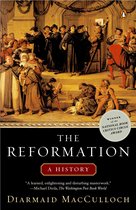
Headlines MacCulloch’s Church History
Part 1, page 1-313
Please note: I never claim this document to be a complete
summary of the first part of MacCulloch’s book. This docu-
ment only contains main lines of part 1 of the book, which are
relevant in my opinion. Therefore, my subheadings do not
correspond with those in the book. Though this document is
not a complete summary of Church History, I still believe it is
very useful for students, because it indicates in a very compact
way what is important in the first six chapters.
1
,Part 1 - A common culture
1 The Old Church, 1490-1517
Two pillars of the Roman Catholic Church
Two important pillars of the Roman Catholic Church (RCC), according to Nicholas Ridley, are:
1. The Mass and Purgatory; The Mass was seen as a manner to get saved of hell. Therefore there
were many altars in the RCC. The Church had a powerful position, because of their mediation
between God and the people by organizing masses. In addition, the Church could provide in
forgiveness of sin, and saving people from (or at least minimizing the time in) Purgatory.
2. The Papal Primacy. The Pope had the power to define which were the right doctrines, and he
could excommunicate or even sentence to death heretics. In addition, the Curia was a court
which developed a new legal system, canon law. It was a universal code at a time when other
legal systems in Europe were generally fragmented and undeveloped.
Transubstantiation
The theory of transubstantiation was the most important answer on the following question: How do
the bread and the wine turn into the body and blood of Christ? The transubstantiation theory was
based on philosophical writings of Aristotle, who divided the being of a particular object into sub -
stance and accidents. Thomas Aquinas applied this distinction of Aristotle to the Mass: Through the
grace of God, the substance of bread is replaced by the substance of the Body of Christ.
Difference between northern and southern churches concerning penance
There was a contrast in emphasis in what the church of the north and the church of the south said
about penance, which explains that the doctrine of Martin Luther had more relevance in the north:
1. North: the preacher throws the spotlight on the penitents themselves, on the continual need for
penance in their everyday lives, and on the importance of true contrition and satisfaction when
they come to confession.
2. South: the sermons pay more attention to the role of the priest, who is seen as doctor or medi-
ator of grace in absolution of sin; the preacher is not so concerned to urge the layperson on to
activity.
Developments towards the Reformation
John Wyclif (and the Lollards), who made a contrast between the material Church (over which
the bishops and the Pope presided) and the eternally existing Church beyond materiality: this
later true Church was a mystical source of grace which the Bible revealed not simply to
clergy, but to all God’s chosen faithful. He created a Bible in English for everyone to under-
stand.
Hussite Church in Bohemia: they worshipped in their vernacular, and insisted that the people
received wine as well as bread the the Eucharist (in contrast to the practice in the RCC).
Conciliarism: the proposition that ultimate authority in the Church should lie in a General
Council of its bishops. The Council of Konstanz (1417) produced a decree ‘Sacrosancta’ pro-
claiming itself to hold its authority from Christ’.
2
, Church versus Commonwealth: political life changed: many secular rulers were increasing and
consolidating their power. In many areas of central Europe, well before the Reformation up -
heavals, locally run churches (Landeskirchen) were quietly emerging.
2 Hopes and Fears, 1490-1517
Two important circumstances prior to the Reformation
The Ottoman Turks had created an Islamic empire-building enterprise designed for conquest,
and they attacked European borders. The fear which this Islamic aggression engendered in
Europe was an essential background to the Reformation, convincing many on both sides that
God’s anger was poised to strike down the Christian world, and so making it all the more es-
sential to please God by affirming the right form of Christian belief against other Christians.
The new possibilities of paper and printing: Multiplication was a sure way to preserve inform-
ation, and it was radically cheaper than a manuscript to produce. Printing turned out to be
good for Protestantism, for a religion of the book needs books. Printing which produced mul-
tiple identical copies of a text encouraged a familiarity with uniformity, very different from
the individuality of a manuscript, and reading became a skill much more worth acquiring.
Humanism
Humanism brought a new concentration on and a new respect for sections of traditional scholarship.
The term ‘humanism’ often has been usefully associated with ‘Renaissance’. Far from being ‘New
Learning’, it represented a refocusing of old learning. Paradoxically, the trauma of the Ottoman con -
quests tipped the balance in the supply of manuscripts and brought Greek culture west. Beside Greek
manuscripts, the humanists regained also new perspectives on the Latin languages and culture, Egyp-
tian manuscripts like the Corpus Hermeticum, and Jewish literature (Cabbala). In humanism historical
authenticity gained a new importance: it now became the chief criterion for authority. Eventually even
the Bible came under the same humanist scrutiny. Ad fontes (back to the sources) was the battle-cry of
the humanists, and Protestants would take it over from them. Another similarity between humanists
and Reformation was the shared interests in attacking the scholastic theologians.
The Last Days?
Political disquiet and the breaking out of syphilis were reasons for preachers like Savonarola to preach
about the Last Days. He called for radical political and moral reform in the name of God. However,
the Lateran Council forbade preaching on apocalyptic subjects in 1513.
Erasmus
Erasmus had been raised on the land of the Devotio Moderna (however, hating the monastic life) and
was destined to become the supreme humanist scholar. He applied his humanist learning to Christian
texts, and produced new critical editions of a range of key early Christian texts (for example his Greek
New Testament, 1516). Eramus discovered the issue of Scripture versus tradition. He wanted to end
the excesses of clerical privilege, particularly the clergy’s pretentions to special knowledge. With typ-
ical humanist optimism, he believed that he could improve the world with the help of the leaders of the
Commonwealth.
3
Part 1, page 1-313
Please note: I never claim this document to be a complete
summary of the first part of MacCulloch’s book. This docu-
ment only contains main lines of part 1 of the book, which are
relevant in my opinion. Therefore, my subheadings do not
correspond with those in the book. Though this document is
not a complete summary of Church History, I still believe it is
very useful for students, because it indicates in a very compact
way what is important in the first six chapters.
1
,Part 1 - A common culture
1 The Old Church, 1490-1517
Two pillars of the Roman Catholic Church
Two important pillars of the Roman Catholic Church (RCC), according to Nicholas Ridley, are:
1. The Mass and Purgatory; The Mass was seen as a manner to get saved of hell. Therefore there
were many altars in the RCC. The Church had a powerful position, because of their mediation
between God and the people by organizing masses. In addition, the Church could provide in
forgiveness of sin, and saving people from (or at least minimizing the time in) Purgatory.
2. The Papal Primacy. The Pope had the power to define which were the right doctrines, and he
could excommunicate or even sentence to death heretics. In addition, the Curia was a court
which developed a new legal system, canon law. It was a universal code at a time when other
legal systems in Europe were generally fragmented and undeveloped.
Transubstantiation
The theory of transubstantiation was the most important answer on the following question: How do
the bread and the wine turn into the body and blood of Christ? The transubstantiation theory was
based on philosophical writings of Aristotle, who divided the being of a particular object into sub -
stance and accidents. Thomas Aquinas applied this distinction of Aristotle to the Mass: Through the
grace of God, the substance of bread is replaced by the substance of the Body of Christ.
Difference between northern and southern churches concerning penance
There was a contrast in emphasis in what the church of the north and the church of the south said
about penance, which explains that the doctrine of Martin Luther had more relevance in the north:
1. North: the preacher throws the spotlight on the penitents themselves, on the continual need for
penance in their everyday lives, and on the importance of true contrition and satisfaction when
they come to confession.
2. South: the sermons pay more attention to the role of the priest, who is seen as doctor or medi-
ator of grace in absolution of sin; the preacher is not so concerned to urge the layperson on to
activity.
Developments towards the Reformation
John Wyclif (and the Lollards), who made a contrast between the material Church (over which
the bishops and the Pope presided) and the eternally existing Church beyond materiality: this
later true Church was a mystical source of grace which the Bible revealed not simply to
clergy, but to all God’s chosen faithful. He created a Bible in English for everyone to under-
stand.
Hussite Church in Bohemia: they worshipped in their vernacular, and insisted that the people
received wine as well as bread the the Eucharist (in contrast to the practice in the RCC).
Conciliarism: the proposition that ultimate authority in the Church should lie in a General
Council of its bishops. The Council of Konstanz (1417) produced a decree ‘Sacrosancta’ pro-
claiming itself to hold its authority from Christ’.
2
, Church versus Commonwealth: political life changed: many secular rulers were increasing and
consolidating their power. In many areas of central Europe, well before the Reformation up -
heavals, locally run churches (Landeskirchen) were quietly emerging.
2 Hopes and Fears, 1490-1517
Two important circumstances prior to the Reformation
The Ottoman Turks had created an Islamic empire-building enterprise designed for conquest,
and they attacked European borders. The fear which this Islamic aggression engendered in
Europe was an essential background to the Reformation, convincing many on both sides that
God’s anger was poised to strike down the Christian world, and so making it all the more es-
sential to please God by affirming the right form of Christian belief against other Christians.
The new possibilities of paper and printing: Multiplication was a sure way to preserve inform-
ation, and it was radically cheaper than a manuscript to produce. Printing turned out to be
good for Protestantism, for a religion of the book needs books. Printing which produced mul-
tiple identical copies of a text encouraged a familiarity with uniformity, very different from
the individuality of a manuscript, and reading became a skill much more worth acquiring.
Humanism
Humanism brought a new concentration on and a new respect for sections of traditional scholarship.
The term ‘humanism’ often has been usefully associated with ‘Renaissance’. Far from being ‘New
Learning’, it represented a refocusing of old learning. Paradoxically, the trauma of the Ottoman con -
quests tipped the balance in the supply of manuscripts and brought Greek culture west. Beside Greek
manuscripts, the humanists regained also new perspectives on the Latin languages and culture, Egyp-
tian manuscripts like the Corpus Hermeticum, and Jewish literature (Cabbala). In humanism historical
authenticity gained a new importance: it now became the chief criterion for authority. Eventually even
the Bible came under the same humanist scrutiny. Ad fontes (back to the sources) was the battle-cry of
the humanists, and Protestants would take it over from them. Another similarity between humanists
and Reformation was the shared interests in attacking the scholastic theologians.
The Last Days?
Political disquiet and the breaking out of syphilis were reasons for preachers like Savonarola to preach
about the Last Days. He called for radical political and moral reform in the name of God. However,
the Lateran Council forbade preaching on apocalyptic subjects in 1513.
Erasmus
Erasmus had been raised on the land of the Devotio Moderna (however, hating the monastic life) and
was destined to become the supreme humanist scholar. He applied his humanist learning to Christian
texts, and produced new critical editions of a range of key early Christian texts (for example his Greek
New Testament, 1516). Eramus discovered the issue of Scripture versus tradition. He wanted to end
the excesses of clerical privilege, particularly the clergy’s pretentions to special knowledge. With typ-
ical humanist optimism, he believed that he could improve the world with the help of the leaders of the
Commonwealth.
3