Origins of psychology
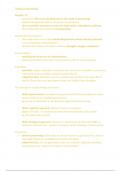
Wundt’s lab;
- opened the first ever lab dedicated to the study of psychology
- aimed to analyse the nature of human consciousness
- first systematic attempt to study the mind under controlled conditions
- this method became known as introspection
Standardised procedures;
- main objectives were to try and develop theories about mental processes
such as language and perception
- divided observations into three sections; thoughts, images, sensations
Structuralism;
- isolating the structure of consciousness
- stimuli presented in the same way and same order to all participants
Evaluation;
- scientific; highly controlled conditions, less extraneous variables, procedures
and instructions carefully considered and followed
- subjective data; limitation, hard to establish general laws, his early efforts
may be flawed eg some participants may have hidden their thoughts
The emergence of psychology as science;
- 1900s behaviourists; introspection questioned by Watson (subjective data)
- made it difficult to establish general laws
- proposed for behaviour to be observed objectively and measure
- 1950s cognitive approach; likened mind to a computer
- highly scientific + conducted in controlled environments such as labs
- eg. the multi-store model
- 1980s biological approach; advances in technology eg EEGs and fMRI to
study live brain activity + genetic testing for understanding of role of genes
Evaluation;
- modern psychology; same aims as natural sciences, eg to describe, observe
and study behaviour, established scientific discipline
- subjective data; not all approaches may use scientific, objective methods,
participants may respond to demand characteristics
, The behaviourist approach
Assumptions;
- studying behaviour that can be observed and measured
- Introspection developed by Wundt but rejected by Watson because concepts
were seen as too vague and difficult to measure
- describe a baby’s mind is a “blank slate”
- maintained control and objectivity in their research + relied on lab studies
- suggested that basic processes are the same in all species (Darwin)
Classical conditioning (Pavlov’s research);
- Pavlov, (1972) ---> learning through association
- showed how dogs could be conditioned to salivate to the sound of bell
ringing
- if food was presented the same time of the sound of the bell
- dogs learnt to associate the sound of the bell with food
- dogs became conditioned to react (salivate) when hearing the bell because
they associated the sound with being fed
Operant conditioning (Skinner’s research);
---> suggest that learning is an active process where animals and humans operate
on their environments
- suggested that behaviour is shaped by its consequences
- positive reinforcement is receiving a reward when correct behaviour is
performed
- negative reinforcement is the avoidance of an unpleasant consequence
- (eg. Skinner’s box; the rat would press the level to avoid getting an electric
shock)
Punishment is an unpleasant consequence of behaviour (finding a way to avoid
punishment would be negative reinforcement
Evaluation of the behaviourist approach;
- well controlled research; focus on observable behaviour in highly controlled
lab settings (extraneous variables removed so cause-and-effect relationship
can be established)
- counterpoint of well controlled research; may be oversimplified, ignores the
influence of human thought in learning (SLT and cognitive approach consider
mental processes whereas behaviourists don’t)
- real world applications; token economy systems (where people in
institutions, prisons, rehab centres, ect can get tokens for good behaviour
which was be exchanged for rewards)
- environmental determinism; ignores the possible influence of free will
because it sees all behaviour to be determined by past experiences and
doesn’t account for conscious decision making processes
- ethical issues; there may be some concerns with the ethics surrounding
Pavlow and Skinner’s research studies as the animals were placed in harsh
conditions eg. always kept hungry
Wundt’s lab;
- opened the first ever lab dedicated to the study of psychology
- aimed to analyse the nature of human consciousness
- first systematic attempt to study the mind under controlled conditions
- this method became known as introspection
Standardised procedures;
- main objectives were to try and develop theories about mental processes
such as language and perception
- divided observations into three sections; thoughts, images, sensations
Structuralism;
- isolating the structure of consciousness
- stimuli presented in the same way and same order to all participants
Evaluation;
- scientific; highly controlled conditions, less extraneous variables, procedures
and instructions carefully considered and followed
- subjective data; limitation, hard to establish general laws, his early efforts
may be flawed eg some participants may have hidden their thoughts
The emergence of psychology as science;
- 1900s behaviourists; introspection questioned by Watson (subjective data)
- made it difficult to establish general laws
- proposed for behaviour to be observed objectively and measure
- 1950s cognitive approach; likened mind to a computer
- highly scientific + conducted in controlled environments such as labs
- eg. the multi-store model
- 1980s biological approach; advances in technology eg EEGs and fMRI to
study live brain activity + genetic testing for understanding of role of genes
Evaluation;
- modern psychology; same aims as natural sciences, eg to describe, observe
and study behaviour, established scientific discipline
- subjective data; not all approaches may use scientific, objective methods,
participants may respond to demand characteristics
, The behaviourist approach
Assumptions;
- studying behaviour that can be observed and measured
- Introspection developed by Wundt but rejected by Watson because concepts
were seen as too vague and difficult to measure
- describe a baby’s mind is a “blank slate”
- maintained control and objectivity in their research + relied on lab studies
- suggested that basic processes are the same in all species (Darwin)
Classical conditioning (Pavlov’s research);
- Pavlov, (1972) ---> learning through association
- showed how dogs could be conditioned to salivate to the sound of bell
ringing
- if food was presented the same time of the sound of the bell
- dogs learnt to associate the sound of the bell with food
- dogs became conditioned to react (salivate) when hearing the bell because
they associated the sound with being fed
Operant conditioning (Skinner’s research);
---> suggest that learning is an active process where animals and humans operate
on their environments
- suggested that behaviour is shaped by its consequences
- positive reinforcement is receiving a reward when correct behaviour is
performed
- negative reinforcement is the avoidance of an unpleasant consequence
- (eg. Skinner’s box; the rat would press the level to avoid getting an electric
shock)
Punishment is an unpleasant consequence of behaviour (finding a way to avoid
punishment would be negative reinforcement
Evaluation of the behaviourist approach;
- well controlled research; focus on observable behaviour in highly controlled
lab settings (extraneous variables removed so cause-and-effect relationship
can be established)
- counterpoint of well controlled research; may be oversimplified, ignores the
influence of human thought in learning (SLT and cognitive approach consider
mental processes whereas behaviourists don’t)
- real world applications; token economy systems (where people in
institutions, prisons, rehab centres, ect can get tokens for good behaviour
which was be exchanged for rewards)
- environmental determinism; ignores the possible influence of free will
because it sees all behaviour to be determined by past experiences and
doesn’t account for conscious decision making processes
- ethical issues; there may be some concerns with the ethics surrounding
Pavlow and Skinner’s research studies as the animals were placed in harsh
conditions eg. always kept hungry