Enzyme Revision Notes
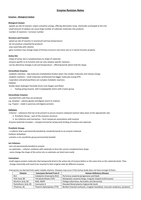
Enzymes – Biological Catalyst
Biological Catalyst
-speeds up rate of reaction, lowers activation energy, offering alternative route, chemically unchanged at the end
-small amount of catalyst can cause large number of substrate molecules into products
-number of reactions = turnover number
Structure and Function
-speed up rate of reaction in neutral pH and low temperatures
-do not produce unwanted by-products
-may need help with cofactor
-gene mutation may change shape of tertiary structure and active site so it cannot function properly
Active Site
-shape of active site is complementary to shape of substrate
-enzyme specific to its function and can only catalyse specific reactions
-can be altered by changes in pH and temperature – affecting bonds which hold the shape
Intracellular Enzymes
-catabolic reactions – big molecules (metabolites) broken down into smaller molecules and release energy
-anabolic reactions – small molecules synthesised into bigger molecules (using ATP)
-respiration and photosynthesis are complex metabolic reactions
Catalyse
-breaks down Hydrogen Peroxide (H2O2) into Oxygen and Water
o Fasting acting enzyme with 4 polypeptide chains with a haem group
Extracellular Enzymes
-secreted from cells they are produced
e.g. Amylase – salivary glands and digests starch to maltose
e.g. Trypsin – made in pancreas and digests proteins
Cofactors
-Cofactor – substance that has to be present to ensure enzyme-catalysed reaction takes place at the appropriate rate
Prosthetic Group – part of the enzymes structure
Ion Cofactors and Coenzymes – form temporary associations with enzyme
-Enzyme-Substrate Complex – complex formed by temporarily binding of enzyme and substrate
Prosthetic Groups
- a cofactor that is permanently bonded by covalently bonds to an enzyme molecule
Carbonic Anhydrase
-contains a zinc prosthetic group permanently bonded
Ion Cofactors
-ions not permanently bonded to enzyme
-co-substrates – cofactor combines with substrate to form the correct complementary shape
- some change the shape of the active site so substrate can bind more easily
Coenzymes:
-small organic protein molecules that temporarily bind to the active site of enzyme before or the same time as the substrate binds. They
change chemically and need to be recycled to their original state by different enzymes.
-Coenzymes are derived from water soluble vitamins. Diseases may occur if the human body does not have enough of them.
Vitamin Coenzyme Derived From It Human Deficiency Disease
B12 Cobalamin (Coenzyme B12) Pernicious anaemia (progressive and fatal)
Folic Acid, B9 Tetrahydrofolate (THF) Metaplastic anaemia (large, irregular shaped erythrocytes)
Nicotinic Acid, B3 NAD, NADP Pellagra (diarrhoea, dermatitis and dementia)
Pantothenic Acid, B5 Coenzyme A Elevated blood-plasma triglyceride levels
Thiamine, B1 Thiamin Diphosphate (TTP) Beriberi (mental confusion, irregular heartbeat, muscular weakness, paralysis)
Enzymes – Biological Catalyst
Biological Catalyst
-speeds up rate of reaction, lowers activation energy, offering alternative route, chemically unchanged at the end
-small amount of catalyst can cause large number of substrate molecules into products
-number of reactions = turnover number
Structure and Function
-speed up rate of reaction in neutral pH and low temperatures
-do not produce unwanted by-products
-may need help with cofactor
-gene mutation may change shape of tertiary structure and active site so it cannot function properly
Active Site
-shape of active site is complementary to shape of substrate
-enzyme specific to its function and can only catalyse specific reactions
-can be altered by changes in pH and temperature – affecting bonds which hold the shape
Intracellular Enzymes
-catabolic reactions – big molecules (metabolites) broken down into smaller molecules and release energy
-anabolic reactions – small molecules synthesised into bigger molecules (using ATP)
-respiration and photosynthesis are complex metabolic reactions
Catalyse
-breaks down Hydrogen Peroxide (H2O2) into Oxygen and Water
o Fasting acting enzyme with 4 polypeptide chains with a haem group
Extracellular Enzymes
-secreted from cells they are produced
e.g. Amylase – salivary glands and digests starch to maltose
e.g. Trypsin – made in pancreas and digests proteins
Cofactors
-Cofactor – substance that has to be present to ensure enzyme-catalysed reaction takes place at the appropriate rate
Prosthetic Group – part of the enzymes structure
Ion Cofactors and Coenzymes – form temporary associations with enzyme
-Enzyme-Substrate Complex – complex formed by temporarily binding of enzyme and substrate
Prosthetic Groups
- a cofactor that is permanently bonded by covalently bonds to an enzyme molecule
Carbonic Anhydrase
-contains a zinc prosthetic group permanently bonded
Ion Cofactors
-ions not permanently bonded to enzyme
-co-substrates – cofactor combines with substrate to form the correct complementary shape
- some change the shape of the active site so substrate can bind more easily
Coenzymes:
-small organic protein molecules that temporarily bind to the active site of enzyme before or the same time as the substrate binds. They
change chemically and need to be recycled to their original state by different enzymes.
-Coenzymes are derived from water soluble vitamins. Diseases may occur if the human body does not have enough of them.
Vitamin Coenzyme Derived From It Human Deficiency Disease
B12 Cobalamin (Coenzyme B12) Pernicious anaemia (progressive and fatal)
Folic Acid, B9 Tetrahydrofolate (THF) Metaplastic anaemia (large, irregular shaped erythrocytes)
Nicotinic Acid, B3 NAD, NADP Pellagra (diarrhoea, dermatitis and dementia)
Pantothenic Acid, B5 Coenzyme A Elevated blood-plasma triglyceride levels
Thiamine, B1 Thiamin Diphosphate (TTP) Beriberi (mental confusion, irregular heartbeat, muscular weakness, paralysis)