𝓶𝓮𝓶𝓸𝓻𝔂
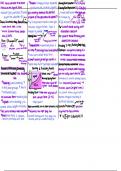
duration, capacity & coding of memory: research on duration
research on duration
Peterson & Peterson: short term memory
→ asked participants to recall trigrams after 18 seconds without rehearsal
→ 3 secs: 80% accuracy
→ 18 secs: 10% accuracy
→ thus very little can stay in STM without rehearsal
Bahrick: long term memory
→ yearbooks: 300 participants asked to recall students from school through free
recall (list their names), photo recognition (shown photo, give name) & name
recognition (given name, match to photo)
→ after 15 years: free recall 60%, photo recognition 90%
→ after 48 years: free recall 30%, photo recognition 70%
evaluation
- Peterson & Peterson: meaningless stimuli
→ trigrams are meaningless so lacks external validity
+ Bahrick: meaningful stimulo
→ real-life stimuli (yearbooks) thus has high external validity
→ Shepard: better recall than studies with meaningless stimuli
duration, capacity & coding of memory: research on capacity
research on capacity
Jacobs: short term memory
→ participants asked to repeat string of letters & numbers
→ on average remembered around 7 items
→ Jacobs concluded capacity of STM around 5-9 items; increased with age
(potentially due to techniques such as chunking)
, Miller: review of short term memory
→ argued 7 +/- 2 items capacity of STM
→ this can be increased through chunking; can memorise around 7 chunks
evaluation
+ Jacobs’ study is valid
→ Bopp & Verhaeghen: replicated findings so valid test of digit span
- Miller overestimated chunking capacity
→ Coward: only 4 chunks can be stored in STM
duration, capacity & coding of memory: research on coding
research on coding
Baddeley: short & long term memory
→ participants were given 4 sets of words either acoustically similar, acoustically
dissimilar, semantically similar or semantically dissimilar
→ immediately group: difficulty remembering acoustically similar
→ after 20 mins: difficulty remembering semantically similar
→ suggests STM codes acoustically (as relies on this thus got confused when
remembering 2 acoustically similar words), LTM codes semantically (as relies on
this thus got confused when remembering 2 semantically similar words)
evaluation
+ identified separate memory stores
→ supports multi-store model as identified difference between STM & LTM
+ independent groups design
→ reduces demand characteristics as less likely to guess hypothesis & change behaviour
- artificial stimuli
→ word lists had no personal meaning so lack external validity
duration, capacity & coding of memory: research on duration
research on duration
Peterson & Peterson: short term memory
→ asked participants to recall trigrams after 18 seconds without rehearsal
→ 3 secs: 80% accuracy
→ 18 secs: 10% accuracy
→ thus very little can stay in STM without rehearsal
Bahrick: long term memory
→ yearbooks: 300 participants asked to recall students from school through free
recall (list their names), photo recognition (shown photo, give name) & name
recognition (given name, match to photo)
→ after 15 years: free recall 60%, photo recognition 90%
→ after 48 years: free recall 30%, photo recognition 70%
evaluation
- Peterson & Peterson: meaningless stimuli
→ trigrams are meaningless so lacks external validity
+ Bahrick: meaningful stimulo
→ real-life stimuli (yearbooks) thus has high external validity
→ Shepard: better recall than studies with meaningless stimuli
duration, capacity & coding of memory: research on capacity
research on capacity
Jacobs: short term memory
→ participants asked to repeat string of letters & numbers
→ on average remembered around 7 items
→ Jacobs concluded capacity of STM around 5-9 items; increased with age
(potentially due to techniques such as chunking)
, Miller: review of short term memory
→ argued 7 +/- 2 items capacity of STM
→ this can be increased through chunking; can memorise around 7 chunks
evaluation
+ Jacobs’ study is valid
→ Bopp & Verhaeghen: replicated findings so valid test of digit span
- Miller overestimated chunking capacity
→ Coward: only 4 chunks can be stored in STM
duration, capacity & coding of memory: research on coding
research on coding
Baddeley: short & long term memory
→ participants were given 4 sets of words either acoustically similar, acoustically
dissimilar, semantically similar or semantically dissimilar
→ immediately group: difficulty remembering acoustically similar
→ after 20 mins: difficulty remembering semantically similar
→ suggests STM codes acoustically (as relies on this thus got confused when
remembering 2 acoustically similar words), LTM codes semantically (as relies on
this thus got confused when remembering 2 semantically similar words)
evaluation
+ identified separate memory stores
→ supports multi-store model as identified difference between STM & LTM
+ independent groups design
→ reduces demand characteristics as less likely to guess hypothesis & change behaviour
- artificial stimuli
→ word lists had no personal meaning so lack external validity