Childhood – Essay Plans
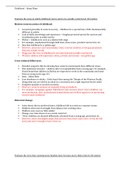
Evaluate the ways in which childhood can be said to be socially constructed (20 marks)
Modern western notion of childhood:
Accepted generally in western society – childhood is a special time of life, fundamentally
different to adults.
Lack of skills, knowledge and experience = lengthy protected period for nurture and
socialisation prior to adult society.
Pilcher = childhood is seen as a distinct life stage.
For example, emphasised through child laws, dress sense, products and service etc.
Idea that childhood is a ‘golden age’
However, innocence and vulnerability (item) conveys children as being quarantined
from the outside world.
Wagg says this view of childhood is not universal and socially constructed.
Western children still experience abuse, poverty and racism = not golden age.
Cross-cultural differences:
Benedict supports this by showing how western counterparts have different views.
Non-industrial societies – children take on responsibility from a young age. For example,
Punch found that children in Bolivia are expected to work in the community and home
from as young as the age of 5.
Item – Africa 28%.
Less obedience to adults – Firth found that among the Tikopia of the Western Pacific,
doing what you are told by an adult is a concession not a right expected by the adult.
Complete paradox to western societies.
However, western notions are arguably being normalised.
For example, campaigns against child labour and concerns about ‘street children’ are
more prominent. Also, international humanitarian and welfare agencies are promoting
western style childhood.
Historical change:
Aries shows that in medieval times, childhood did not exist as a separate status.
Children often moved straight from infancy into working roles.
Children were seen as ‘little adults’
Change over time shows it as a social construct.
^Now, children are dressed differently, educated from a young age, protection etc.
However, some sociologists argue that pictures from those times don’t reveal the full
story and aren’t enough to base views on.
Evaluate the view that contemporary families have become more child-centred (20 marks)
Evaluate the ways in which childhood can be said to be socially constructed (20 marks)
Modern western notion of childhood:
Accepted generally in western society – childhood is a special time of life, fundamentally
different to adults.
Lack of skills, knowledge and experience = lengthy protected period for nurture and
socialisation prior to adult society.
Pilcher = childhood is seen as a distinct life stage.
For example, emphasised through child laws, dress sense, products and service etc.
Idea that childhood is a ‘golden age’
However, innocence and vulnerability (item) conveys children as being quarantined
from the outside world.
Wagg says this view of childhood is not universal and socially constructed.
Western children still experience abuse, poverty and racism = not golden age.
Cross-cultural differences:
Benedict supports this by showing how western counterparts have different views.
Non-industrial societies – children take on responsibility from a young age. For example,
Punch found that children in Bolivia are expected to work in the community and home
from as young as the age of 5.
Item – Africa 28%.
Less obedience to adults – Firth found that among the Tikopia of the Western Pacific,
doing what you are told by an adult is a concession not a right expected by the adult.
Complete paradox to western societies.
However, western notions are arguably being normalised.
For example, campaigns against child labour and concerns about ‘street children’ are
more prominent. Also, international humanitarian and welfare agencies are promoting
western style childhood.
Historical change:
Aries shows that in medieval times, childhood did not exist as a separate status.
Children often moved straight from infancy into working roles.
Children were seen as ‘little adults’
Change over time shows it as a social construct.
^Now, children are dressed differently, educated from a young age, protection etc.
However, some sociologists argue that pictures from those times don’t reveal the full
story and aren’t enough to base views on.
Evaluate the view that contemporary families have become more child-centred (20 marks)