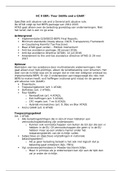
BHCS3003 revision
Staphylococcus aureus
• Forms cocci which grow in clusters (grape-like)
• Commensal – found in nose, vagina, and colon
• Produces catalase and coagulase (differentiate from S. epidermidis)
• Range of diseases
o Skin and soft tissue infections (SSTI)
o Impetigo
o Toxic shock syndrome (TSS)
o Septicaemia
o Osteomyelitis
• Large, approx. 2um
• Facultative aerobe
• Highly resistant strains – methicillin-resistant (MRSA) and penicillin-G
• Foodborne or healthcare acquired (HCAI)
• Lab diagnosis
o Clinical specimens – swabs from lesion, pus or nasal
o Forms yellow colonies on nutrient agar
o Yellow colonies on mannitol salt agar
o Alpha and beta haemolysis on blood agar
o Positive Gram stain (purple)
o Catalase positive
o Coagulase positive
o Molecular - not needed unless outbreak for epidemiology
▪ PCR for 16s mecA gene in MRSA strains
• Virulence factors
o Enzymes
▪ Coagulase – prevent plasma clots and coat bacterial cells to evade phagocytes
▪ Hyaluronidase – breaks down hyaluronic acid in host’s skin to allow entry to blood
and spread (septicaemia)
▪ DNAse – nucleases which break down host DNA
▪ Lipase – break downs oils on skin for better colonisation
▪ Beta-lactamases (penicillinases) – resistance to beta-lactam antibiotics
▪ Staphylokinase – digests fibrin by converting plasminogen to plasmin which digests
fibrin clots
o Toxins
▪ Enterotoxins
• Food poisoning symptoms
• 7 serotypes of cytolysins – A, B, C, D, E, G
• Alpha toxin (SEA) – alpha hemolysin, pore forming, chromosomal gene
• Beta toxin (SEB) – sphingomyelinase damages host plasma membrane,
plasmid gene
• Delta toxin (SED) – cytotoxic peptide toxin
▪ Superantigens
• Toxic shock syndrome toxin-1
o Septic shock
o Expressed systemically
o Some non-menstrual cases (usually caused by tampon)
▪ Exotoxins – leucocidin acts on polymorphonuclear leukocytes
o Immunoevasion
▪ Polysaccharide capsule (glycocalyx)
, • Surface proteins
o Protein A binds IgG molecules – disrupts opsonisation and
phagocytosis
o Some promote bacterial binding to host epithelial and endothelial
surfaces
o Adhesins bind to fibronectin and laminin so bacterial cells aren’t
moved on
o Clumping factors bind to fibrogen/fibrin
• Prophylaxis
o Stop transmission/colonisation
▪ Drain infected areas
▪ Clean infected areas using anti-bacterials
▪ Autoclave contaminated bedding/clothes
• Treatment – antibiotics
o Semi-synthetic penicillin – flucloxacillin, dicloxacillin
o Cephalosporins
o Clindamycin
o Lincomycin
o Erythromycin
o MRSA
▪ Treated with vancomycin or teicoplanin
▪ Nosocomial strains treated with combination of oral antimicrobials – usually
rifampicin and fusidic acid)
o New antibiotics – linezolid, quinupristin/dalfoprisitin
o Surface infection treated with oral administration
o Systemic infection treated with IV administration
Staphylococcus epidermidis
• Form cocci which grown in clusters (grape-like)
• Commensals found in nose, vagina, and colon
• Does NOT produce catalase and coagulase (used to differentiate from S. aureus)
• Large, approx. 2um
• Facultative anaerobe
• Highly resistant – amoxicillin, methicillin
• Healthcare acquired infections – catheters, biofilms, UTIs
• Lab diagnosis
o White colonies in culture
o Gamma-haemolysis on blood agar
o Catalase negative
o Coagulase negative
o Molecular tests – not needed unless outbreak for epidemiology
• Virulence factors
o Toxins
▪ Exfoliatin toxins (ETA, ETB)
• Scaled skin syndrome
• Causes separation from epidermis
o Exotoxins – leucocidin acts on polymorphonuclear leukocytes
o Immunoevasion
▪ Polysaccharide capsule (glycocalyx)
• Surface proteins
,BHCS3003 revision
o Protein A binds IgG molecules – disrupts opsonisation and
phagocytosis
o Some promote bacterial binding to host epithelial and endothelial
surfaces
o Adhesins bind to fibronectin and laminin so bacterial cells aren’t
moved on
o Clumping factors bind to fibrogen/fibrin
• Prophylaxis
o Stop transmission/colonisation
▪ Drain infected areas
▪ Clean infected areas using anti-bacterials
▪ Autoclave contaminated bedding/clothes
• Treatment – antibiotics
o Semi-synthetic penicillin – flucloxacillin, dicloxacillin
o Cephalosporins
o Clindamycin
o Lincomycin
o Erythromycin
o New antibiotics – linezolid, quinupristin/dalfoprisitin
o Surface infection treated with oral administration
o Systemic infection treated with IV administration
Streptococci pyogenes
• Cocci that form chains
• Small, 0.6-1um
• Ferment carbohydrates
• Lancefield group A
• Aerotolerant
• Causes a range of diseases
o Sore throat (Strept throat)
o Skin infections
o Rheumatic fever
o Post Strept glomerulonephritis (PSGN)
• If stringy and sticky when colony is picked up off agar = mucoid colonies produced by an
encapsulated cell
• Lab diagnosis
o Clinical specimens – swabs from lesions, pus, nasal; blood, sputum
o Positive Gram stain (purple)
o Oxidase negative
o Catalase negative
o Beta haemolysis
o Forms white colonies in culture
o Bacitracin sensitive (differentiates from S. agalactiae which is also beta-haemolytic)
o Molecular tests – not needed unless outbreak for epidemiology
• Antigenic structure
o Capsule composed on hyaluronic acid
o Complex polysaccharides in cell wall
▪ L-rhamnose and N-acetyl-D-glucosamine
o T-antigens
o Two major classes of proteins – T and M-antigen pilli
▪ M proteins – ‘hairy’ extensions
, • Specific adherence by lipoteichoic acid
• Trigger immune response
• Form biofilm (white patches on throat seen in strep throat, allow survival out
of host)
• Highly immunogenic
• Lysogenic
o All S. pyogenes strains carry one or more bacteriophage within genome
o Lysogenised bacteriophage encodes various Strept enzymes and toxins
• Virulence factors
o Enzymes
▪ C5a peptidase – destroys C5a signals used by host in recruitment and activation
phagocytosis (complement system)
▪ Hyaluronidase – breaks down hyaluronic acid for spread through host (how does it
not break down bacteria capsule)
▪ Nucleases – four antigenic types facilitate liquidation of pus
▪ Proteases – phosphatases
▪ Streptokinase – lyse blood clots using fibrinolysin
o Toxins
▪ Streptolysin O
• Oxygen labile cytolysin for beta haemolysis
• Toxin to leukocytes
• Strongly immunogenic
▪ Streptolysin A
• Oxygen stable cytolysis for beta haemolysis
• Non-immunogenic
▪ Pyrogenic exotoxins (erythrogenic)
• Superantigens in lysogenised strains
• Causes pyrogenic (fever) properties in hypothalamus and causes rash of
scarlet fever
• Strept toxic shock syndrome typified by multisystem involvement (renal and
respiratory failure, rash, diarrhoea)
o Immunoevasion
▪ Hyaluronic capsule
• Anti-phagocytic
• Non-antigenic – chemically similar to host for evasion
• Prevents opsonised phagocytes
▪ Surface proteins
• Adhesins – fibronectin binding protein, lipoteichoic acids
• M-protein
o Anti-phagocytic
o Anti-complement
o Cytotoxic to neutrophils
o Acute glomerulonephritis follows Strept infection of pharynx
• Treatment depends on Lancefield group – antibiotics
o Penicillin VK, amoxicillin, penicillin G
o Erythromycin, clarithromycin, azithromycin
Streptococci agalactiae
• Cocci that form chains
• Lancefield group B
Staphylococcus aureus
• Forms cocci which grow in clusters (grape-like)
• Commensal – found in nose, vagina, and colon
• Produces catalase and coagulase (differentiate from S. epidermidis)
• Range of diseases
o Skin and soft tissue infections (SSTI)
o Impetigo
o Toxic shock syndrome (TSS)
o Septicaemia
o Osteomyelitis
• Large, approx. 2um
• Facultative aerobe
• Highly resistant strains – methicillin-resistant (MRSA) and penicillin-G
• Foodborne or healthcare acquired (HCAI)
• Lab diagnosis
o Clinical specimens – swabs from lesion, pus or nasal
o Forms yellow colonies on nutrient agar
o Yellow colonies on mannitol salt agar
o Alpha and beta haemolysis on blood agar
o Positive Gram stain (purple)
o Catalase positive
o Coagulase positive
o Molecular - not needed unless outbreak for epidemiology
▪ PCR for 16s mecA gene in MRSA strains
• Virulence factors
o Enzymes
▪ Coagulase – prevent plasma clots and coat bacterial cells to evade phagocytes
▪ Hyaluronidase – breaks down hyaluronic acid in host’s skin to allow entry to blood
and spread (septicaemia)
▪ DNAse – nucleases which break down host DNA
▪ Lipase – break downs oils on skin for better colonisation
▪ Beta-lactamases (penicillinases) – resistance to beta-lactam antibiotics
▪ Staphylokinase – digests fibrin by converting plasminogen to plasmin which digests
fibrin clots
o Toxins
▪ Enterotoxins
• Food poisoning symptoms
• 7 serotypes of cytolysins – A, B, C, D, E, G
• Alpha toxin (SEA) – alpha hemolysin, pore forming, chromosomal gene
• Beta toxin (SEB) – sphingomyelinase damages host plasma membrane,
plasmid gene
• Delta toxin (SED) – cytotoxic peptide toxin
▪ Superantigens
• Toxic shock syndrome toxin-1
o Septic shock
o Expressed systemically
o Some non-menstrual cases (usually caused by tampon)
▪ Exotoxins – leucocidin acts on polymorphonuclear leukocytes
o Immunoevasion
▪ Polysaccharide capsule (glycocalyx)
, • Surface proteins
o Protein A binds IgG molecules – disrupts opsonisation and
phagocytosis
o Some promote bacterial binding to host epithelial and endothelial
surfaces
o Adhesins bind to fibronectin and laminin so bacterial cells aren’t
moved on
o Clumping factors bind to fibrogen/fibrin
• Prophylaxis
o Stop transmission/colonisation
▪ Drain infected areas
▪ Clean infected areas using anti-bacterials
▪ Autoclave contaminated bedding/clothes
• Treatment – antibiotics
o Semi-synthetic penicillin – flucloxacillin, dicloxacillin
o Cephalosporins
o Clindamycin
o Lincomycin
o Erythromycin
o MRSA
▪ Treated with vancomycin or teicoplanin
▪ Nosocomial strains treated with combination of oral antimicrobials – usually
rifampicin and fusidic acid)
o New antibiotics – linezolid, quinupristin/dalfoprisitin
o Surface infection treated with oral administration
o Systemic infection treated with IV administration
Staphylococcus epidermidis
• Form cocci which grown in clusters (grape-like)
• Commensals found in nose, vagina, and colon
• Does NOT produce catalase and coagulase (used to differentiate from S. aureus)
• Large, approx. 2um
• Facultative anaerobe
• Highly resistant – amoxicillin, methicillin
• Healthcare acquired infections – catheters, biofilms, UTIs
• Lab diagnosis
o White colonies in culture
o Gamma-haemolysis on blood agar
o Catalase negative
o Coagulase negative
o Molecular tests – not needed unless outbreak for epidemiology
• Virulence factors
o Toxins
▪ Exfoliatin toxins (ETA, ETB)
• Scaled skin syndrome
• Causes separation from epidermis
o Exotoxins – leucocidin acts on polymorphonuclear leukocytes
o Immunoevasion
▪ Polysaccharide capsule (glycocalyx)
• Surface proteins
,BHCS3003 revision
o Protein A binds IgG molecules – disrupts opsonisation and
phagocytosis
o Some promote bacterial binding to host epithelial and endothelial
surfaces
o Adhesins bind to fibronectin and laminin so bacterial cells aren’t
moved on
o Clumping factors bind to fibrogen/fibrin
• Prophylaxis
o Stop transmission/colonisation
▪ Drain infected areas
▪ Clean infected areas using anti-bacterials
▪ Autoclave contaminated bedding/clothes
• Treatment – antibiotics
o Semi-synthetic penicillin – flucloxacillin, dicloxacillin
o Cephalosporins
o Clindamycin
o Lincomycin
o Erythromycin
o New antibiotics – linezolid, quinupristin/dalfoprisitin
o Surface infection treated with oral administration
o Systemic infection treated with IV administration
Streptococci pyogenes
• Cocci that form chains
• Small, 0.6-1um
• Ferment carbohydrates
• Lancefield group A
• Aerotolerant
• Causes a range of diseases
o Sore throat (Strept throat)
o Skin infections
o Rheumatic fever
o Post Strept glomerulonephritis (PSGN)
• If stringy and sticky when colony is picked up off agar = mucoid colonies produced by an
encapsulated cell
• Lab diagnosis
o Clinical specimens – swabs from lesions, pus, nasal; blood, sputum
o Positive Gram stain (purple)
o Oxidase negative
o Catalase negative
o Beta haemolysis
o Forms white colonies in culture
o Bacitracin sensitive (differentiates from S. agalactiae which is also beta-haemolytic)
o Molecular tests – not needed unless outbreak for epidemiology
• Antigenic structure
o Capsule composed on hyaluronic acid
o Complex polysaccharides in cell wall
▪ L-rhamnose and N-acetyl-D-glucosamine
o T-antigens
o Two major classes of proteins – T and M-antigen pilli
▪ M proteins – ‘hairy’ extensions
, • Specific adherence by lipoteichoic acid
• Trigger immune response
• Form biofilm (white patches on throat seen in strep throat, allow survival out
of host)
• Highly immunogenic
• Lysogenic
o All S. pyogenes strains carry one or more bacteriophage within genome
o Lysogenised bacteriophage encodes various Strept enzymes and toxins
• Virulence factors
o Enzymes
▪ C5a peptidase – destroys C5a signals used by host in recruitment and activation
phagocytosis (complement system)
▪ Hyaluronidase – breaks down hyaluronic acid for spread through host (how does it
not break down bacteria capsule)
▪ Nucleases – four antigenic types facilitate liquidation of pus
▪ Proteases – phosphatases
▪ Streptokinase – lyse blood clots using fibrinolysin
o Toxins
▪ Streptolysin O
• Oxygen labile cytolysin for beta haemolysis
• Toxin to leukocytes
• Strongly immunogenic
▪ Streptolysin A
• Oxygen stable cytolysis for beta haemolysis
• Non-immunogenic
▪ Pyrogenic exotoxins (erythrogenic)
• Superantigens in lysogenised strains
• Causes pyrogenic (fever) properties in hypothalamus and causes rash of
scarlet fever
• Strept toxic shock syndrome typified by multisystem involvement (renal and
respiratory failure, rash, diarrhoea)
o Immunoevasion
▪ Hyaluronic capsule
• Anti-phagocytic
• Non-antigenic – chemically similar to host for evasion
• Prevents opsonised phagocytes
▪ Surface proteins
• Adhesins – fibronectin binding protein, lipoteichoic acids
• M-protein
o Anti-phagocytic
o Anti-complement
o Cytotoxic to neutrophils
o Acute glomerulonephritis follows Strept infection of pharynx
• Treatment depends on Lancefield group – antibiotics
o Penicillin VK, amoxicillin, penicillin G
o Erythromycin, clarithromycin, azithromycin
Streptococci agalactiae
• Cocci that form chains
• Lancefield group B