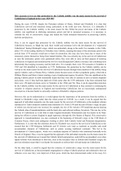
How accurate is it to say that protection by the Catholic nobility was the main reason for the survival of
Catholicism in England in the years 1529–88?
During the years 1529-88, despite the Protestant reforms of Henry, Edward and Elizabeth, it is clear that
Catholicism survived and remained strong, particularly in the north and west. However, it is debatable if
protection by the Catholic nobility is the main reason for this. While the power and status of the Catholic
nobility was significant in sheltering missionary priests and led to increased recusancy, it is necessary to
consider the role of conservative clergy and indeed the Tudor monarchs themselves in preserving Catholic
doctrine and practices.
First, it can be argued that protection by the Catholic nobility was the main reason for the survival of
Catholicism because, as Haigh has said, their wealth and assistance led to the development of a “seigneurial
Catholicism” during Elizabegth’s reign, which was particularly strong in the north. For example, in the 1560s,
about 75% of the leading families in Yorkshire were Catholic, meaning that many of the missionary priests who
arrived from 1574 onwards would turn to them for protection; this may also have been due to many of the
missionary priests themselves being from landed families. This was certainly key in the survival of Catholicism
as once the missionary priests were guaranteed safety, they were able to carry out their purpose of restoring
Catholicism to England and transformed the low-level and disorganised Catholic resistance into something more
determined, thus keeping recusancy and the faith alive. For example, there were 750 recusants in Yorkshire in
1582 and 304 identified in Lancashire in 1578. Furthermore, the protection by the Catholic nobility can be
viewed as the main reason for the survival of Catholicism because through some members of the nobility being
openly Catholic, such as Thomas Percy, Catholic priests became aware of other sympathetic gentry, which led to
William Weston and Henry Garnet creating a type of employment agency for priests. This was significant as the
placing Catholic priests in noble households meant that they were able to continue to serve as family chaplains
and priests, even if they had been deprived of their posts after the 1559 settlement; it has been estimated that
there were 150 deprived priests active in Yorkshire in the 1560s and 70s. Thus, it can be argued that protection
by the Catholic nobility was the main reason for the survival of Catholicism as they assisted in continuing the
variation in religious practices in England and transforming Catholicism into an increasingly underground
movement as it became harder to outwardly conform to Elizabeth’s religious policies.
However, this can be undermined as it would appear that the importance of the protection from the nobility is
limited to Elizabeth’s reign, rather than the whole period of 1529-88. As a result, it can be argued that the
approach of individual monarchs was the main reason for the survival of Catholicism, as the moderate reforms
introduced by Tudor monarchs enabled some toleration of it. From 1539 until the end of Henry’s reign, the pace
of reform was slowed and even reversed, for example, the Act of Six Articles 1539 stated that anyone denying
the Catholic idea of transubstantiation could be burnt alive and enforced celibacy for priests. This was key to the
survival of Catholicism as it did little to make England doctrinally Protestantism and was drawn on by Mary
during her efforts to restore England to papal supremacy through the first Statute of Repeal. This conservative
approach to transubstantiation was also continued at the beginning of Edward’s reign, in his 1549 Book of
Common Prayer, which used ambiguous wording to allow both Catholic belief and Protestant interpretation.
Furthermore, it is clear that the toleration shown by Elizabeth was crucial to the survival of Catholicism as she
ensured that her 1559 Religious Settlement and 39 Articles were kept as moderate as possible and could
accommodate elements of Catholicism, such as priests wearing traditional vestments. This led to the
development of ‘Church papists’, which was a moderate majority of Catholics who conformed outwardly to the
Church of England. Thus, it can be argued that the approach of the individual monarchs was the main reason for
the survival of Catholicism as it meant that Catholic beliefs and practices could still be accomodated; even when
tighter reforms were introduced to limit this, such as the recusancy fines in Edward and Elizabeth’s reigns, the
previous toleration meant that it was harder for monarchs to enforce their will and stamp out Catholicism.
On the other hand, it could be argued that the existence of conservative clergy was the main reason for the
survival of Catholicism, as these prompted congregations to cling to Catholic practices and continued to have an
influence even once they were deprived of their posts, which has been demonstrated earlier in the essay. For
Catholicism in England in the years 1529–88?
During the years 1529-88, despite the Protestant reforms of Henry, Edward and Elizabeth, it is clear that
Catholicism survived and remained strong, particularly in the north and west. However, it is debatable if
protection by the Catholic nobility is the main reason for this. While the power and status of the Catholic
nobility was significant in sheltering missionary priests and led to increased recusancy, it is necessary to
consider the role of conservative clergy and indeed the Tudor monarchs themselves in preserving Catholic
doctrine and practices.
First, it can be argued that protection by the Catholic nobility was the main reason for the survival of
Catholicism because, as Haigh has said, their wealth and assistance led to the development of a “seigneurial
Catholicism” during Elizabegth’s reign, which was particularly strong in the north. For example, in the 1560s,
about 75% of the leading families in Yorkshire were Catholic, meaning that many of the missionary priests who
arrived from 1574 onwards would turn to them for protection; this may also have been due to many of the
missionary priests themselves being from landed families. This was certainly key in the survival of Catholicism
as once the missionary priests were guaranteed safety, they were able to carry out their purpose of restoring
Catholicism to England and transformed the low-level and disorganised Catholic resistance into something more
determined, thus keeping recusancy and the faith alive. For example, there were 750 recusants in Yorkshire in
1582 and 304 identified in Lancashire in 1578. Furthermore, the protection by the Catholic nobility can be
viewed as the main reason for the survival of Catholicism because through some members of the nobility being
openly Catholic, such as Thomas Percy, Catholic priests became aware of other sympathetic gentry, which led to
William Weston and Henry Garnet creating a type of employment agency for priests. This was significant as the
placing Catholic priests in noble households meant that they were able to continue to serve as family chaplains
and priests, even if they had been deprived of their posts after the 1559 settlement; it has been estimated that
there were 150 deprived priests active in Yorkshire in the 1560s and 70s. Thus, it can be argued that protection
by the Catholic nobility was the main reason for the survival of Catholicism as they assisted in continuing the
variation in religious practices in England and transforming Catholicism into an increasingly underground
movement as it became harder to outwardly conform to Elizabeth’s religious policies.
However, this can be undermined as it would appear that the importance of the protection from the nobility is
limited to Elizabeth’s reign, rather than the whole period of 1529-88. As a result, it can be argued that the
approach of individual monarchs was the main reason for the survival of Catholicism, as the moderate reforms
introduced by Tudor monarchs enabled some toleration of it. From 1539 until the end of Henry’s reign, the pace
of reform was slowed and even reversed, for example, the Act of Six Articles 1539 stated that anyone denying
the Catholic idea of transubstantiation could be burnt alive and enforced celibacy for priests. This was key to the
survival of Catholicism as it did little to make England doctrinally Protestantism and was drawn on by Mary
during her efforts to restore England to papal supremacy through the first Statute of Repeal. This conservative
approach to transubstantiation was also continued at the beginning of Edward’s reign, in his 1549 Book of
Common Prayer, which used ambiguous wording to allow both Catholic belief and Protestant interpretation.
Furthermore, it is clear that the toleration shown by Elizabeth was crucial to the survival of Catholicism as she
ensured that her 1559 Religious Settlement and 39 Articles were kept as moderate as possible and could
accommodate elements of Catholicism, such as priests wearing traditional vestments. This led to the
development of ‘Church papists’, which was a moderate majority of Catholics who conformed outwardly to the
Church of England. Thus, it can be argued that the approach of the individual monarchs was the main reason for
the survival of Catholicism as it meant that Catholic beliefs and practices could still be accomodated; even when
tighter reforms were introduced to limit this, such as the recusancy fines in Edward and Elizabeth’s reigns, the
previous toleration meant that it was harder for monarchs to enforce their will and stamp out Catholicism.
On the other hand, it could be argued that the existence of conservative clergy was the main reason for the
survival of Catholicism, as these prompted congregations to cling to Catholic practices and continued to have an
influence even once they were deprived of their posts, which has been demonstrated earlier in the essay. For