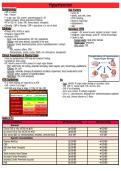
Epidemiology Risk Factors
• 30% of adults • family hx
• Men > Women • obesity, poor diet, stress
• ↑ w age: men- 50s; women- postmenopausal & >65 • ETOH, Smoking
• highest incidence: African Americans & Filipinos • physical inactivity
• RF for CAD, HF, Stroke, PAD, kidney disease, retinopathy • dyslipidemia
• 20mmHg ↑ SBP & 10mmHg ↑ DBP = associated w 2x risk of death • age
Etiology Secondary HTN
• Primary HTN: 90-95% of adults • younger: <30; severe & acute; resistant (at least 3 meds)
• Pregnancy induced HTN • malignant: organ damage, acute RF, retinal hemorrhages
• Secondary HTN: • Causes by Age:
-Renal- acute glomerulonephritis, CRF, PkD, pyelonephritis -Younger adults: renal artery stenosis
-Vascular- renal artery stenosis, coarctation of the aorta -Middle-aged: endocrine
-Endocrine- thyroid, pheochromocytoma, primary hyperaldosteronism, Cushing’s -Older adults: CkD
-Other-
‣ OSA, excessive caffeine, ETOH
‣ Pharm(stimulants, steroids, cocaine, NSAIDS, oral contraceptives, decongestants)
Clinical Presentation & Physical Exam
• most pts asymptomatic (HTN may be incidental finding)
• occipital HA, blurry vision
• PE: identify cause of HTN & assess for target organ disease
-ENT: optic fundi- AV nicking, arteriolar narrowing, silver/coppery wire, hemorrhage, papilledema
-Cardiac: S4, LVH
-Vascular: extremity changes dt peripheral circulatory impairment, bruit carotid/aortic/renal
-Thyroid: goiter, evidence of hyperthyroidism
-Neurologic: TIA, CVA symptoms
HTN Guidelines Dx
• 2 or more readings are required to dx HTN • Goal: identify if target organ damage or secondary cause
• JNC = pharm tx at stage 1 • CBC. CMP, Cr, fasting Lipids, TSH, UA, ECG, Echo
• ACC/AHA only drugs at stage 1 if 10yr CV risk >10% • CXR- if hx of smoking
• 24-hr urine cortisol- if Cushing’s suspected
• 24-hr Cr, Catecholamines, Metanephrines- pheochromocytoma suspected
• Uric acid, Urinary albumin to Cr Ratio
Goals of Tx
Clinical Conditions BP Threshold mmHg BP Goal mmHg
General
Clinical CVD or 10yr ASCVD risk ≥10% ≥130/80 <130/80
No clinical CVD & 10yr ASCVD risk <10% ≥140/90 <130/80
Older persons (≥65 yrs; noninstitUtionalized, ambUlatory, commUnity-living) ≥130 SBP <130 SBP
Specific Comorbidities
Diabetes Mellitus ≥130/80 <130/80
CKD ≥130/80 <130/80
CKD after Renal Transplant ≥130/80 <130/80
HF ≥130/80 <130/80
Stable Ischemic Heart Disease ≥130/80 <130/80
Secondary Stroke Prevention ≥140/80 <130/80
Secondary Stroke Prevention (lacunar) ≥130/80 <130/80
PAD ≥130/80 <130/80
, Hypertension contd… q w
Management
• ElevatedBPorStage1HTNwlowASCVDRisk- w
q w
q w
q qw w
q w
q w
q w
q w
q
-non-pharmtherapy,recheckin3-6m w
q w
q w
q w
q
• Stage 1 HTN & High ASCVD Risk (≥10% 10yr ASCVD risk)-
qw qw qw qw qw qw qw qw qw qw
-non-pharm&antihypertensivedrugtherapy,repeatBPin1m w
q w
q w
q w
q w
q qw w
q w
q
• Stage2HTN- w
q w
q
-non-pharm&2antiHTNdrugsofdifferentclasseswrepeatBPin1m w
q w
q w
q w
q w
q w
q w
q w
q w
q w
q w
q w
q
• AdultswaveryhighaverageBP(≥160SBPor≥100DBP)- w
q w
q w
q w
q w
q w
q w
q w
q w
q w
q w
q
-prompt eval, drug tx➜ carefulmonitoring & upward dose adjustment qw qw qw w
q qw w
q qw qw w
q qw
Pharm Tx qw
• Note:
-↑or add after1 monthifnot atgoal q
w w
q w
q w
q w
q w
q qw w
q w
q
-NoACEorARBtogether w
q w
q w
q w
q
-3meds & notcontrolled➜ refertospecialist
qw qw qw qw w
q qw qw qw
Non- Thiazides, CCB, ACEI, ARB Thiazides, qw qw qw qw qw
Black Blac qw CCB
ks CKDorD
qw w
q qw ACEorARB w
q qw qw
M MI
qw BB
Pregnancy Methyldopa, Labetalol, Hydralazine qw qw
Thiazides qw
Hydrochlorothiazide(Microzide),Chlorthalidone(Hygroton) ✓ for Blacks w
q q
w w
q
qw
CCB Dihydropyridine (DHP):“-pines”: ✓ for Blacks qw w
q
qw
Amlodipine(Norvasc), Nifedipine(Procardia), Nicardipine (Cardene) DPH (Amlodipine) ✓ for HF w
q q
w qw q
w qw
qw qw q w qw
Non-Dihydropyridine(NDPH):“non-pines”: NDPH(Diltiazem, Verapamil)X forHF w
q w
q
w
q w
q w
q w
q
Diltiazem (Cardizem), Verapamil (Calan)
qw
X for systolicHF q w q w q w
qw qw w
q
ACE “-pril”: ✓ for DM, CkD, HF qw qw qw
Enalapril (Vasotec), Lisinopril (Zestril), Ramipril (Altace) reducesmortalityinHF&renaldeclineinCkD SE: coug q w q w q w q w q w
w
q w
q w
q w
q w
q w
q w
q w
q qw qw
h,angioedema w
q
ARB B qw
Losartan (Cozaar), Valsartan (Diovan), Olmesartan (Benicar) ✓ for DM, CkD, HF qw qw qw qw qw
qw qw qw
forptsintoleranttoACE(cough,angioedema) w
q qw w
q w
q w
q qw
B Selective (Beta-1 Specific): better for CAD, HFrEF, post- MI instead of HTN
qw qw qw qw qw qw qw qw qw qw
Atenolol (Tenormin), Nebivolol (Bystolic), Esmolol, Bisoprolol Metopr X forasthma(especiallynon- qw qw qw qw qw qw
qw w
q w
q w
q
olol Succinate (Toprol XL), Metoprolol Tartrate (Lopressor) selective) avoid in younger pts dt SE- qw qw qw qw qw qw
fatigue
qw qw qw qw qw qw
Non-Selective(Beta-1 &2): qw w
q qw
qw
Propranolol, Carvedilol, Labetalol, Nadolol qw qw qw
LoopDiuretics Furosemide (Lasix)
w
q q w
qw
k- Sparing Spironolactone (Aldactone) qw
Alpha Agonists Methyldopa (Aldomet), Clonidine(Catapres)
qw q w
q
w q
w w
q
Renin-InhibitorAliskiren (Tekturna) qw
qw
Non-Pharm Tx q w
• DASH Diet qw • Exercise:
qw
• Weightloss:1kg=1mmHg w
q w
q w
q w
q w
q w
q -30min moderate-intensity aerobic at least 5days/wk for a total of 150min qw qw qw qw qw qw qw qw qw qw
• smoking & drug abuse cessation qw qw qw qw -25minvigorous aerobicactivityatleast3days/wk fortotal75min (orcombo ofmod& vigorous) w
q w
q w
q w
q w
q w
q qw w
q w
q w
q w
q w
q qw w
q qw
• ETOH-avoidorlimit w
q w
q w
q -moderate-high intensity muscle-strengthening activity at least 2days/wk qw qw qw qw qw qw
• educateondisease(ptsmayfeelfine) w
q w
q w
q w
q w
q w
q -for lowering BP & cholesterol: 40min moderate-to-vigorous-intensity aerobic activity 3-4x/wk
qw qw qw qw qw qw qw qw qw
• PREVENTION
White Coat Syndrome qw qw
Other Considerations
• Office BP: ≥130/80 but <160/100 sp 3m lifestyle mod
qw
qw qw qw qw qw qw qw qw
• Follow-up:labs,add-med?
• HBPM(homebpmonitoring)
w
q w
q
w
q w
q w
q
• Referral: elderly pts, dietitian, cardiologist, nephrology, endocrinology
• ABPM (ambulatory BP monitoring)
qw qw qw qw qw qw
qw qw qw
• lifestyle changes
• if >130/80 – start antihypertensive med
qw
qw qw qw qw qw
• Elderly:startlow-goslow,comorbidities,polypharm,schedule,orthostatic
ICD-10 Codes
w
q w
q w
q w
q w
q w
q w
q
qw
• Complications
• 110- Essential (primary) HTN qw qw qw
• 112.9- HTN CKD w stage 1-4 CKD or unspecific CKD qw qw qw qw qw qw qw qw qw
• 115.2- HTN secondary to endocrine disorders qw qw qw qw qw
• 111.0-HTNheartdiseasewHF Downloaded by Brian Njenga ()
w
q w
q w
q w
q w
q
qw qw qw qw
, Atrial Fibrillaiton q w
A-fib: ventricular arrhythmia
qw qw
Impact of A-fib qw q
w
• ↑risk for stroke by 4-5x
w
q qw qw qw qw
• causesabt25%ofischemicstrokes w
q w
q w
q w
q w
q
• doublestheriskofheart-relateddeaths w
q w
q qw w
q w
q
• absent atria contraction ➜ loss of CO (15-30%) dt no "atrial kick", contributing to HF
qw qw qw qw qw qw qw qw qw qw qw qw qw qw
Risk Factors
qw
• advancing age qw • HTN qw • CAD qw • Cardiomyopathy
qw
• Obesity • athletesqw • DM qw •Europeanancestry
w
q w
q
• HF • Hyperthyroidism
qw • CKD qw • heavyETOHuse
qw w
q w
q
• rheumaticheartdisease w
q w
q • valvularheartdisease
qw w
q w
q • sleepapnea
qw w
q • pericarditis/myocarditis
qw
• enlargedLheartchambers w
q w
q w
q
Valvular vs. Non-Valvular A-fib q w q w q w
• Valvular: AF w moderate-to-severe mitral stenosis (potentially requiring sx) orin the presence of anartificial (mechanical) heart valve
qw qw qw qw qw qw qw qw qw qw qw w
q qw qw w
q qw qw qw
• Non-Valvular:AFintheabsenceofmoderate-to-severemitralstenosisoramechanicalheartvalve w
q w
q w
q w
q w
q w
q w
q w
q w
q w
q w
q w
q w
q
Clinical Presentation & Physical Exam
qw qw qw qw
• manyareasymptomatic&unawareoftheirdx-sometimesitisanincidentalfindinguponexam
qw qw w
q w
q qw w
q qw w
q w
q qw w
q w
q qw qw qw
Symptomatic Presentation Physical Exam q w q w
• General Fatigue • Rapid/Irregular heartbeat
qw • Irregular Heart Rhythm: hallmark of AF qw qw qw qw qw qw qw
• Fluttering/"thumping"inchest • Dizziness • Tachycardia(typically110-140s),Hypotension w
q w
q q w qw w
q qw w
q
• SOB • Anxiety • Possiblefindings: qw qw
• Weakness • Faintness -JVD,Rales,EffusionfromHF,LEedema(HForDVT) qw w
q w
q w
q w
q w
q w
q w
q w
q w
q
• Confusion • Fatigue wexercise -Murmurs (suggesting stenosisorregurgitation);Exophthalmia qw qw qw qw qw w
q w
q w
q
• CPorPressure➜ Call911
qw qw -Stroke S&S (facial droop, arm weakness, slurred speech) qw q w w
q qw qw qw qw qw qw qw
EKG
• Gold Standard: qw
-No visible P-waves (no measurable PR interval) q w q w q w q w q w q w
-Irregularly irregular QRS q w q w
-Ventricular rate is frequently fast q w q w q w q w
• IrregularR-Rintervals(irregularventricularresponse) w
q w
q w
q w
q w
q
• NodistinctP-waves
w
q w
q
• F-waves(fibrillatory)replaceP-waves(varyingamplitude) w
q w
q w
q w
q w
q
Classifying A-fib q w
Paroxysmal AF -AF that terminates spontaneously or w intervention within 7days of onset
q w
qw qw qw qw qw qw qw qw qw qw
-episodesmay recurwvariable frequency w
q w
q w
q w
q w
q
Persistent AF -continuous AF that is sustained >7days
qw qw qw qw qw qw
Long-standing Persistent AF -continuous AF >12m in duration qw qw qw qw qw qw
Permanent AF -termusedwhen pt &cliniciandecidetostopfurtherattemptstorestore&ormaintain NSR
qw
w
q w
q w
q qw w
q w
q w
q w
q w
q w
q w
q w
q w
q w
q w
q w
q
-acceptanceofAFrepresentsatherapeuticattitudeonthepartofthept&clinicianratherthanpathophysiologyofAF w
q w
q w
q w
q w
q qw w
q w
q qw w
q w
q qw qw w
q w
q w
q w
q w
q w
q
-acceptance of AD may change as symptoms, efficacy of interventions, & pt or clinician preferences evolve qw qw qw qw qw qw qw qw qw qw qw qw qw qw qw
Nonvalvular AF -absence of rheumatic mitral stenosis, mechanical or bioprosthetic heart valve, or mitral valve repair
q w qw qw qw qw qw qw qw qw qw qw qw qw qw
Dx
• Labs: CBC, CMP, TSH, BNP, PT, PTT, INR
qw qw qw qw qw qw qw
• Echocardiogram-
-evaluation of size & function of atria & ventricles, detect valvular heart disease, LV hypertrophy, & pericardial disease qw qw qw qw qw qw qw qw qw qw qw qw qw qw qw qw qw
• Transesophageal Echocardiogram (TEE)- qw qw
-mostsensitive&specifictechniquetodetectLAthrombi w
q w
q w
q qw qw w
q qw w
q
• Event Recorders (Implantable Loop Recorders or Holter monitors)-
qw qw qw qw qw qw qw
-identify arrhythmiaif intermittent, to correlate symptoms, or rate control strategies w
q w
q qw qw w
q qw w
q qw qw w
q
• Stress Test qw
• EP Study
qw
Downloaded by Brian Njenga () qw qw qw qw
, q w
GoalsofTx w
q q
w
CHADVASC– Determine Stroke Risk
• PreventionofThromboembolism-
q w qw qw
w
q w
q
-useChadsscoretodetermine strokerisk
0 0
qw qw w
q qw qw qw
• Rate Control (preferred over rhythm control)-
qw qw qw qw qw
-BB,NDPHCCB,DigitalisGlycosides
w
q w
q qw w
q
• Rhythm Control- qw
-pts that don't tolerate loss of atrial kick (hemodynamic instability)
qw qw qw qw qw qw qw qw qw
-Synchronized Cardioversion; Pharm Cardioversion qw qw qw
Bleeding Assessment qw qw
w
q
qw
Pharm Tx qw
-VitKAntagonist: w
q w
q
Warfarin-serummonitoring:goal-INR2-3
qw w
q qw qw qw qw
-Direct Thrombin Inhibitor: qw qw
qw Dabigatran (Pradaxa) 150mg PO BID -noserummonitoring qw qw qw qw qw w
q w
q
Anticoagtılation -FactorXaInhibitors: w
q w
q
(Thromboembolism Prevention) q w
Rivaroxaban, Edoxaban, Apixaban -no serum monitoring qw q w q w q w q w
Xarelto20mgPOQD -switchingWarfarintoXarelto➜dcWarfarin&startXareltowhenINR<3
w
q w
q w
q q w w
q w
q w
q w
q qw w
q w
q w
q w
q w
q w
q w
q
Eliquis5mgPOBID-2.5mgBIDif2ofthefollowing:>80yrs,<60kg,or>1.5Cr
w
q w
q w
q w
q w
q w
q w
q w
q w
q w
q w
q qw w
q w
q w
q
-Non-Vit K Antagonist Oral Anticoagulants (NOACs): qw qw qw qw qw
-contraindicated in pts wsignificant mitralstenosis or mechanical valves
qw qw qw w
q qw qw w
q qw w
q qw
-BetaBlocker: w
q
q w Atenolol, Metoprolol, Nadolol, Propranolol, Sotalol qw qw qw qw
-NDPH CCB:
RateControl
qw
w
q
q w Diltiazem, Verapamil qw
-Digitalis Glflcoside: qw
qw Digoxin
-Pharmacologic Cardioversion: qw
RhythmControl w
q q w Dofetilide, Flecainide, Propafenone, Ibutilide, Amiodarone q w q w q w q w
-Considerlonghalf-life,pulmonarytoxicity,thyroiddysfunction qw qw w
q w
q qw qw
Other Tx qw
• Watchman Device:leftatrialappendage(LAA)closuredevice permanentlyimplanted; closes offLAAso clots thatforminLAA cantentercirculation
qw w
q w
q w
q w
q w
q w
q qw w
q qw qw w
q w
q w
q qw w
q w
q w
q qw w
q w
q
-indicated for pts w Non-VascularA-fibatrisk forstroke qw qw w
q qw w
q qw qw qw w
q
-alternative for ptswho can’tbe on anticoagulation(hx bleedor highriskfor bleeding,drug interactions,etc.,)
qw w
q w
q qw w
q qw qw w
q qw w
q w
q qw w
q w
q w
q qw w
q
-Risks: LAA rupture during device implant, infection
qw qw qw qw qw qw
-ptwillprobablystillneedtotakeASA
w
q w
q qw w
q qw qw qw
• Pacemaker:for flowHR w
q w
q w
q
Downloaded by Brian Njenga () qw qw qw qw
• 30% of adults • family hx
• Men > Women • obesity, poor diet, stress
• ↑ w age: men- 50s; women- postmenopausal & >65 • ETOH, Smoking
• highest incidence: African Americans & Filipinos • physical inactivity
• RF for CAD, HF, Stroke, PAD, kidney disease, retinopathy • dyslipidemia
• 20mmHg ↑ SBP & 10mmHg ↑ DBP = associated w 2x risk of death • age
Etiology Secondary HTN
• Primary HTN: 90-95% of adults • younger: <30; severe & acute; resistant (at least 3 meds)
• Pregnancy induced HTN • malignant: organ damage, acute RF, retinal hemorrhages
• Secondary HTN: • Causes by Age:
-Renal- acute glomerulonephritis, CRF, PkD, pyelonephritis -Younger adults: renal artery stenosis
-Vascular- renal artery stenosis, coarctation of the aorta -Middle-aged: endocrine
-Endocrine- thyroid, pheochromocytoma, primary hyperaldosteronism, Cushing’s -Older adults: CkD
-Other-
‣ OSA, excessive caffeine, ETOH
‣ Pharm(stimulants, steroids, cocaine, NSAIDS, oral contraceptives, decongestants)
Clinical Presentation & Physical Exam
• most pts asymptomatic (HTN may be incidental finding)
• occipital HA, blurry vision
• PE: identify cause of HTN & assess for target organ disease
-ENT: optic fundi- AV nicking, arteriolar narrowing, silver/coppery wire, hemorrhage, papilledema
-Cardiac: S4, LVH
-Vascular: extremity changes dt peripheral circulatory impairment, bruit carotid/aortic/renal
-Thyroid: goiter, evidence of hyperthyroidism
-Neurologic: TIA, CVA symptoms
HTN Guidelines Dx
• 2 or more readings are required to dx HTN • Goal: identify if target organ damage or secondary cause
• JNC = pharm tx at stage 1 • CBC. CMP, Cr, fasting Lipids, TSH, UA, ECG, Echo
• ACC/AHA only drugs at stage 1 if 10yr CV risk >10% • CXR- if hx of smoking
• 24-hr urine cortisol- if Cushing’s suspected
• 24-hr Cr, Catecholamines, Metanephrines- pheochromocytoma suspected
• Uric acid, Urinary albumin to Cr Ratio
Goals of Tx
Clinical Conditions BP Threshold mmHg BP Goal mmHg
General
Clinical CVD or 10yr ASCVD risk ≥10% ≥130/80 <130/80
No clinical CVD & 10yr ASCVD risk <10% ≥140/90 <130/80
Older persons (≥65 yrs; noninstitUtionalized, ambUlatory, commUnity-living) ≥130 SBP <130 SBP
Specific Comorbidities
Diabetes Mellitus ≥130/80 <130/80
CKD ≥130/80 <130/80
CKD after Renal Transplant ≥130/80 <130/80
HF ≥130/80 <130/80
Stable Ischemic Heart Disease ≥130/80 <130/80
Secondary Stroke Prevention ≥140/80 <130/80
Secondary Stroke Prevention (lacunar) ≥130/80 <130/80
PAD ≥130/80 <130/80
, Hypertension contd… q w
Management
• ElevatedBPorStage1HTNwlowASCVDRisk- w
q w
q w
q qw w
q w
q w
q w
q w
q
-non-pharmtherapy,recheckin3-6m w
q w
q w
q w
q
• Stage 1 HTN & High ASCVD Risk (≥10% 10yr ASCVD risk)-
qw qw qw qw qw qw qw qw qw qw
-non-pharm&antihypertensivedrugtherapy,repeatBPin1m w
q w
q w
q w
q w
q qw w
q w
q
• Stage2HTN- w
q w
q
-non-pharm&2antiHTNdrugsofdifferentclasseswrepeatBPin1m w
q w
q w
q w
q w
q w
q w
q w
q w
q w
q w
q w
q
• AdultswaveryhighaverageBP(≥160SBPor≥100DBP)- w
q w
q w
q w
q w
q w
q w
q w
q w
q w
q w
q
-prompt eval, drug tx➜ carefulmonitoring & upward dose adjustment qw qw qw w
q qw w
q qw qw w
q qw
Pharm Tx qw
• Note:
-↑or add after1 monthifnot atgoal q
w w
q w
q w
q w
q w
q qw w
q w
q
-NoACEorARBtogether w
q w
q w
q w
q
-3meds & notcontrolled➜ refertospecialist
qw qw qw qw w
q qw qw qw
Non- Thiazides, CCB, ACEI, ARB Thiazides, qw qw qw qw qw
Black Blac qw CCB
ks CKDorD
qw w
q qw ACEorARB w
q qw qw
M MI
qw BB
Pregnancy Methyldopa, Labetalol, Hydralazine qw qw
Thiazides qw
Hydrochlorothiazide(Microzide),Chlorthalidone(Hygroton) ✓ for Blacks w
q q
w w
q
qw
CCB Dihydropyridine (DHP):“-pines”: ✓ for Blacks qw w
q
qw
Amlodipine(Norvasc), Nifedipine(Procardia), Nicardipine (Cardene) DPH (Amlodipine) ✓ for HF w
q q
w qw q
w qw
qw qw q w qw
Non-Dihydropyridine(NDPH):“non-pines”: NDPH(Diltiazem, Verapamil)X forHF w
q w
q
w
q w
q w
q w
q
Diltiazem (Cardizem), Verapamil (Calan)
qw
X for systolicHF q w q w q w
qw qw w
q
ACE “-pril”: ✓ for DM, CkD, HF qw qw qw
Enalapril (Vasotec), Lisinopril (Zestril), Ramipril (Altace) reducesmortalityinHF&renaldeclineinCkD SE: coug q w q w q w q w q w
w
q w
q w
q w
q w
q w
q w
q w
q qw qw
h,angioedema w
q
ARB B qw
Losartan (Cozaar), Valsartan (Diovan), Olmesartan (Benicar) ✓ for DM, CkD, HF qw qw qw qw qw
qw qw qw
forptsintoleranttoACE(cough,angioedema) w
q qw w
q w
q w
q qw
B Selective (Beta-1 Specific): better for CAD, HFrEF, post- MI instead of HTN
qw qw qw qw qw qw qw qw qw qw
Atenolol (Tenormin), Nebivolol (Bystolic), Esmolol, Bisoprolol Metopr X forasthma(especiallynon- qw qw qw qw qw qw
qw w
q w
q w
q
olol Succinate (Toprol XL), Metoprolol Tartrate (Lopressor) selective) avoid in younger pts dt SE- qw qw qw qw qw qw
fatigue
qw qw qw qw qw qw
Non-Selective(Beta-1 &2): qw w
q qw
qw
Propranolol, Carvedilol, Labetalol, Nadolol qw qw qw
LoopDiuretics Furosemide (Lasix)
w
q q w
qw
k- Sparing Spironolactone (Aldactone) qw
Alpha Agonists Methyldopa (Aldomet), Clonidine(Catapres)
qw q w
q
w q
w w
q
Renin-InhibitorAliskiren (Tekturna) qw
qw
Non-Pharm Tx q w
• DASH Diet qw • Exercise:
qw
• Weightloss:1kg=1mmHg w
q w
q w
q w
q w
q w
q -30min moderate-intensity aerobic at least 5days/wk for a total of 150min qw qw qw qw qw qw qw qw qw qw
• smoking & drug abuse cessation qw qw qw qw -25minvigorous aerobicactivityatleast3days/wk fortotal75min (orcombo ofmod& vigorous) w
q w
q w
q w
q w
q w
q qw w
q w
q w
q w
q w
q qw w
q qw
• ETOH-avoidorlimit w
q w
q w
q -moderate-high intensity muscle-strengthening activity at least 2days/wk qw qw qw qw qw qw
• educateondisease(ptsmayfeelfine) w
q w
q w
q w
q w
q w
q -for lowering BP & cholesterol: 40min moderate-to-vigorous-intensity aerobic activity 3-4x/wk
qw qw qw qw qw qw qw qw qw
• PREVENTION
White Coat Syndrome qw qw
Other Considerations
• Office BP: ≥130/80 but <160/100 sp 3m lifestyle mod
qw
qw qw qw qw qw qw qw qw
• Follow-up:labs,add-med?
• HBPM(homebpmonitoring)
w
q w
q
w
q w
q w
q
• Referral: elderly pts, dietitian, cardiologist, nephrology, endocrinology
• ABPM (ambulatory BP monitoring)
qw qw qw qw qw qw
qw qw qw
• lifestyle changes
• if >130/80 – start antihypertensive med
qw
qw qw qw qw qw
• Elderly:startlow-goslow,comorbidities,polypharm,schedule,orthostatic
ICD-10 Codes
w
q w
q w
q w
q w
q w
q w
q
qw
• Complications
• 110- Essential (primary) HTN qw qw qw
• 112.9- HTN CKD w stage 1-4 CKD or unspecific CKD qw qw qw qw qw qw qw qw qw
• 115.2- HTN secondary to endocrine disorders qw qw qw qw qw
• 111.0-HTNheartdiseasewHF Downloaded by Brian Njenga ()
w
q w
q w
q w
q w
q
qw qw qw qw
, Atrial Fibrillaiton q w
A-fib: ventricular arrhythmia
qw qw
Impact of A-fib qw q
w
• ↑risk for stroke by 4-5x
w
q qw qw qw qw
• causesabt25%ofischemicstrokes w
q w
q w
q w
q w
q
• doublestheriskofheart-relateddeaths w
q w
q qw w
q w
q
• absent atria contraction ➜ loss of CO (15-30%) dt no "atrial kick", contributing to HF
qw qw qw qw qw qw qw qw qw qw qw qw qw qw
Risk Factors
qw
• advancing age qw • HTN qw • CAD qw • Cardiomyopathy
qw
• Obesity • athletesqw • DM qw •Europeanancestry
w
q w
q
• HF • Hyperthyroidism
qw • CKD qw • heavyETOHuse
qw w
q w
q
• rheumaticheartdisease w
q w
q • valvularheartdisease
qw w
q w
q • sleepapnea
qw w
q • pericarditis/myocarditis
qw
• enlargedLheartchambers w
q w
q w
q
Valvular vs. Non-Valvular A-fib q w q w q w
• Valvular: AF w moderate-to-severe mitral stenosis (potentially requiring sx) orin the presence of anartificial (mechanical) heart valve
qw qw qw qw qw qw qw qw qw qw qw w
q qw qw w
q qw qw qw
• Non-Valvular:AFintheabsenceofmoderate-to-severemitralstenosisoramechanicalheartvalve w
q w
q w
q w
q w
q w
q w
q w
q w
q w
q w
q w
q w
q
Clinical Presentation & Physical Exam
qw qw qw qw
• manyareasymptomatic&unawareoftheirdx-sometimesitisanincidentalfindinguponexam
qw qw w
q w
q qw w
q qw w
q w
q qw w
q w
q qw qw qw
Symptomatic Presentation Physical Exam q w q w
• General Fatigue • Rapid/Irregular heartbeat
qw • Irregular Heart Rhythm: hallmark of AF qw qw qw qw qw qw qw
• Fluttering/"thumping"inchest • Dizziness • Tachycardia(typically110-140s),Hypotension w
q w
q q w qw w
q qw w
q
• SOB • Anxiety • Possiblefindings: qw qw
• Weakness • Faintness -JVD,Rales,EffusionfromHF,LEedema(HForDVT) qw w
q w
q w
q w
q w
q w
q w
q w
q w
q
• Confusion • Fatigue wexercise -Murmurs (suggesting stenosisorregurgitation);Exophthalmia qw qw qw qw qw w
q w
q w
q
• CPorPressure➜ Call911
qw qw -Stroke S&S (facial droop, arm weakness, slurred speech) qw q w w
q qw qw qw qw qw qw qw
EKG
• Gold Standard: qw
-No visible P-waves (no measurable PR interval) q w q w q w q w q w q w
-Irregularly irregular QRS q w q w
-Ventricular rate is frequently fast q w q w q w q w
• IrregularR-Rintervals(irregularventricularresponse) w
q w
q w
q w
q w
q
• NodistinctP-waves
w
q w
q
• F-waves(fibrillatory)replaceP-waves(varyingamplitude) w
q w
q w
q w
q w
q
Classifying A-fib q w
Paroxysmal AF -AF that terminates spontaneously or w intervention within 7days of onset
q w
qw qw qw qw qw qw qw qw qw qw
-episodesmay recurwvariable frequency w
q w
q w
q w
q w
q
Persistent AF -continuous AF that is sustained >7days
qw qw qw qw qw qw
Long-standing Persistent AF -continuous AF >12m in duration qw qw qw qw qw qw
Permanent AF -termusedwhen pt &cliniciandecidetostopfurtherattemptstorestore&ormaintain NSR
qw
w
q w
q w
q qw w
q w
q w
q w
q w
q w
q w
q w
q w
q w
q w
q w
q
-acceptanceofAFrepresentsatherapeuticattitudeonthepartofthept&clinicianratherthanpathophysiologyofAF w
q w
q w
q w
q w
q qw w
q w
q qw w
q w
q qw qw w
q w
q w
q w
q w
q w
q
-acceptance of AD may change as symptoms, efficacy of interventions, & pt or clinician preferences evolve qw qw qw qw qw qw qw qw qw qw qw qw qw qw qw
Nonvalvular AF -absence of rheumatic mitral stenosis, mechanical or bioprosthetic heart valve, or mitral valve repair
q w qw qw qw qw qw qw qw qw qw qw qw qw qw
Dx
• Labs: CBC, CMP, TSH, BNP, PT, PTT, INR
qw qw qw qw qw qw qw
• Echocardiogram-
-evaluation of size & function of atria & ventricles, detect valvular heart disease, LV hypertrophy, & pericardial disease qw qw qw qw qw qw qw qw qw qw qw qw qw qw qw qw qw
• Transesophageal Echocardiogram (TEE)- qw qw
-mostsensitive&specifictechniquetodetectLAthrombi w
q w
q w
q qw qw w
q qw w
q
• Event Recorders (Implantable Loop Recorders or Holter monitors)-
qw qw qw qw qw qw qw
-identify arrhythmiaif intermittent, to correlate symptoms, or rate control strategies w
q w
q qw qw w
q qw w
q qw qw w
q
• Stress Test qw
• EP Study
qw
Downloaded by Brian Njenga () qw qw qw qw
, q w
GoalsofTx w
q q
w
CHADVASC– Determine Stroke Risk
• PreventionofThromboembolism-
q w qw qw
w
q w
q
-useChadsscoretodetermine strokerisk
0 0
qw qw w
q qw qw qw
• Rate Control (preferred over rhythm control)-
qw qw qw qw qw
-BB,NDPHCCB,DigitalisGlycosides
w
q w
q qw w
q
• Rhythm Control- qw
-pts that don't tolerate loss of atrial kick (hemodynamic instability)
qw qw qw qw qw qw qw qw qw
-Synchronized Cardioversion; Pharm Cardioversion qw qw qw
Bleeding Assessment qw qw
w
q
qw
Pharm Tx qw
-VitKAntagonist: w
q w
q
Warfarin-serummonitoring:goal-INR2-3
qw w
q qw qw qw qw
-Direct Thrombin Inhibitor: qw qw
qw Dabigatran (Pradaxa) 150mg PO BID -noserummonitoring qw qw qw qw qw w
q w
q
Anticoagtılation -FactorXaInhibitors: w
q w
q
(Thromboembolism Prevention) q w
Rivaroxaban, Edoxaban, Apixaban -no serum monitoring qw q w q w q w q w
Xarelto20mgPOQD -switchingWarfarintoXarelto➜dcWarfarin&startXareltowhenINR<3
w
q w
q w
q q w w
q w
q w
q w
q qw w
q w
q w
q w
q w
q w
q w
q
Eliquis5mgPOBID-2.5mgBIDif2ofthefollowing:>80yrs,<60kg,or>1.5Cr
w
q w
q w
q w
q w
q w
q w
q w
q w
q w
q w
q qw w
q w
q w
q
-Non-Vit K Antagonist Oral Anticoagulants (NOACs): qw qw qw qw qw
-contraindicated in pts wsignificant mitralstenosis or mechanical valves
qw qw qw w
q qw qw w
q qw w
q qw
-BetaBlocker: w
q
q w Atenolol, Metoprolol, Nadolol, Propranolol, Sotalol qw qw qw qw
-NDPH CCB:
RateControl
qw
w
q
q w Diltiazem, Verapamil qw
-Digitalis Glflcoside: qw
qw Digoxin
-Pharmacologic Cardioversion: qw
RhythmControl w
q q w Dofetilide, Flecainide, Propafenone, Ibutilide, Amiodarone q w q w q w q w
-Considerlonghalf-life,pulmonarytoxicity,thyroiddysfunction qw qw w
q w
q qw qw
Other Tx qw
• Watchman Device:leftatrialappendage(LAA)closuredevice permanentlyimplanted; closes offLAAso clots thatforminLAA cantentercirculation
qw w
q w
q w
q w
q w
q w
q qw w
q qw qw w
q w
q w
q qw w
q w
q w
q qw w
q w
q
-indicated for pts w Non-VascularA-fibatrisk forstroke qw qw w
q qw w
q qw qw qw w
q
-alternative for ptswho can’tbe on anticoagulation(hx bleedor highriskfor bleeding,drug interactions,etc.,)
qw w
q w
q qw w
q qw qw w
q qw w
q w
q qw w
q w
q w
q qw w
q
-Risks: LAA rupture during device implant, infection
qw qw qw qw qw qw
-ptwillprobablystillneedtotakeASA
w
q w
q qw w
q qw qw qw
• Pacemaker:for flowHR w
q w
q w
q
Downloaded by Brian Njenga () qw qw qw qw