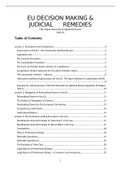
EU DECISION MAKING &
JUDICIAL REMEDIES
(The Hague University of Applied Sciences)
2020-21
Table of Contents
Lecture 1: Procedures and Competence....................................................................................4
Governance in the EU – the Community Method (Recap)....................................................4
Legislative acts........................................................................................................................4
The Consent Procedure..........................................................................................................4
The Consultation Procedure...................................................................................................5
The EU & its Member States: division of competence..........................................................6
Competence division between the EU and its Member States.............................................7
The Community method – criticism.......................................................................................8
Alternative methods of governance for the EU: The Open Method of Coordination (OMC)
................................................................................................................................................8
Example for soft governance: The EU framework for National Roma Integration Strategies
(2011)...................................................................................................................................10
Lecture 2: Delegation of Rulemaking Powers in the EU..........................................................11
Rulemaking Powers in the EU..............................................................................................11
The Notion of ‘Delegation of Powers’..................................................................................11
Rulemaking Powers by the European Commission..............................................................13
Competences and Powers....................................................................................................16
Institutional Balance.............................................................................................................16
Lecture 3: The Preliminary Ruling Procedure in EU Law..........................................................17
Recalling the General Principle of ‘Supremacy’ in EU Law..................................................17
Recalling the General Principle of ‘Direct Effect’ in EU Law................................................17
Foundations..........................................................................................................................18
What is Preliminary Ruling?.................................................................................................18
Referable Questions I...........................................................................................................19
Referable Questions II..........................................................................................................20
The Doctrine of ‘Acte Clair’..................................................................................................20
Legal Nature of Preliminary Rulings I...................................................................................21
Legal Nature of Preliminary Ruling – A Common Law Perspective......................................22
1
, Legal Nature of Preliminary Ruling – A Civil Law Perspective..............................................22
Conclusion............................................................................................................................23
Workshop.............................................................................................................................23
PART II: WORKSHOP.................................................................................................................25
Case 283/81, CILFIT et al v. Ministry of Health....................................................................25
Lecture 4: Enforcement Actions against Member States of the Union...................................26
Setting the Scene..................................................................................................................26
Recalling Principle of Sincere Cooperation..........................................................................26
Recalling the Principle of Conferred Powers........................................................................26
Role of the European Commission in Infringement Procedure of EU Law..........................27
Nature and Function of Art. 258 TFEU.................................................................................27
Infringement Procedure of EU Law......................................................................................27
The Commission’s Discretion...............................................................................................27
The Commission’s Reasoned Opinion..................................................................................28
Exceptions to Access............................................................................................................29
Consequences of a Commission’s reasoned opinion...........................................................29
Types of breach by Member States of EU Law....................................................................29
Interim Measures.................................................................................................................31
Workshop............................................................................................................................31
Lecture 5: Actions for Annulment (Part I)................................................................................33
What happens when the Union oversteps its competences?.............................................33
The CJEU – Jurisdiction.........................................................................................................33
Actions for Annulment – Introduction.................................................................................33
Why Having Actions for Annulment in the EU system?.......................................................34
Two main elements of actions for annulment.....................................................................34
Admissibility – The Issue of Locus Standi – Which applicants can bring an action for
annulment?..........................................................................................................................35
Admissibility – acts of which institutions are reviewable?..................................................36
Admissibility – When is an act intended to produce legal effect vis-à-vis third parties?....37
Admissibility – acts of which institutions are renewable?...................................................37
Admissibility – which acts are not-reviewable?...................................................................38
Admissibility – to sum up: which acts are reviewable?.......................................................39
Admissibility – the time limit................................................................................................39
Effects of a well-founded action for annulment..................................................................39
Lecture 6: Action for Annulment – Non-privilege applicants..................................................40
Admissibility - Locus standi for non-privileged applicants...................................................40
2
, Natural or Legal Persons......................................................................................................41
Locus standi for non-privileged applicants – 4 possible scenarios under Article 263 TFEU 41
Scenario 1: The act is addressed to the applicant................................................................41
When is a Union act considered “NOT addressed to the applicant”? (Second and third
scenario)...............................................................................................................................41
Acts NOT addressed to the applicant (Second and third scenario).....................................42
The concept of “direct concern” and individual concern”...................................................42
The Plaumann test...............................................................................................................43
Scenario 4: The act is a regulatory act and it does NOT entail any implementing measures
..............................................................................................................................................44
To sum up: locus standi for non-privileged applicants – 4 possible scenarios....................45
Admissibility criteria for natural & legal persons – are the conditions too strict or too
strictly interpreted by the CJEU?..........................................................................................45
Grounds for annulment – 1. Lack of competence or authority...........................................46
Grounds for annulment – 2. Misuse of powers...................................................................46
Grounds for annulment – 3. Infringement of an essential procedural requirement..........46
Grounds for annulment – 4. Infringement of the Treaties or any other rule of law relating
to their application...............................................................................................................46
Workshop.............................................................................................................................47
Lecture 7: Recap.......................................................................................................................48
Lecture 1: Competence & Procedures.................................................................................48
Lecture 5: Actions for Annulment (I)....................................................................................50
Lecture 6 – Actions for Annulment (II).................................................................................53
3
, Lecture 1: Procedures and Competence
Governance in the EU – the Community Method (Recap)
The Community Method is the usual decision-making method in the EU,
characterized by:
o The European Commission’s role in legislative initiative
o The Council’s role in decision-making
o Involvement of the European Parliament in decision-making at different
degrees depending on the decision-making procedure:
Ordinary legislative procedure
Consent procedure
Consultation procedure
o The role of the CJEU in providing judicial remedies
Legislative acts
What are legislative acts?
Art 289 (3) TFEU:
Legal acts adopted by legislative procedure shall constitute legislative acts.
The ordinary legislative procedure – recap
Article 289 TFEU:
“The ordinary legislative procedure shall consist in the joint adoption by the
European Parliament and the Council of a regulation, directive or decision
on a proposal from the Commission.”
This procedure is defined in Article 294 TFEU.
The Consent Procedure
The Council must obtain the consent of the European Parliament before
adopting a proposed secondary EU legislation
The European Parliament has the right to veto the proposed legislation
Some examples:
Membership applications to the EU – Article 49 TEU
Adoption of the multiannual financial framework – Article 312 TFEU
Approval of anti-discrimination action – Article 19(1) TFEU
Example 1:
Article 312(2) TFEU
4
JUDICIAL REMEDIES
(The Hague University of Applied Sciences)
2020-21
Table of Contents
Lecture 1: Procedures and Competence....................................................................................4
Governance in the EU – the Community Method (Recap)....................................................4
Legislative acts........................................................................................................................4
The Consent Procedure..........................................................................................................4
The Consultation Procedure...................................................................................................5
The EU & its Member States: division of competence..........................................................6
Competence division between the EU and its Member States.............................................7
The Community method – criticism.......................................................................................8
Alternative methods of governance for the EU: The Open Method of Coordination (OMC)
................................................................................................................................................8
Example for soft governance: The EU framework for National Roma Integration Strategies
(2011)...................................................................................................................................10
Lecture 2: Delegation of Rulemaking Powers in the EU..........................................................11
Rulemaking Powers in the EU..............................................................................................11
The Notion of ‘Delegation of Powers’..................................................................................11
Rulemaking Powers by the European Commission..............................................................13
Competences and Powers....................................................................................................16
Institutional Balance.............................................................................................................16
Lecture 3: The Preliminary Ruling Procedure in EU Law..........................................................17
Recalling the General Principle of ‘Supremacy’ in EU Law..................................................17
Recalling the General Principle of ‘Direct Effect’ in EU Law................................................17
Foundations..........................................................................................................................18
What is Preliminary Ruling?.................................................................................................18
Referable Questions I...........................................................................................................19
Referable Questions II..........................................................................................................20
The Doctrine of ‘Acte Clair’..................................................................................................20
Legal Nature of Preliminary Rulings I...................................................................................21
Legal Nature of Preliminary Ruling – A Common Law Perspective......................................22
1
, Legal Nature of Preliminary Ruling – A Civil Law Perspective..............................................22
Conclusion............................................................................................................................23
Workshop.............................................................................................................................23
PART II: WORKSHOP.................................................................................................................25
Case 283/81, CILFIT et al v. Ministry of Health....................................................................25
Lecture 4: Enforcement Actions against Member States of the Union...................................26
Setting the Scene..................................................................................................................26
Recalling Principle of Sincere Cooperation..........................................................................26
Recalling the Principle of Conferred Powers........................................................................26
Role of the European Commission in Infringement Procedure of EU Law..........................27
Nature and Function of Art. 258 TFEU.................................................................................27
Infringement Procedure of EU Law......................................................................................27
The Commission’s Discretion...............................................................................................27
The Commission’s Reasoned Opinion..................................................................................28
Exceptions to Access............................................................................................................29
Consequences of a Commission’s reasoned opinion...........................................................29
Types of breach by Member States of EU Law....................................................................29
Interim Measures.................................................................................................................31
Workshop............................................................................................................................31
Lecture 5: Actions for Annulment (Part I)................................................................................33
What happens when the Union oversteps its competences?.............................................33
The CJEU – Jurisdiction.........................................................................................................33
Actions for Annulment – Introduction.................................................................................33
Why Having Actions for Annulment in the EU system?.......................................................34
Two main elements of actions for annulment.....................................................................34
Admissibility – The Issue of Locus Standi – Which applicants can bring an action for
annulment?..........................................................................................................................35
Admissibility – acts of which institutions are reviewable?..................................................36
Admissibility – When is an act intended to produce legal effect vis-à-vis third parties?....37
Admissibility – acts of which institutions are renewable?...................................................37
Admissibility – which acts are not-reviewable?...................................................................38
Admissibility – to sum up: which acts are reviewable?.......................................................39
Admissibility – the time limit................................................................................................39
Effects of a well-founded action for annulment..................................................................39
Lecture 6: Action for Annulment – Non-privilege applicants..................................................40
Admissibility - Locus standi for non-privileged applicants...................................................40
2
, Natural or Legal Persons......................................................................................................41
Locus standi for non-privileged applicants – 4 possible scenarios under Article 263 TFEU 41
Scenario 1: The act is addressed to the applicant................................................................41
When is a Union act considered “NOT addressed to the applicant”? (Second and third
scenario)...............................................................................................................................41
Acts NOT addressed to the applicant (Second and third scenario).....................................42
The concept of “direct concern” and individual concern”...................................................42
The Plaumann test...............................................................................................................43
Scenario 4: The act is a regulatory act and it does NOT entail any implementing measures
..............................................................................................................................................44
To sum up: locus standi for non-privileged applicants – 4 possible scenarios....................45
Admissibility criteria for natural & legal persons – are the conditions too strict or too
strictly interpreted by the CJEU?..........................................................................................45
Grounds for annulment – 1. Lack of competence or authority...........................................46
Grounds for annulment – 2. Misuse of powers...................................................................46
Grounds for annulment – 3. Infringement of an essential procedural requirement..........46
Grounds for annulment – 4. Infringement of the Treaties or any other rule of law relating
to their application...............................................................................................................46
Workshop.............................................................................................................................47
Lecture 7: Recap.......................................................................................................................48
Lecture 1: Competence & Procedures.................................................................................48
Lecture 5: Actions for Annulment (I)....................................................................................50
Lecture 6 – Actions for Annulment (II).................................................................................53
3
, Lecture 1: Procedures and Competence
Governance in the EU – the Community Method (Recap)
The Community Method is the usual decision-making method in the EU,
characterized by:
o The European Commission’s role in legislative initiative
o The Council’s role in decision-making
o Involvement of the European Parliament in decision-making at different
degrees depending on the decision-making procedure:
Ordinary legislative procedure
Consent procedure
Consultation procedure
o The role of the CJEU in providing judicial remedies
Legislative acts
What are legislative acts?
Art 289 (3) TFEU:
Legal acts adopted by legislative procedure shall constitute legislative acts.
The ordinary legislative procedure – recap
Article 289 TFEU:
“The ordinary legislative procedure shall consist in the joint adoption by the
European Parliament and the Council of a regulation, directive or decision
on a proposal from the Commission.”
This procedure is defined in Article 294 TFEU.
The Consent Procedure
The Council must obtain the consent of the European Parliament before
adopting a proposed secondary EU legislation
The European Parliament has the right to veto the proposed legislation
Some examples:
Membership applications to the EU – Article 49 TEU
Adoption of the multiannual financial framework – Article 312 TFEU
Approval of anti-discrimination action – Article 19(1) TFEU
Example 1:
Article 312(2) TFEU
4