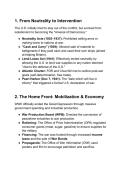
1. From Neutrality to Intervention
The U.S. initially tried to stay out of the conflict, but evolved from
isolationism to becoming the "Arsenal of Democracy."
● Neutrality Acts (1935–1937): Prohibited selling arms or
making loans to nations at war.
● "Cash and Carry" (1939): Allowed sale of materiel to
belligerents if they paid cash and used their own ships (aimed
at helping Britain).
● Lend-Lease Act (1941): Effectively ended neutrality by
allowing the U.S. to lend war supplies to any nation deemed
"vital to the defense of the U.S."
● Atlantic Charter: FDR and Churchill met to outline post-war
goals (self-determination, free trade).
● Pearl Harbor (Dec 7, 1941): The "date which will live in
infamy" that triggered a formal U.S. declaration of war.
2. The Home Front: Mobilization & Economy
WWII officially ended the Great Depression through massive
government spending and industrial production.
● War Production Board (WPB): Directed the conversion of
peacetime industries to war production.
● Rationing: The Office of Price Administration (OPA) regulated
consumer goods (meat, sugar, gasoline) to ensure supplies for
the military.
● Financing: The war was funded through increased income
taxes and the sale of War Bonds.
● Propaganda: The Office of War Information (OWI) used
posters and film to encourage patriotism and sacrifice.
The U.S. initially tried to stay out of the conflict, but evolved from
isolationism to becoming the "Arsenal of Democracy."
● Neutrality Acts (1935–1937): Prohibited selling arms or
making loans to nations at war.
● "Cash and Carry" (1939): Allowed sale of materiel to
belligerents if they paid cash and used their own ships (aimed
at helping Britain).
● Lend-Lease Act (1941): Effectively ended neutrality by
allowing the U.S. to lend war supplies to any nation deemed
"vital to the defense of the U.S."
● Atlantic Charter: FDR and Churchill met to outline post-war
goals (self-determination, free trade).
● Pearl Harbor (Dec 7, 1941): The "date which will live in
infamy" that triggered a formal U.S. declaration of war.
2. The Home Front: Mobilization & Economy
WWII officially ended the Great Depression through massive
government spending and industrial production.
● War Production Board (WPB): Directed the conversion of
peacetime industries to war production.
● Rationing: The Office of Price Administration (OPA) regulated
consumer goods (meat, sugar, gasoline) to ensure supplies for
the military.
● Financing: The war was funded through increased income
taxes and the sale of War Bonds.
● Propaganda: The Office of War Information (OWI) used
posters and film to encourage patriotism and sacrifice.