NURS 2028 Quiz 1 Review
Nursing Lab Skills (George Brown College)
WEEK 1
INTRAVENOUS THERAPY
RATIONAL FOR IV THERAPY
• Replace/correct fluid and electrolyte balance
• Maintain or restore fluid volume (shock/dehydration)
• Route for medication administration
• Transfusion of blood or blood components
• Provision of nutritional support (TPN & Lipids)
• Normal fluid and electrolyte balance is essential for normal bodily function
TYPES OF IV FLUIDS
• A patient’s medical needs will determine which type of IV fluid is ordered
• IV fluids are commonly categorized according to their tonicity
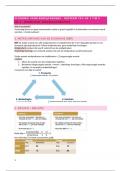
WHAT IS TONICITY?
• Tonicity: a measure of the osmotic pressure gradient between two solutions separated by a semi-
permeable membrane
• The tonicity of an IV solution affects fluid transport across the semipermeable membrane of the cell
• Low concentration of solute in a solution causes fluid to move into the cell where there is higher
concentration of solute
• High concentration of solute in a solution causes fluid to move out of the cell to the extracellular
fluid
• The type of IV solution that a doctor orders is based on the desired fluid shifts
TONICITY
IV FLUID CATEGORIES BASED ON TONICITY
COLLOIDS CRYSTALLOIDS
• Colloid IV solutions contain larger molecules (protein or starch) that cannot diffuse through semi-
permeable membranes of the capillary walls
• Contain solutes of high molecular weight which causes the fluid to remain within the patient’s
vascular system
• Crystalloid IV solutions contain small molecules that easily diffuse through semi-permeable
membranes of the capillary walls
• They are further categorized depending upon their relative tonicity compared to blood plasma.
There are 3 types of crystalloid solutions:
1. Isotonic
2. Hypotonic
3. hypertonic
COLLOID IV SOLUTIONS
EXAMPLES:
• Blood and blood products (5% albumin, FFP)
• Synthetic colloids (Voluven, Pentaspan, Dextran)
WHAT ARE THEY USED FOR?
• Useful for expanding intravascular volume and raising blood pressure
• Indicated for clients who are malnourished and cannot tolerate large infusions of fluids
ADMINISTERING COLLOID SOLUTIONS - NURSING CONSIDERATIONS
• Assess allergy history - although rare, colloid solutions can cause allergic reactions. Inquire about
previous IV fluid reactions
• Use a large bore angiocath (18 gauge) for colloid solutions
• Obtain baseline data prior to administration (vital signs, edema, lung sounds, heart sounds).
Continue monitoring during and after infusion
• Monitor patient’s response: look for signs of hypervolemia, hypertension, dyspnea, crackles in lungs,
and edema
• Monitor coagulation indexes as colloid solutions can interfere with platelet function and increase
bleeding times
, CRYSTALLOID IV SOLUTIONS (further categorized according to their tonicity)
ISOTONIC
Have the same concentration of solutes as blood plasma
HYPOTONIC
Have a lesser concentration of solutes as blood plasma; fluid enters the cell
HYPERTONIC
Have a greater concentration of solutes as blood plasma; fluid is drawn out of the cell
ISOTONIC IV SOLUTIONS:
• have the same concentration of solutes as blood plasma; “normal” osmolarity
• do not cause cells to lose or gain fluid
• are the least irritating to the endothelial lining of the vein wall
• keep the amount of fluid crossing the semi-permeable membrane in and out of the cell in equilibrium
• stays within the vascular system
EXAMPLES:
• 0.9% saline, Lactated Ringer’s, D5W
WHAT ARE THEY USED FOR?
• Used to restore extracellular fluid volume due to dehydration, blood loss, surgery)
HYPOTONIC SOLUTIONS HYPOTONIC IV SOLUTIONS:
• have a lesser concentration of solutes than blood plasma
• shift water extracellularly to intracellularly via osmosis
• cause cell swelling; cell can burst or lyse
• can hydrate cells which reduces fluid in the circulatory system
EXAMPLES:
0.45% NS (1/2 NS); 0.225% NS (1/4 NS); 0.33% NS (1/3 NS)
WHAT ARE THEY USED FOR?
• Usually used to treat cellular dehydration, and to replace cellular fluid (such as in diabetic
ketoacidosis or hyperosmolar hyperglycemia)
USE WITH CAUTION!
• Watch for decreased circulatory volume as extracellular fluid enters cell to re-hydrate it.
• Never give hypotonic solutions to patients at risk for increased intracranial pressure (can cause fluid
to shift to brain tissue)
• Never give hypotonic solutions to patients with extensive burns or trauma (they are already
hypovolemic); can deplete their fluid volume
HYPERTONIC IV SOLUTIONS:
• have a greater concentration of solutes than blood plasma
• cause fluid to shift from the intracellular compartment to the extracellular compartment via osmosis
which will cause the cell to shrink
EXAMPLES:
• 3% Saline, 5% Saline, 10% Dextrose in Water (D10W), 5% Dextrose in 0.9% Saline, 5% Dextrose in
0.45% saline, 5% Dextrose in Lactated Ringer’s
WHAT ARE THEY USED FOR?
• Used very cautiously (usually in the ICU) to decrease edema (cerebral, pulmonary, peripheral)
• Prefer to give hypertonic solutions through larger veins (central venous line) due to their
vesicant effects and risk of infiltration.
ASSESSING YOUR PATIENT WITH AN IV
• Doctor’s order
• Is the correct solution hanging? • Correct rate
• Assess IV site, tubing, and bag every 1-2 hours
• Document intake and output at the start and end of shift (or ordered frequency)
• Document amount already infused from the bag
• Document amount to be absorbed (TBA)
• Identify any issues or complications and intervene as needed
NURSING ASSESSMENT OF FLUID & ELECTROLYTE STATUS
• Daily weights
• Intake & output
• Lab values
Nursing Lab Skills (George Brown College)
WEEK 1
INTRAVENOUS THERAPY
RATIONAL FOR IV THERAPY
• Replace/correct fluid and electrolyte balance
• Maintain or restore fluid volume (shock/dehydration)
• Route for medication administration
• Transfusion of blood or blood components
• Provision of nutritional support (TPN & Lipids)
• Normal fluid and electrolyte balance is essential for normal bodily function
TYPES OF IV FLUIDS
• A patient’s medical needs will determine which type of IV fluid is ordered
• IV fluids are commonly categorized according to their tonicity
WHAT IS TONICITY?
• Tonicity: a measure of the osmotic pressure gradient between two solutions separated by a semi-
permeable membrane
• The tonicity of an IV solution affects fluid transport across the semipermeable membrane of the cell
• Low concentration of solute in a solution causes fluid to move into the cell where there is higher
concentration of solute
• High concentration of solute in a solution causes fluid to move out of the cell to the extracellular
fluid
• The type of IV solution that a doctor orders is based on the desired fluid shifts
TONICITY
IV FLUID CATEGORIES BASED ON TONICITY
COLLOIDS CRYSTALLOIDS
• Colloid IV solutions contain larger molecules (protein or starch) that cannot diffuse through semi-
permeable membranes of the capillary walls
• Contain solutes of high molecular weight which causes the fluid to remain within the patient’s
vascular system
• Crystalloid IV solutions contain small molecules that easily diffuse through semi-permeable
membranes of the capillary walls
• They are further categorized depending upon their relative tonicity compared to blood plasma.
There are 3 types of crystalloid solutions:
1. Isotonic
2. Hypotonic
3. hypertonic
COLLOID IV SOLUTIONS
EXAMPLES:
• Blood and blood products (5% albumin, FFP)
• Synthetic colloids (Voluven, Pentaspan, Dextran)
WHAT ARE THEY USED FOR?
• Useful for expanding intravascular volume and raising blood pressure
• Indicated for clients who are malnourished and cannot tolerate large infusions of fluids
ADMINISTERING COLLOID SOLUTIONS - NURSING CONSIDERATIONS
• Assess allergy history - although rare, colloid solutions can cause allergic reactions. Inquire about
previous IV fluid reactions
• Use a large bore angiocath (18 gauge) for colloid solutions
• Obtain baseline data prior to administration (vital signs, edema, lung sounds, heart sounds).
Continue monitoring during and after infusion
• Monitor patient’s response: look for signs of hypervolemia, hypertension, dyspnea, crackles in lungs,
and edema
• Monitor coagulation indexes as colloid solutions can interfere with platelet function and increase
bleeding times
, CRYSTALLOID IV SOLUTIONS (further categorized according to their tonicity)
ISOTONIC
Have the same concentration of solutes as blood plasma
HYPOTONIC
Have a lesser concentration of solutes as blood plasma; fluid enters the cell
HYPERTONIC
Have a greater concentration of solutes as blood plasma; fluid is drawn out of the cell
ISOTONIC IV SOLUTIONS:
• have the same concentration of solutes as blood plasma; “normal” osmolarity
• do not cause cells to lose or gain fluid
• are the least irritating to the endothelial lining of the vein wall
• keep the amount of fluid crossing the semi-permeable membrane in and out of the cell in equilibrium
• stays within the vascular system
EXAMPLES:
• 0.9% saline, Lactated Ringer’s, D5W
WHAT ARE THEY USED FOR?
• Used to restore extracellular fluid volume due to dehydration, blood loss, surgery)
HYPOTONIC SOLUTIONS HYPOTONIC IV SOLUTIONS:
• have a lesser concentration of solutes than blood plasma
• shift water extracellularly to intracellularly via osmosis
• cause cell swelling; cell can burst or lyse
• can hydrate cells which reduces fluid in the circulatory system
EXAMPLES:
0.45% NS (1/2 NS); 0.225% NS (1/4 NS); 0.33% NS (1/3 NS)
WHAT ARE THEY USED FOR?
• Usually used to treat cellular dehydration, and to replace cellular fluid (such as in diabetic
ketoacidosis or hyperosmolar hyperglycemia)
USE WITH CAUTION!
• Watch for decreased circulatory volume as extracellular fluid enters cell to re-hydrate it.
• Never give hypotonic solutions to patients at risk for increased intracranial pressure (can cause fluid
to shift to brain tissue)
• Never give hypotonic solutions to patients with extensive burns or trauma (they are already
hypovolemic); can deplete their fluid volume
HYPERTONIC IV SOLUTIONS:
• have a greater concentration of solutes than blood plasma
• cause fluid to shift from the intracellular compartment to the extracellular compartment via osmosis
which will cause the cell to shrink
EXAMPLES:
• 3% Saline, 5% Saline, 10% Dextrose in Water (D10W), 5% Dextrose in 0.9% Saline, 5% Dextrose in
0.45% saline, 5% Dextrose in Lactated Ringer’s
WHAT ARE THEY USED FOR?
• Used very cautiously (usually in the ICU) to decrease edema (cerebral, pulmonary, peripheral)
• Prefer to give hypertonic solutions through larger veins (central venous line) due to their
vesicant effects and risk of infiltration.
ASSESSING YOUR PATIENT WITH AN IV
• Doctor’s order
• Is the correct solution hanging? • Correct rate
• Assess IV site, tubing, and bag every 1-2 hours
• Document intake and output at the start and end of shift (or ordered frequency)
• Document amount already infused from the bag
• Document amount to be absorbed (TBA)
• Identify any issues or complications and intervene as needed
NURSING ASSESSMENT OF FLUID & ELECTROLYTE STATUS
• Daily weights
• Intake & output
• Lab values