

FISDAP Trauma
Las últimas cargas en FISDAP Trauma. ¿Buscando notas en FISDAP Trauma? Tenemos muchas notas, guias de estudio y notas de estudio disponsible para tu escuela.
-
273
- 0
-
35
All courses for FISDAP Trauma
-
FISDAP Trauma 273
-
FISDAP trauma !!!! 2
-
FISDAP TRAUMA, 1
-
Fisdap-Trauma 1
Último contenido FISDAP Trauma
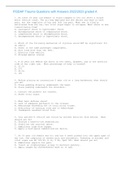
FISDAP Trauma Questions with Answers 2022/2023 graded A
- Examen
- • 26 páginas's •
-
FISDAP Trauma•FISDAP Trauma
Vista previa 3 fuera de 26 páginas
Preparando tu documento...
FISDAP Trauma Questions with Answers 2022/2023 graded A
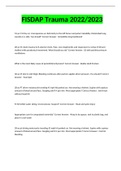
FISDAP Trauma 2022/2023 questions and answers all correct
- Package deal
- Examen
- • 8 páginas's •
-
FISDAP Trauma•FISDAP Trauma
-
FISDAP Trauma, Medical, Airway, Cardiology, OBGYN, Operations Exam Practice Questions with Answers 2021/2022 | FINAL PARAMEDIC FISDAP COMPLETE STUDY GUIDE• PorClassroom
Vista previa 2 fuera de 8 páginas
Preparando tu documento...
FISDAP Trauma 2022/2023 questions and answers all correct
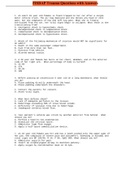
1. An alert 18 year old female is found trapped in her car after a single motor vehicle crash. The air bag deployed and she denies any head or neck pain, but she complains of hip and left leg pain. When she is finally extricated from the car, her vital signs begin to collapse. What shock is she transitioning from? A. neurogenic shock to hypovolemic shock. B. decompensated shock to compensated shock. C. compensated shock to decompensated shock. D. decompensated shock to hypovolemic shock....
- Package deal
- Examen
- • 26 páginas's •
-
FISDAP Trauma•FISDAP Trauma
-
BUNDLE:: FISDAP EXAMS COMPILED• PorLeCrae
Vista previa 3 fuera de 26 páginas
Preparando tu documento...
1. An alert 18 year old female is found trapped in her car after a single motor vehicle crash. The air bag deployed and she denies any head or neck pain, but she complains of hip and left leg pain. When she is finally extricated from the car, her vital signs begin to collapse. What shock is she transitioning from? A. neurogenic shock to hypovolemic shock. B. decompensated shock to compensated shock. C. compensated shock to decompensated shock. D. decompensated shock to hypovolemic shock....
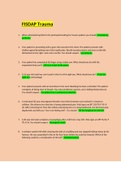
FISDAP Trauma 1. When administering fluid in the prehospital setting for trauma patient you should - Maintaining perfusion 2. Your patient is presenting with a guns shot wound to the chest. The patient presents with shallow agonal breathing and a faint rapid pulse. Breath sounds present and clear on the left, diminished on the right. neck veins are flat. You should suspect - Hemothorax 3. Your patient has amputated his finger using a table saw. What should you do with the amputated body...
- Examen
- • 3 páginas's •
-
FISDAP Trauma•FISDAP Trauma
Vista previa 1 fuera de 3 páginas
Preparando tu documento...
FISDAP Trauma 1. When administering fluid in the prehospital setting for trauma patient you should - Maintaining perfusion 2. Your patient is presenting with a guns shot wound to the chest. The patient presents with shallow agonal breathing and a faint rapid pulse. Breath sounds present and clear on the left, diminished on the right. neck veins are flat. You should suspect - Hemothorax 3. Your patient has amputated his finger using a table saw. What should you do with the amputated body...
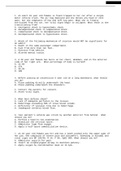
FISDAP Trauma Questions with Answers1. An alert 18 year old female is found trapped in her car after a single motor vehicle crash. The air bag deployed and she denies any head or neck pain, but she complains of hip and left leg pain. When she is finally extricated from the car, her vital signs begin to collapse. What shock is she transitioning from? A. neurogenic shock to hypovolemic shock. B. decompensated shock to compensated shock. C. compensated shock to decompensated shock. D. decom...
- Examen
- • 26 páginas's •
-
FISDAP Trauma•FISDAP Trauma
Vista previa 3 fuera de 26 páginas
Preparando tu documento...
FISDAP Trauma Questions with Answers1. An alert 18 year old female is found trapped in her car after a single motor vehicle crash. The air bag deployed and she denies any head or neck pain, but she complains of hip and left leg pain. When she is finally extricated from the car, her vital signs begin to collapse. What shock is she transitioning from? A. neurogenic shock to hypovolemic shock. B. decompensated shock to compensated shock. C. compensated shock to decompensated shock. D. decom...