

BIOD 151
Las últimas cargas en BIOD 151. ¿Buscando notas en BIOD 151? Tenemos muchas notas, guias de estudio y notas de estudio disponsible para tu escuela.
-
2194
- 0
-
196
All courses for BIOD 151
-
BioD 151 2
-
BIOD 151 2193
-
BIOD 151, 1
-
BIOD 151: 4
-
BIOD 151( 3
-
Biod 151/ 1
-
Biod 151 1
-
Biod-151 2
Último contenido BIOD 151
BIOD 151 Module 4 Exam Questions and Correct Answers, 2024. Complete Solution. long, short, flat, irregular, sesamoid What are the basic bone types? Lumbar What type of vertebrae is this? Thoracic What type of vertebrae is this? Cervical What type of vertebrae is this? flat thin, protection, skull flat bones shape, function and examples long thin, support body weight and enable movement, humerus tibia fibula metatarsals long bone shape, functions and examples small cube shaped, mo...
- Examen
- • 3 páginas's •
-
BIOD 151•BIOD 151
Vista previa 1 fuera de 3 páginas
Preparando tu documento...
BIOD 151 Module 4 Exam Questions and Correct Answers, 2024. Complete Solution. long, short, flat, irregular, sesamoid What are the basic bone types? Lumbar What type of vertebrae is this? Thoracic What type of vertebrae is this? Cervical What type of vertebrae is this? flat thin, protection, skull flat bones shape, function and examples long thin, support body weight and enable movement, humerus tibia fibula metatarsals long bone shape, functions and examples small cube shaped, mo...
BIOD 151 Module 3 exam Questions and Correct Answers, 100% Correct. Explain why someone who has hypergastrinemia (excessive secretion of gastrin) might develop gastric/stomach ulcers. Gastrin stimulates the secretions of pepsinogens and hydrochloric acid. Excess amounts would lead to erosion of the stomach lining. Explain in detail how the stomach contents enter the small intestine The pyloric sphincter (valve), located at the base of the stomach, relaxes causing a small quantity of chym...
- Examen
- • 4 páginas's •
-
BIOD 151•BIOD 151
Vista previa 1 fuera de 4 páginas
Preparando tu documento...
BIOD 151 Module 3 exam Questions and Correct Answers, 100% Correct. Explain why someone who has hypergastrinemia (excessive secretion of gastrin) might develop gastric/stomach ulcers. Gastrin stimulates the secretions of pepsinogens and hydrochloric acid. Excess amounts would lead to erosion of the stomach lining. Explain in detail how the stomach contents enter the small intestine The pyloric sphincter (valve), located at the base of the stomach, relaxes causing a small quantity of chym...
BIOD 151 Module 2 Questions And Correct Answers With Complete Solution 2024. 118 Questions and Answers. True or false. The lungs are symmetrical. False Hilum the "root" of the lung healthy lung tissue is what color peachy/pink color pleurae membranes that surround the lungs and the cavity around the lungs visceral pleura layer of pleura that faces/covers the lung parietal pleura outer layer of pleura lying closer to the ribs and chest wall that covers the surface around the lung...
- Examen
- • 8 páginas's •
-
BIOD 151•BIOD 151
Vista previa 2 fuera de 8 páginas
Preparando tu documento...
BIOD 151 Module 2 Questions And Correct Answers With Complete Solution 2024. 118 Questions and Answers. True or false. The lungs are symmetrical. False Hilum the "root" of the lung healthy lung tissue is what color peachy/pink color pleurae membranes that surround the lungs and the cavity around the lungs visceral pleura layer of pleura that faces/covers the lung parietal pleura outer layer of pleura lying closer to the ribs and chest wall that covers the surface around the lung...
BIOD 151 Module 1 Exam Questions And Answers, Complete Solution. Chemical, cellular, tissue, organ structure, organ system, organism What are the six levels of organization in the human body? Integumentary Necessary life function that protects our internal environment from our external environment is provided by what system? Muscular system Function of movement is provided by what system? Nervous system The function of responsiveness is provided by what system Digestive system The fu...
- Examen
- • 5 páginas's •
-
BIOD 151•BIOD 151
Vista previa 2 fuera de 5 páginas
Preparando tu documento...
BIOD 151 Module 1 Exam Questions And Answers, Complete Solution. Chemical, cellular, tissue, organ structure, organ system, organism What are the six levels of organization in the human body? Integumentary Necessary life function that protects our internal environment from our external environment is provided by what system? Muscular system Function of movement is provided by what system? Nervous system The function of responsiveness is provided by what system Digestive system The fu...
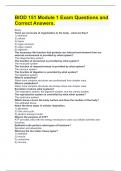
BIOD 151 Module 1 Exam Questions and Correct Answers. Study There are six levels of organization in the body - what are they? 1) chemical 2) cellular 3) tissue 4) organ structure 5) organ system 6) organism The necessary life function that protects our internal environment from our external environment is provided by what system? The integumentary system The function of movement is provided by what system? The muscular system The function of responsiveness is provided by what syst...
- Examen
- • 5 páginas's •
-
BIOD 151•BIOD 151
Vista previa 2 fuera de 5 páginas
Preparando tu documento...
BIOD 151 Module 1 Exam Questions and Correct Answers. Study There are six levels of organization in the body - what are they? 1) chemical 2) cellular 3) tissue 4) organ structure 5) organ system 6) organism The necessary life function that protects our internal environment from our external environment is provided by what system? The integumentary system The function of movement is provided by what system? The muscular system The function of responsiveness is provided by what syst...
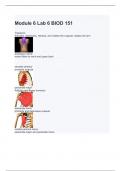
Module 6 Lab 6 BIOD 151 Trapezius Elevates, depresses, retracts, and rotates the scapula; rotates the arm accessory nerve motor fibers to neck and upper back Brainpower Read More serrates anterior protracts scapula pectoralis major Adducts and flexes humerus pectoralis minor protracts and depresses scapula
- Package deal
- Examen
- • 4 páginas's •
-
BIOD 151•BIOD 151
-
PACKAGE DEAL FOR BIOD 151 FULL COURSE EXAM MATERIALS ( MODULE 1-7 EXAMS, LAB EXAMS, SUMMSRIES AND STUDY GUIDES) ALL WITH COMPLETE VERIFIED SOLUTIONS, UPDATED 2024.• PorACADEMICAIDSTORE
Vista previa 1 fuera de 4 páginas
Preparando tu documento...
Module 6 Lab 6 BIOD 151 Trapezius Elevates, depresses, retracts, and rotates the scapula; rotates the arm accessory nerve motor fibers to neck and upper back Brainpower Read More serrates anterior protracts scapula pectoralis major Adducts and flexes humerus pectoralis minor protracts and depresses scapula
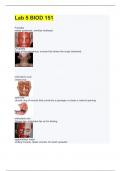
Lab 5 BIOD 151 Frontalis raises eyebrows, wrinkles forehead Occiptalis Back of the epicranius; muscle that draws the scalp backward. Brainpower Read More orbicularis oculi closes eye sphincter circular ring of muscle that constricts a passage or closes a natural opening orbicularis oris
- Package deal
- Examen
- • 4 páginas's •
-
BIOD 151•BIOD 151
-
PACKAGE DEAL FOR BIOD 151 FULL COURSE EXAM MATERIALS ( MODULE 1-7 EXAMS, LAB EXAMS, SUMMSRIES AND STUDY GUIDES) ALL WITH COMPLETE VERIFIED SOLUTIONS, UPDATED 2024.• PorACADEMICAIDSTORE
Vista previa 1 fuera de 4 páginas
Preparando tu documento...
Lab 5 BIOD 151 Frontalis raises eyebrows, wrinkles forehead Occiptalis Back of the epicranius; muscle that draws the scalp backward. Brainpower Read More orbicularis oculi closes eye sphincter circular ring of muscle that constricts a passage or closes a natural opening orbicularis oris
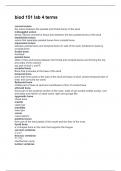
biod 151 lab 4 terms coronal suture the suture between the parietal and frontal bones of the skull midsaggital suture dense, fibrous connective tissue joint between the two parietal bones of the skull lambdoidal suture suture that separates parietal bones from occipital bone squamosal suture between parietal bone and temporal bone on side of the skull, bordered in back by occipital bone frontal bone forehead parietal bone either of two skull bones between the frontal and occipital ...
- Package deal
- Examen
- • 2 páginas's •
-
biod 151•biod 151
-
PACKAGE DEAL FOR BIOD 151 FULL COURSE EXAM MATERIALS ( MODULE 1-7 EXAMS, LAB EXAMS, SUMMSRIES AND STUDY GUIDES) ALL WITH COMPLETE VERIFIED SOLUTIONS, UPDATED 2024.• PorACADEMICAIDSTORE
Vista previa 1 fuera de 2 páginas
Preparando tu documento...
biod 151 lab 4 terms coronal suture the suture between the parietal and frontal bones of the skull midsaggital suture dense, fibrous connective tissue joint between the two parietal bones of the skull lambdoidal suture suture that separates parietal bones from occipital bone squamosal suture between parietal bone and temporal bone on side of the skull, bordered in back by occipital bone frontal bone forehead parietal bone either of two skull bones between the frontal and occipital ...
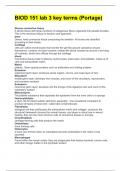
BIOD 151 lab 3 key terms (Portage) fibrous connective tissue A dense tissue with large numbers of collagenous fibers organized into parallel bundles. This is the dominant tissue in tendons and ligaments. bone Dense, hard connective tissue composing the skeleton. All bones are classified according to their shape. Cartilage cells are called chondrocytes that secrete the gel-like ground substance around themselves. contains no blood vessels; instead the blood vessels lay around it and drop ...
- Package deal
- Examen
- • 3 páginas's •
-
BIOD 151•BIOD 151
-
PACKAGE DEAL FOR BIOD 151 FULL COURSE EXAM MATERIALS ( MODULE 1-7 EXAMS, LAB EXAMS, SUMMSRIES AND STUDY GUIDES) ALL WITH COMPLETE VERIFIED SOLUTIONS, UPDATED 2024.• PorACADEMICAIDSTORE
Vista previa 1 fuera de 3 páginas
Preparando tu documento...
BIOD 151 lab 3 key terms (Portage) fibrous connective tissue A dense tissue with large numbers of collagenous fibers organized into parallel bundles. This is the dominant tissue in tendons and ligaments. bone Dense, hard connective tissue composing the skeleton. All bones are classified according to their shape. Cartilage cells are called chondrocytes that secrete the gel-like ground substance around themselves. contains no blood vessels; instead the blood vessels lay around it and drop ...
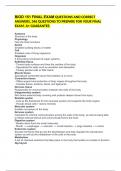
BIOD 151 FINAL EXAM QUESTIONS AND CORRECT ANSWERS, 346 QUESTIONS TO PREPARE FOR YOUR FINAL EXAM. A+ GUARANTEE. Anatomy Structure of the body Physiology How the body functions Atoms Smallest building blocks of matter Cell Smallest units of living organisms Organism A living thing composed of organ systems Epithelial tissue - Covers body surfaces and lines the cavities of the body - Specialized for tasks such as secretion and absorption - Closely packed cells w/ little matrix Musc...
- Package deal
- Examen
- • 25 páginas's •
-
BIOD 151•BIOD 151
-
PACKAGE DEAL FOR BIOD 151 FULL COURSE EXAM MATERIALS ( MODULE 1-7 EXAMS, LAB EXAMS, SUMMSRIES AND STUDY GUIDES) ALL WITH COMPLETE VERIFIED SOLUTIONS, UPDATED 2024.• PorACADEMICAIDSTORE
Vista previa 3 fuera de 25 páginas
Preparando tu documento...
BIOD 151 FINAL EXAM QUESTIONS AND CORRECT ANSWERS, 346 QUESTIONS TO PREPARE FOR YOUR FINAL EXAM. A+ GUARANTEE. Anatomy Structure of the body Physiology How the body functions Atoms Smallest building blocks of matter Cell Smallest units of living organisms Organism A living thing composed of organ systems Epithelial tissue - Covers body surfaces and lines the cavities of the body - Specialized for tasks such as secretion and absorption - Closely packed cells w/ little matrix Musc...