

TFE 800.21
Texas Tech University
Hier vind je de beste samenvattingen om te slagen voor TFE 800.21. Er zijn o.a. samenvattingen, aantekeningen en oefenvragen beschikbaar.
Overig
TFE 800.21 INTERACTIVE FIELD EXPERIENCES IN LEARNER DEVELOPMENT: PART 1|ACCURATE AND VERIFIED | 2026 UPDATE
TFE 800.21 INTERACTIVE FIELD EXPERIENCES IN LEARNER DEVELOPMENT: PART 1|ACCURATE AND VERIFIED | 2026 UPDATE
 GEEKA
GEEKA
Tentamen (uitwerkingen)
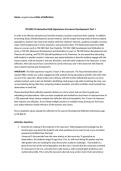
TFE 800.21 Interactive Field Experiences in Learner Development: Part 1_ Answered Latest 2025/26.
PopulairTFE 800.21 Interactive Field Experiences in Learner Development: Part 1 In order to be effective educators and sensitive mentors, teachers must know their students. In addition to knowing about child development, learner theories, and the unique learning needs of diverse student populations, teachers also need to be familiar with their students’ interests, academic strengths, learning styles, family backgrounds or home situations, and assessment data. This field-based experience (FBE) dra...
 MindCraft
Tentamen (uitwerkingen)
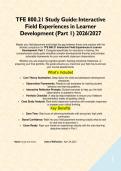
TFE 800.21 Study Guide: Interactive Field Experiences in Learner Development (Part 1) 2026/2027
Master your field placement and bridge the gap between theory and practice with the ultimate companion for TFE 800.21 Interactive Field Experiences in Learner Development: Part 1. Designed specifically for educators in training, this comprehensive study guide simplifies complex developmental theories and provides actionable frameworks for your real-world classroom observations. Whether you are analyzing cognitive growth, tracking emotional milestones, or preparing your final portfolio, this gui...
 Studyacesmart
Tentamen (uitwerkingen)
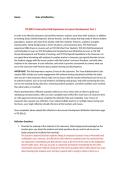
TFE 800.21 Interactive Field Experiences in Learner Development: Part 1 - Completed
This interactive field experience guide covers the foundational components of TFE 800.21, focusing on developing teacher candidates' ability to understand and respond to the diverse developmental needs of K–12 learners. The course emphasizes that effective educators and sensitive mentors must know their students beyond surface-level data, including their interests, academic strengths, learning styles, family backgrounds, home situations, and assessment data.
 grade_bender