

Vrije Universiteit Amsterdam (VU) • Artificial Intelligence
Meest recente samenvattingen voor de opleiding Artificial Intelligence op de Vrije Universiteit Amsterdam (VU). Op zoek naar een samenvatting voor Artificial Intelligence? Wij hebben diverse samenvattingen voor de opleiding Artificial Intelligence op de Vrije Universiteit Amsterdam (VU).
-
175
-
9
-
29
Vakken Artificial Intelligence op de Vrije Universiteit Amsterdam (VU)
Er zijn samenvattingen beschikbaar voor de volgende vakken van Artificial Intelligence op Vrije Universiteit Amsterdam (VU)
- Information Management X_401085 1
- Information Retrieval X_400435 3
- INFORMATION SYSTEMS IN E-BUSINESS AND ONLINE COMMERCE E_IBA3_ISEOC 2
- Intelligent Systems XB_0031 8
- Introduction Psychology And Its Methods XB_0069 12
- Introduction To Programming XB_0082 1
- Introduction to Psychology & its Methods P_BIPM_AI 3
- Introduction to Psychology and its Methods P_BIPM_AI 1
Populaire samengevatte boeken Vrije Universiteit Amsterdam (VU) • Artificial Intelligence
Michael S. Gazzaniga • ISBN 9780393644548
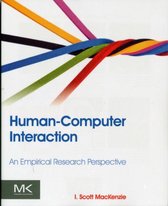
I. Scott MacKenzie • ISBN 9780124058651
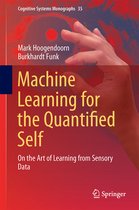
Mark Hoogendoorn, Burkhardt Funk • ISBN 9783319663074
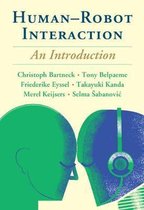
Christoph Bartneck, Tony Belpaeme • ISBN 9781108735407
Laatste content Vrije Universiteit Amsterdam (VU) • Artificial Intelligence
In-depth summary of the slides + additional information of the course Cognitive Psychology and Its methods
This is a summary of all lectures used in the course Evolutionary Computing given to students following a master in Artificial Intelligence or Business Analytics. This summary closely follows the book 'Introduction to Evolutionary Computing' written by A.E. Eiben (lecturer of the course) and J.E. Smith. The summary contains chapters 1 to 10, 12, 13 and 17 from the book as well as an additional chapter on neuro evolution ('chapter 18'). Moreover, there's a clear structure and corre...
Lecture and book notes on Topic 5: learning and Topic 6: memory and questions related to the exam
Lecture notes on Topic 3: Consciousness and Topic 4: Sensation and perception and notes from the book with related exam questions
Topic 1: Genes and evolution and Topic 2: The brain and the nervous system, with lecture notes and book notes and questions related to the exam
In this document, all lectures are summarized. I used this to study for the exam and make my cheatsheet and I passed the exam with a 9, I hope you will do the same :) Note: using this document, you can easily make your cheatsheet. Make your cheatsheet and use this document to study. Good luck!
Summary based on lectures. I got an 8.5 for the exam. This course covers the general principles and methods that form the foundation of information organization and knowledge-intensive processes, as well as the contexts in which they can be applied and the interaction with users. The lecture topics include knowledge modeling, ontologies, logic, controlled natural language, Semantic Web and Linked Data, as well as knowledge maintenance and evaluation, in addition to guest lectures on speci...
Based on lectures. I got a 9 for the exam! Deep learning becomes the leading learning and modeling paradigm in machine learning. During this course, we will present basic components of deep learning, such as: - different layers (e.g., linear layers, convolutional layers, pooling layers, recurrent layers); - non-linear activation functions (e.g., sigmoid, ReLU); - backpropagation; - learning algorithms (e.g., ADAM); - other (e.g., dropout). Further, we will show how to build deep ar...
Based on lecture content. In Multi-agent systems (MAS) one studies collections of interacting, strategic and intelligent agents. These agents typically can sense both other agents and their environment, reason about what they perceive, and plan and carry out actions to achieve specific goals. In this course we introduce a number of fundamental scientific and engineering concepts that underpin the theoretical study of such multi-agent systems. In particular, we will cover the following top...
Summary based on both lectures and book. Including some exam questions. I got an 8.5 for the exam. This course is about constructing, applying and studying algorithms based on the Darwinian evolution theory. Driven by selection (survival of the fittest, mating of the fittest) and randomised reproduction (mutation, recombination), an evolutionary process is being emulated and solutions for a given problem are being "bred". During this course, various flavours within evolutionary computing are ...