CHILD PSYCHOPATHOLOGY
3RD EDITION
• AUTHOR(S)ERIC J MASH,
RUSSELL A BARKLEY
TEST BANK
1
Reference
Ch. 1 — Child Psychopathology: A Developmental–Systems
Perspective
Stem
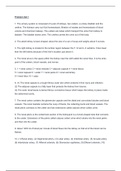
A 7-year-old girl, Sara, was referred for worries at school:
repeated separation protests, clinginess at home, and somatic
complaints on school mornings for the past 6 months. Her
parents immigrated 2 years ago; teachers report she functions
,well in class but becomes tearful at transition times. Using a
developmental-systems framework, which formulation best
integrates causes and guides next assessment steps?
Options
A. Treat as a specific phobia (school avoidance) and prioritize
exposure-based interventions.
B. Conceptualize as separation anxiety disorder triggered by
contextual stressors; assess family migration stress and school
supports.
C. Label as normative culture-related adjustment and provide
reassurance—no further assessment needed.
D. Conceptualize as generalized anxiety disorder and
recommend immediate SSRI medication.
Correct answer
B
Rationale — Correct (3–4 sentences)
A developmental-systems perspective emphasizes interactional
causes (biological, family, school, cultural). Sara’s symptom
pattern (separation protests, somatic school refusal, clear
contextual stressor—recent immigration) fits separation anxiety
disorder precipitated/exacerbated by migration stress;
therefore assessment should examine family stress, attachment
history, and school supports. This formulation guides
psychosocial interventions and targeted assessment rather than
immediate pharmacotherapy.
,Rationale — Incorrect
A. Specific phobia (school) focuses on discrete fear/object and
avoidance; Sara’s cross-context symptoms and attachment
features point to separation anxiety.
C. Treating as normative misses impairment and 6-month
duration; warrants assessment.
D. GAD is less specific for separation-related presentations;
immediate SSRI without psychosocial assessment is premature.
Teaching point (≤20 words)
Developmental-systems formulation links symptom pattern to
contextual stressors, guiding targeted assessment and
psychosocial intervention.
Citation
Mash, E. J., & Barkley, R. A. (2023). Child psychopathology (3rd
ed.). Chapter 1.
2
Reference
Ch. 1 — Child Psychopathology: A Developmental–Systems
Perspective
Stem
A 15-year-old male, Marcus, with longstanding oppositional
behavior in childhood now presents with emerging substance
use and academic decline. Which developmental-systems
, feature most strongly predicts risk for persistent antisocial
outcomes and informs prevention focus?
Options
A. Early callous–unemotional traits combined with chronic
family coercion.
B. Late adolescent peer substance experimentation without
conduct history.
C. High intelligence with school disengagement.
D. Isolated school performance problems emerging in
adolescence.
Correct answer
A
Rationale — Correct (3–4 sentences)
Developmental-systems models emphasize interactions
between child vulnerabilities and environmental processes.
Early callous–unemotional traits plus chronic coercive family
processes predict a stable, severe antisocial trajectory and
substance risk. This combination identifies a high-risk pathway
where family-based prevention and interventions targeting
affective empathy and parenting practices are indicated.
Rationale — Incorrect
B. Peer experimentation in isolation has lower predictive power
than early conduct/CU traits.
C. High intelligence alone does not predict persistent antisocial
outcomes; context matters.
3RD EDITION
• AUTHOR(S)ERIC J MASH,
RUSSELL A BARKLEY
TEST BANK
1
Reference
Ch. 1 — Child Psychopathology: A Developmental–Systems
Perspective
Stem
A 7-year-old girl, Sara, was referred for worries at school:
repeated separation protests, clinginess at home, and somatic
complaints on school mornings for the past 6 months. Her
parents immigrated 2 years ago; teachers report she functions
,well in class but becomes tearful at transition times. Using a
developmental-systems framework, which formulation best
integrates causes and guides next assessment steps?
Options
A. Treat as a specific phobia (school avoidance) and prioritize
exposure-based interventions.
B. Conceptualize as separation anxiety disorder triggered by
contextual stressors; assess family migration stress and school
supports.
C. Label as normative culture-related adjustment and provide
reassurance—no further assessment needed.
D. Conceptualize as generalized anxiety disorder and
recommend immediate SSRI medication.
Correct answer
B
Rationale — Correct (3–4 sentences)
A developmental-systems perspective emphasizes interactional
causes (biological, family, school, cultural). Sara’s symptom
pattern (separation protests, somatic school refusal, clear
contextual stressor—recent immigration) fits separation anxiety
disorder precipitated/exacerbated by migration stress;
therefore assessment should examine family stress, attachment
history, and school supports. This formulation guides
psychosocial interventions and targeted assessment rather than
immediate pharmacotherapy.
,Rationale — Incorrect
A. Specific phobia (school) focuses on discrete fear/object and
avoidance; Sara’s cross-context symptoms and attachment
features point to separation anxiety.
C. Treating as normative misses impairment and 6-month
duration; warrants assessment.
D. GAD is less specific for separation-related presentations;
immediate SSRI without psychosocial assessment is premature.
Teaching point (≤20 words)
Developmental-systems formulation links symptom pattern to
contextual stressors, guiding targeted assessment and
psychosocial intervention.
Citation
Mash, E. J., & Barkley, R. A. (2023). Child psychopathology (3rd
ed.). Chapter 1.
2
Reference
Ch. 1 — Child Psychopathology: A Developmental–Systems
Perspective
Stem
A 15-year-old male, Marcus, with longstanding oppositional
behavior in childhood now presents with emerging substance
use and academic decline. Which developmental-systems
, feature most strongly predicts risk for persistent antisocial
outcomes and informs prevention focus?
Options
A. Early callous–unemotional traits combined with chronic
family coercion.
B. Late adolescent peer substance experimentation without
conduct history.
C. High intelligence with school disengagement.
D. Isolated school performance problems emerging in
adolescence.
Correct answer
A
Rationale — Correct (3–4 sentences)
Developmental-systems models emphasize interactions
between child vulnerabilities and environmental processes.
Early callous–unemotional traits plus chronic coercive family
processes predict a stable, severe antisocial trajectory and
substance risk. This combination identifies a high-risk pathway
where family-based prevention and interventions targeting
affective empathy and parenting practices are indicated.
Rationale — Incorrect
B. Peer experimentation in isolation has lower predictive power
than early conduct/CU traits.
C. High intelligence alone does not predict persistent antisocial
outcomes; context matters.