WEEK 3 – Precedent (Neil Duxbury)
Stare decisis
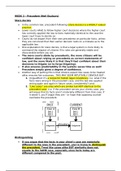
In the common law, precedent-following (stare decisis) is a HIGHLY valued
practice.
Lower courts HAVE to follow higher court decisions where the higher court
has correctly applied the law to facts materially identical to the case the
lower court have to decide on.
Courts do not depart from their own precedents on particular facts, unless
they are convinced that their earlier decision rests on a mistake as to the
applicable law.
One explanation for stare decisis, is that a legal system is more likely to
command the respect of citizens if its rules are generally stable and
discoverable before you act.
The more courts abide by precedents, the more citizens will be
confident about relying on precedents as correct statements of
law, and the more likely it is that they’ll feel confident about their
decisions to litigate (or to forgo litigating).
It also ensures predictability in the system; saves time as well!
Precedent simply gives a degree of confidence.
Another way of putting this is that citizens expect like cases to be treated
alike; ensures fair outcomes. THIS MAY SEEM INTUITIVELY OBVIOUS BUT:
1. Unqualified; it’s a recipe for foolish legal consistency (i.e. what if the
facts were wrong in the precedent case, and the law was applied
wrong again and again in future cases, consistently?) and;
2. “Like cases” are ones which are similar but NOT identical to the
precedent case. (I.e. if the precedent serves your clients case, you
will argue that its facts aren’t materially different from that case. If
it doesn’t, you’ll argue they are – or hope that opposing counsel
overlooks the precedent.
Distinguishing
If you argue that the facts in your client’s case are materially
different to the ones in the precedent, you’re trying to distinguish
the precedent. Treat like cases alike BUT similarity does not
equate to the SAME case, especially since facts today are
different compared to the past.
, In doing so, you are not challenging the precedent as a source of law.
An earlier court provided a reason(s) for a decision (a ratio decidendi) on a
particular set of facts. You’re saying not that the court was wrong to
decide as it did on those facts, but that the facts in your client’s case are
different, and so it would be wrong for the court to apply the precedent to
them.
How does the common law develop?
Promissory estoppel is the doctrine that prevents a party from acting in a
certain way because the first party promised not to, and the second party
relied on that promise and acted upon it. In English law, a promise made
without consideration is generally not enforceable, and is known as a
gratuitous promise.
Let’s say a court accepts your argument, and doesn’t apply the precedent.
What does it do instead?
In a modest sense, it makes law. E.g.:
- Case A (precedent): C relied on D’s promise. D didn’t keep it. C suffered
detriment. Court held: C has a valid estoppel claim against D, and that the
remedy is specific performance (the performance of a contractual duty, as
ordered in cases where damages would not be adequate remedy).
- Case B (today’s case): C relies on D’s promise. D doesn’t keep it. C
suffers detriment. But D didn’t keep his promise because it had become
impossible to perform. Court holds: breach of promise owing to frustration
(impossibility of performing it) necessitates damages remedy rather than
specific performance.
How is case-law, law?
The reasoning necessary to a judicial decision, the ratio decidendi, is the
content that can bind as law. Case-law is law because it yields a ratio
Appellate cases are decided by judicial panels rather than individual
judges. In these cases, judges will often produce their own opinions rather
than produce a unanimous or majority court opinion.
And so judges sometimes find themselves writing minority opinions:
dissents, or separate concurring opinions (agreeing with the majority on
an outcome but for different reasons). These minority opinions aren’t law.
Traditionally, judges offered opinions orally not with text (obiter dicta; an
observation that is not necessary but still worth making, so not entirely
irrelevant).
Persuasive authority
Sometimes they will be observations by eminent judges, or
repeated over the years by various courts, or very carefully
formulated, etc. And so they’re sometimes treated as persuasive
authority.
There are other forms of persuasive authority besides obiter dicta.
Legislative history, third-party (amicus) interventions dissenting judicial
opinions, and concurring opinions produced separate from single majority
judgments all qualify as persuasive authority. So too do law review articles
and textbooks.
Stare decisis
In the common law, precedent-following (stare decisis) is a HIGHLY valued
practice.
Lower courts HAVE to follow higher court decisions where the higher court
has correctly applied the law to facts materially identical to the case the
lower court have to decide on.
Courts do not depart from their own precedents on particular facts, unless
they are convinced that their earlier decision rests on a mistake as to the
applicable law.
One explanation for stare decisis, is that a legal system is more likely to
command the respect of citizens if its rules are generally stable and
discoverable before you act.
The more courts abide by precedents, the more citizens will be
confident about relying on precedents as correct statements of
law, and the more likely it is that they’ll feel confident about their
decisions to litigate (or to forgo litigating).
It also ensures predictability in the system; saves time as well!
Precedent simply gives a degree of confidence.
Another way of putting this is that citizens expect like cases to be treated
alike; ensures fair outcomes. THIS MAY SEEM INTUITIVELY OBVIOUS BUT:
1. Unqualified; it’s a recipe for foolish legal consistency (i.e. what if the
facts were wrong in the precedent case, and the law was applied
wrong again and again in future cases, consistently?) and;
2. “Like cases” are ones which are similar but NOT identical to the
precedent case. (I.e. if the precedent serves your clients case, you
will argue that its facts aren’t materially different from that case. If
it doesn’t, you’ll argue they are – or hope that opposing counsel
overlooks the precedent.
Distinguishing
If you argue that the facts in your client’s case are materially
different to the ones in the precedent, you’re trying to distinguish
the precedent. Treat like cases alike BUT similarity does not
equate to the SAME case, especially since facts today are
different compared to the past.
, In doing so, you are not challenging the precedent as a source of law.
An earlier court provided a reason(s) for a decision (a ratio decidendi) on a
particular set of facts. You’re saying not that the court was wrong to
decide as it did on those facts, but that the facts in your client’s case are
different, and so it would be wrong for the court to apply the precedent to
them.
How does the common law develop?
Promissory estoppel is the doctrine that prevents a party from acting in a
certain way because the first party promised not to, and the second party
relied on that promise and acted upon it. In English law, a promise made
without consideration is generally not enforceable, and is known as a
gratuitous promise.
Let’s say a court accepts your argument, and doesn’t apply the precedent.
What does it do instead?
In a modest sense, it makes law. E.g.:
- Case A (precedent): C relied on D’s promise. D didn’t keep it. C suffered
detriment. Court held: C has a valid estoppel claim against D, and that the
remedy is specific performance (the performance of a contractual duty, as
ordered in cases where damages would not be adequate remedy).
- Case B (today’s case): C relies on D’s promise. D doesn’t keep it. C
suffers detriment. But D didn’t keep his promise because it had become
impossible to perform. Court holds: breach of promise owing to frustration
(impossibility of performing it) necessitates damages remedy rather than
specific performance.
How is case-law, law?
The reasoning necessary to a judicial decision, the ratio decidendi, is the
content that can bind as law. Case-law is law because it yields a ratio
Appellate cases are decided by judicial panels rather than individual
judges. In these cases, judges will often produce their own opinions rather
than produce a unanimous or majority court opinion.
And so judges sometimes find themselves writing minority opinions:
dissents, or separate concurring opinions (agreeing with the majority on
an outcome but for different reasons). These minority opinions aren’t law.
Traditionally, judges offered opinions orally not with text (obiter dicta; an
observation that is not necessary but still worth making, so not entirely
irrelevant).
Persuasive authority
Sometimes they will be observations by eminent judges, or
repeated over the years by various courts, or very carefully
formulated, etc. And so they’re sometimes treated as persuasive
authority.
There are other forms of persuasive authority besides obiter dicta.
Legislative history, third-party (amicus) interventions dissenting judicial
opinions, and concurring opinions produced separate from single majority
judgments all qualify as persuasive authority. So too do law review articles
and textbooks.