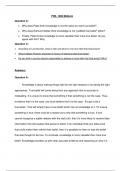
NSG 530 EXAM 1: ADVANCED
PATHOPHYSIOLOGY, (LATEST 2026/ 2027)
WITH CORRECT/ACCURATE ANSWERS
100 Questions (NCLEX-Style)
AT WILKES UNIVERSITY
NSG 530 EXAM 1 ADVANCED
PATHOPHYSIOLOGY
QUESTIONS 1–6
1. Question:
When antibodies are formed against red blood cell antigens of the Rh system, how are the blood cells
destroyed?
a. Complement-mediated cell lysis
b. Phagocytosis by macrophages
c. Phagocytosis in the spleen
d. Neutrophil granules and toxic oxygen products
ANSWER: C
Rationale:
Antibodies bind sparsely to RBCs in Rh reactions, causing splenic macrophages to remove the cells.
Complement does not lyse these cells, and neutrophils do not mediate this process.
2. Question:
When soluble antigens from infectious agents enter circulation, what is tissue damage a result of?
a. Complement-mediated cell lysis
b. Phagocytosis by macrophages
c. Phagocytosis in the spleen
d. Neutrophil granules and toxic oxygen products
ANSWER: D
Rationale:
Neutrophils release toxic oxygen species and granule enzymes that damage tissue when responding to
circulating antigens.
,3. Question:
How are target cells destroyed in a type II hypersensitivity reaction?
a. Complement-mediated cell lysis
b. Phagocytosis by macrophages
c. Neutrophil granules and toxic oxygen products
d. Natural killer cells
ANSWER: D
Rationale:
In Type II antibody-dependent cell-mediated cytotoxicity, NK cells bind Fc regions of antibodies on target
cells and release toxic enzymes.
4. Question:
Graves’ disease (hyperthyroidism) is an example of which type II hypersensitivity reaction?
a. Modulation
b. Antibody-dependent cell-mediated cytotoxicity
c. Neutrophil-mediated damage
d. Complement-mediated lysis
ANSWER: A
Rationale:
Graves’ disease involves antibodies stimulating the TSH receptor, altering (modulating) receptor function.
5. Question:
Type III hypersensitivity reactions are a result of which mechanism?
a. Antibodies coating mast cells
b. Antibodies binding soluble antigens forming immune complexes that deposit in tissues
c. Tc cells destroying targets
d. Antibodies binding antigens on the cell surface
ANSWER: B
Rationale:
Type III reactions involve immune complexes circulating and lodging in tissues, causing inflammation.
6. Question:
A type IV hypersensitivity reaction causes which result?
a. Antibodies coating mast cells
b. Immune complexes deposited in tissues
c. Th1 lymphokine-producing cells destroying cellular targets
d. Antibodies binding the antigen on cell surfaces
ANSWER: C
Rationale:
Type IV reactions are T-cell mediated (not antibody-mediated) and involve direct destruction by Th1 or Tc
cells.
, QUESTIONS 7–30 (Multiple Choice + Answers +
Rationales)
7. Which cytokine is the primary mediator of fever during inflammation?
a. IL-4
b. IL-1
c. TNF-β
d. Interferon-γ
ANSWER: B
Rationale: IL-1 acts on the hypothalamus to raise the set point, producing fever. TNF and IL-6 contribute
but IL-1 is the primary mediator.
8. Which process describes the movement of leukocytes through the endothelial wall during
inflammation?
a. Chemotaxis
b. Diapedesis
c. Margination
d. Opsonization
ANSWER: B
Rationale: Diapedesis is the squeezing of WBCs between endothelial cells. Margination is movement along
vessel walls; chemotaxis is migration toward signals.
9. Which electrolyte imbalance is most likely in a patient with chronic renal failure?
a. Hypokalemia
b. Hyperkalemia
c. Hypocalcemia
d. Hypernatremia
ANSWER: B
Rationale: Renal failure reduces potassium excretion, causing life-threatening hyperkalemia.
10. What is the primary mechanism of cellular swelling during hypoxic injury?
a. Increased ATP production
b. Failure of Na+/K+ ATPase pump
c. Activation of lysosomes
PATHOPHYSIOLOGY, (LATEST 2026/ 2027)
WITH CORRECT/ACCURATE ANSWERS
100 Questions (NCLEX-Style)
AT WILKES UNIVERSITY
NSG 530 EXAM 1 ADVANCED
PATHOPHYSIOLOGY
QUESTIONS 1–6
1. Question:
When antibodies are formed against red blood cell antigens of the Rh system, how are the blood cells
destroyed?
a. Complement-mediated cell lysis
b. Phagocytosis by macrophages
c. Phagocytosis in the spleen
d. Neutrophil granules and toxic oxygen products
ANSWER: C
Rationale:
Antibodies bind sparsely to RBCs in Rh reactions, causing splenic macrophages to remove the cells.
Complement does not lyse these cells, and neutrophils do not mediate this process.
2. Question:
When soluble antigens from infectious agents enter circulation, what is tissue damage a result of?
a. Complement-mediated cell lysis
b. Phagocytosis by macrophages
c. Phagocytosis in the spleen
d. Neutrophil granules and toxic oxygen products
ANSWER: D
Rationale:
Neutrophils release toxic oxygen species and granule enzymes that damage tissue when responding to
circulating antigens.
,3. Question:
How are target cells destroyed in a type II hypersensitivity reaction?
a. Complement-mediated cell lysis
b. Phagocytosis by macrophages
c. Neutrophil granules and toxic oxygen products
d. Natural killer cells
ANSWER: D
Rationale:
In Type II antibody-dependent cell-mediated cytotoxicity, NK cells bind Fc regions of antibodies on target
cells and release toxic enzymes.
4. Question:
Graves’ disease (hyperthyroidism) is an example of which type II hypersensitivity reaction?
a. Modulation
b. Antibody-dependent cell-mediated cytotoxicity
c. Neutrophil-mediated damage
d. Complement-mediated lysis
ANSWER: A
Rationale:
Graves’ disease involves antibodies stimulating the TSH receptor, altering (modulating) receptor function.
5. Question:
Type III hypersensitivity reactions are a result of which mechanism?
a. Antibodies coating mast cells
b. Antibodies binding soluble antigens forming immune complexes that deposit in tissues
c. Tc cells destroying targets
d. Antibodies binding antigens on the cell surface
ANSWER: B
Rationale:
Type III reactions involve immune complexes circulating and lodging in tissues, causing inflammation.
6. Question:
A type IV hypersensitivity reaction causes which result?
a. Antibodies coating mast cells
b. Immune complexes deposited in tissues
c. Th1 lymphokine-producing cells destroying cellular targets
d. Antibodies binding the antigen on cell surfaces
ANSWER: C
Rationale:
Type IV reactions are T-cell mediated (not antibody-mediated) and involve direct destruction by Th1 or Tc
cells.
, QUESTIONS 7–30 (Multiple Choice + Answers +
Rationales)
7. Which cytokine is the primary mediator of fever during inflammation?
a. IL-4
b. IL-1
c. TNF-β
d. Interferon-γ
ANSWER: B
Rationale: IL-1 acts on the hypothalamus to raise the set point, producing fever. TNF and IL-6 contribute
but IL-1 is the primary mediator.
8. Which process describes the movement of leukocytes through the endothelial wall during
inflammation?
a. Chemotaxis
b. Diapedesis
c. Margination
d. Opsonization
ANSWER: B
Rationale: Diapedesis is the squeezing of WBCs between endothelial cells. Margination is movement along
vessel walls; chemotaxis is migration toward signals.
9. Which electrolyte imbalance is most likely in a patient with chronic renal failure?
a. Hypokalemia
b. Hyperkalemia
c. Hypocalcemia
d. Hypernatremia
ANSWER: B
Rationale: Renal failure reduces potassium excretion, causing life-threatening hyperkalemia.
10. What is the primary mechanism of cellular swelling during hypoxic injury?
a. Increased ATP production
b. Failure of Na+/K+ ATPase pump
c. Activation of lysosomes