CMN 552 Final Exam-Q&A
MODULE 1: MOOD
DISORDERS
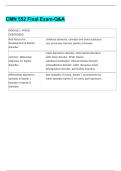
Risk Factors for childhood adversity, cannabis and other substance
development of bipolar use, previously married, genetic processes
disorder
major depressive disorder, other bipolar disorders,
common differential GAD, Panic disorder, PTSD, bipolar,
diagnosis for bipolar substance/medication induced bipolar disorder,
disorder schizoaffective disorder, adhd, disruptive mood
dysregulation disorder, personality disorders
differentiate depressive past episodes of mania, bipolar 1 accompanied by
episodes in bipolar 1 manic episodes bipolar II no manic just hypomanic
disorder vs bipolar II
disorder
,For at least 2 years (at cyclothymia
least 1 year in children and
adolescents) there have
been numerous periods
with hypomanic symptoms
that do not meet criteria
for a hypomanic episode
and numerous periods
with depressive symptoms
that do not meet criteria
for a major depressive
episode.
2 week duration of depressed or irritable mood
and/or loss of interest or pleasure
usually irritable rather than depressed
weight or appetite change
sleep disturbance
symptoms of depression psychomotor retardation or agitation
in children fatigue or loss of energy
feelings of worthlessness or guilt
diminished concentration
suicidal ideations, intent, or plan
IMPAIRMENT in child's functioning critical to diagnosis
in youth
mood change: painful arousal, hypersensitivity to
unpleasant events, insensitivity to pleasant events,
mood disturbance
insensitivity to unpleasant events, reduced
symptoms in depression
anticipatory pleasure, anhedonia affecting blunting,
apathy
, severe recurrent temper disruptive mood dysregulation disorder
outbursts manifested
verbally (verbal rages)
and/or behaviorally
(physical aggression
toward people or
property) that are grossly
out of proportion in
intensity or duration to the
situation or provocation
family and twin data 75%, 37%
collectively suggest that
genes explain
approximately what
percent of bipolar
disorder and what percent
of major depression
depressed mood for most persistent depressive disorder
of the day, for most days
than not, as indicated by
either subjective account
or observation by others,
for at least 2 years
Manic Episode: distractibility, indiscretion, grandiosity,
DIGFAST flight of ideas, activity increase, sleep deficit,
talkativeness
patients with glaucoma, cataracts, macular
contraindications of bright degeneration, retinal detachment, retinitis pigmentosa
light therapy or retinopathy, patients taking photosensitizing
medications
MODULE 1: MOOD
DISORDERS
Risk Factors for childhood adversity, cannabis and other substance
development of bipolar use, previously married, genetic processes
disorder
major depressive disorder, other bipolar disorders,
common differential GAD, Panic disorder, PTSD, bipolar,
diagnosis for bipolar substance/medication induced bipolar disorder,
disorder schizoaffective disorder, adhd, disruptive mood
dysregulation disorder, personality disorders
differentiate depressive past episodes of mania, bipolar 1 accompanied by
episodes in bipolar 1 manic episodes bipolar II no manic just hypomanic
disorder vs bipolar II
disorder
,For at least 2 years (at cyclothymia
least 1 year in children and
adolescents) there have
been numerous periods
with hypomanic symptoms
that do not meet criteria
for a hypomanic episode
and numerous periods
with depressive symptoms
that do not meet criteria
for a major depressive
episode.
2 week duration of depressed or irritable mood
and/or loss of interest or pleasure
usually irritable rather than depressed
weight or appetite change
sleep disturbance
symptoms of depression psychomotor retardation or agitation
in children fatigue or loss of energy
feelings of worthlessness or guilt
diminished concentration
suicidal ideations, intent, or plan
IMPAIRMENT in child's functioning critical to diagnosis
in youth
mood change: painful arousal, hypersensitivity to
unpleasant events, insensitivity to pleasant events,
mood disturbance
insensitivity to unpleasant events, reduced
symptoms in depression
anticipatory pleasure, anhedonia affecting blunting,
apathy
, severe recurrent temper disruptive mood dysregulation disorder
outbursts manifested
verbally (verbal rages)
and/or behaviorally
(physical aggression
toward people or
property) that are grossly
out of proportion in
intensity or duration to the
situation or provocation
family and twin data 75%, 37%
collectively suggest that
genes explain
approximately what
percent of bipolar
disorder and what percent
of major depression
depressed mood for most persistent depressive disorder
of the day, for most days
than not, as indicated by
either subjective account
or observation by others,
for at least 2 years
Manic Episode: distractibility, indiscretion, grandiosity,
DIGFAST flight of ideas, activity increase, sleep deficit,
talkativeness
patients with glaucoma, cataracts, macular
contraindications of bright degeneration, retinal detachment, retinitis pigmentosa
light therapy or retinopathy, patients taking photosensitizing
medications