BSNC 1000 Exam #1 Questions and Answers
Save
Terms in this set (44)
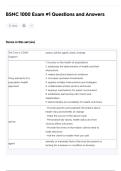
The 5 A's in CDSM assess, advise, agree, assist, arrange
Support
1. focuses on the health of populations
2. addresses the determinants of health and their
interactions
3. makes decisions based on evidence
9 key elements of a 4. increases upstream investments
population health 5. applies multiple interventions and strategies
approach 6. collaborates actress sectors and levels
7. employs mechanisms for public involvement
8. establishes partnership with clients and
stakeholders
9. demonstrates accountability for health outcomes
- Provide specific personalized information about
health risks and benefits of change
- Make the source of the advice clear
- Personalize lab values, health status and how
advise
choices affect outcomes
- Provide the level of information clients need to
make decisions
- Ask the client to restate what you said
animate or inanimate factor that must be present or
agent
lacking for a disease or condition to develop
, Groups that form a population. eg. BCIT student in
aggregate
BSN program
- Collaboratively set goals based on the client's
interests and confidence in their ability to change the
behavior.
agree - If their self-rated confidence is low, the goal may
need to be changed e.g. select one aspect of the
goal that the client feels more confident about
attaining
Schedule follow-up contact to provide ongoing
assistance and support to adjust the plan as needed.
Use whatever method of contact the client prefers,
arrange
such as in person, by email or phone. Make sure
follow-up happens to preserve trust in the
relationship.
- The Knowledge, skills, confidence, and the
importance the client assigns to a health issue, their
supports, the presence of barriers and risk factors.
- To assess importance, for example, ask "How
important do you think it is to
check your blood glucose before breakfast each
day?" Use a 1-10 scale,
assess
from not at all important to very important.
- To assess confidence, for example, ask "How
confident are you that you
can control any symptoms or health problems you
have so that they do not interfere with the things you
want to do?" Use a 1-10 scale, from not at all important
to very important
Save
Terms in this set (44)
The 5 A's in CDSM assess, advise, agree, assist, arrange
Support
1. focuses on the health of populations
2. addresses the determinants of health and their
interactions
3. makes decisions based on evidence
9 key elements of a 4. increases upstream investments
population health 5. applies multiple interventions and strategies
approach 6. collaborates actress sectors and levels
7. employs mechanisms for public involvement
8. establishes partnership with clients and
stakeholders
9. demonstrates accountability for health outcomes
- Provide specific personalized information about
health risks and benefits of change
- Make the source of the advice clear
- Personalize lab values, health status and how
advise
choices affect outcomes
- Provide the level of information clients need to
make decisions
- Ask the client to restate what you said
animate or inanimate factor that must be present or
agent
lacking for a disease or condition to develop
, Groups that form a population. eg. BCIT student in
aggregate
BSN program
- Collaboratively set goals based on the client's
interests and confidence in their ability to change the
behavior.
agree - If their self-rated confidence is low, the goal may
need to be changed e.g. select one aspect of the
goal that the client feels more confident about
attaining
Schedule follow-up contact to provide ongoing
assistance and support to adjust the plan as needed.
Use whatever method of contact the client prefers,
arrange
such as in person, by email or phone. Make sure
follow-up happens to preserve trust in the
relationship.
- The Knowledge, skills, confidence, and the
importance the client assigns to a health issue, their
supports, the presence of barriers and risk factors.
- To assess importance, for example, ask "How
important do you think it is to
check your blood glucose before breakfast each
day?" Use a 1-10 scale,
assess
from not at all important to very important.
- To assess confidence, for example, ask "How
confident are you that you
can control any symptoms or health problems you
have so that they do not interfere with the things you
want to do?" Use a 1-10 scale, from not at all important
to very important