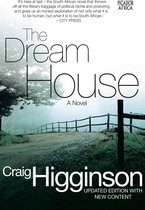
The Dream House
- Can you claim that a memory is the truth
- The Dream of the Dog (the original play) grew into the novel
- 5-part structure
- 5 perspectives
- Post-apartheid novel
Epigraph:
There is no better way to know us
Than two wolves, come separately to a wood. – Ted Hughes
Measure their opponents.
Dark and mysterious.
Wolf one: Patricia
Wolf two: Looksmart
Patricia = Old, South African women, not healthy, colonialism, past South Africa
Richard = English man, has dementia, racist, past South Africa
Beauty = Domestic, ironic name, never loved, past South Africa
Bheki = Quiet, driver, garden boy, past South Africa
Looksmart = Born on the farm, taken in by Patricia, good education, successful business man,
. new South Africa
Dwaleni
= Farm in the midlands (KZN)
,The title of the novel
The meaning behind the title of the novel is multi-layered.
The Dream House represents something that is both an ideal and an illusion or a fantasy that
will never become reality.
Each of the characters yearns for their own version of ‘the dream house’:
Patricia - Her dream house is filled with family and love that never came to fruition at Dwaleni.
She resurrects that dream when her surrogate son, Looksmart, reappears in her life, and asks
him to visit her at the house by the sea. She imagines that house filled with the warmth and
laughter of his family, bringing with them the love she has always craved. Even as she dreams of
it, however, it feels ‘immediately absurd’, a fantasy that will never materialise.
Looksmart – He seeks to create his dream house by remodelling the farmhouse at Dwaleni.
When he was a boy, the farmhouse represented a site of privilege from which he, as the child of
a black farm worker, was excluded. Though he formed a kind of mother-son bond with Patricia,
the racial divides dictated by apartheid meant that they could never truly be family. As an adult,
he has channelled the feelings of inadequacy, rage and hatred that stemmed from his exclusion
into the farm development project. He has taken ownership of that farmhouse, and all that it
represents, and plans to transform it into a space that he can occupy. In doing so, he
subconsciously wishes to heal the pain of his past. Patricia realises, however, that in building
houses across the farm that are modelled on the farmhouse, ‘all he’s managing to do is
reproduce that pain’
Beauty – Her dream house is simpler in its conception: ‘It has been her dream to have a house
of her own’ a space that is entirely her own domain. She has been saving towards this dream
and has even requested a plot on which to build it. Her dream house is a place in which she
does not have to serve or answer to anyone else; however, as she prepares to leave for
Durban, where she will continue to serve the Wileys, there seems to be no real prospect of her
dream being realised.
Bheki – His dream house is less easily defined, but it is represented by the ideal of remaining
with his family and being in a position to care for them. This opportunity is offered to him by
Looksmart.
Richard - He is simply searching for a home in which he feels welcomed. As his marriage to
Patricia soured, he spent his entire adult life as a kind of exile on the farm, and observes that ‘it
was never his house, but hers, handed down from her father’.
For each of the characters, ‘the dream house’ is not just a physical space, but an ideal for which
they yearn: a state of bliss or happiness that they feel is missing from their lives or circum-
stances. On a more general level, ‘the dream house’ is something for which every South African
yearns: Higginson appears to be suggesting that many of us may not feel ‘at home’ in our own
country and that the ideal of an inclusive society has not yet been achieved.
,Plot structure
Plot = the pattern of events and situations in a narrative or dramatic work, selected and
arranged to emphasise cause-and-effect relationships.
Five-part structure
The narrative structure of The Dream House appears to have been heavily influenced by
Higginson’s background as a playwright.
It has been organised into five ‘Parts’, which closely correspond to the five ‘acts’ often used to
structure plays.
The five-act structure is common because it has proved to be an extremely suitable way of
ensuring that the events and revelations of the drama occur at an enthralling, satisfying pace.
1.Exposition or Introduction
This part of the plot introduces the main characters, establishes the relationship between these
characters and introduces the situation or conflict with which the main character is faced and
will have to resolve.
In Part One of the novel, the background or exposition of the storyline is provided. In this
section, we are introduced to the five central characters, Patricia, Richard, Beauty, Bheki and
Looksmart, and their relationships to one another. We learn that Patricia and Richard Wiley are
selling their Natal Midlands farm to a property developer and will be moving to Durban with their
long-serving employees, Beauty and Bheki. Looksmart, meanwhile, is driving towards the farm
from his home in Gauteng, intent on confronting the Wileys about the past. Part One closes as
Patricia, seemingly alone, hears the ominous sound of someone entering the house through the
back door.
2.Rising Action
At this point, the ‘plot thickens’. The main character starts working towards resolving his or her
problem. He or she will face challenges and obstacles and be thwarted along the way. How he
or she decides to tackle these obstacles sets the stage for the rest of the drama.
In Part Two, Richard wanders around the grounds of the farm, as Beauty and Bheki attempt to
find him. Looksmart and Patricia become cautiously reacquainted, and it is clear that Looksmart
has a burden of which he needs to relieve himself. At the end of this section, he utters the name
of a woman from his past, ‘Grace’, the memory of whom has driven him to visit the farm after so
long an absence.
3.Turning Point or Climax
This is the focal point of the plot. The main character makes a single critical decision. He or she
is ready to engage with his or her antagonist(s) and, consequently, there will be a change, for
better or for worse, in the ensuing action of the play.
In Part Three, the story of Grace’s violent death slowly unfolds, as Patricia recalls the origins of
her relationship with Looksmart. Beauty and Bheki continue the desperate search for Richard,
who grows increasingly confused and agitated. At the close of Part Three, Beauty reluctantly
confirms Looksmart’s accusation that Richard was responsible for Grace’s murder.
, 4.Falling Action
This is a time of great tension and drama. The antagonist appears to have the upper hand and
the main character seems to be unable to accomplish his or her goal. Loose ends start to be
tied up and complications unravel. The play moves towards its conclusion.
In Part Four, the emotional confrontation between Patricia and Looksmart reaches its dramatic
climax, as both vent their regrets and past pain. Richard attempts to dig up the grave of his and
Patricia’s stillborn daughter before making his way back to the house, where he and Looksmart
have an awkward encounter. After Looksmart leaves, Patricia confronts Richard with her
knowledge of the murder and the two have an explosive argument. Patricia tries to call
Looksmart back, but she is too late.
5.Conclusion or Resolution
There is a confrontation and the conflict (problem) is resolved. Typically, the audience
experiences ‘catharsis’ or the release of tension and anxiety.
In Part Five, the inhabitants of Dwaleni awake to their final morning on the farm. Patricia
receives the disturbing news that her lover of the past three decades, John Ford, has committed
suicide. As they prepare to leave the farm, Patricia and Beauty have a hushed conversation in
which Beauty reveals the shocking truth behind Grace’s death. As they drive away for the final
time, they pass Looksmart driving in the opposite direction, headed to reclaim and transform his
childhood home.
- Can you claim that a memory is the truth
- The Dream of the Dog (the original play) grew into the novel
- 5-part structure
- 5 perspectives
- Post-apartheid novel
Epigraph:
There is no better way to know us
Than two wolves, come separately to a wood. – Ted Hughes
Measure their opponents.
Dark and mysterious.
Wolf one: Patricia
Wolf two: Looksmart
Patricia = Old, South African women, not healthy, colonialism, past South Africa
Richard = English man, has dementia, racist, past South Africa
Beauty = Domestic, ironic name, never loved, past South Africa
Bheki = Quiet, driver, garden boy, past South Africa
Looksmart = Born on the farm, taken in by Patricia, good education, successful business man,
. new South Africa
Dwaleni
= Farm in the midlands (KZN)
,The title of the novel
The meaning behind the title of the novel is multi-layered.
The Dream House represents something that is both an ideal and an illusion or a fantasy that
will never become reality.
Each of the characters yearns for their own version of ‘the dream house’:
Patricia - Her dream house is filled with family and love that never came to fruition at Dwaleni.
She resurrects that dream when her surrogate son, Looksmart, reappears in her life, and asks
him to visit her at the house by the sea. She imagines that house filled with the warmth and
laughter of his family, bringing with them the love she has always craved. Even as she dreams of
it, however, it feels ‘immediately absurd’, a fantasy that will never materialise.
Looksmart – He seeks to create his dream house by remodelling the farmhouse at Dwaleni.
When he was a boy, the farmhouse represented a site of privilege from which he, as the child of
a black farm worker, was excluded. Though he formed a kind of mother-son bond with Patricia,
the racial divides dictated by apartheid meant that they could never truly be family. As an adult,
he has channelled the feelings of inadequacy, rage and hatred that stemmed from his exclusion
into the farm development project. He has taken ownership of that farmhouse, and all that it
represents, and plans to transform it into a space that he can occupy. In doing so, he
subconsciously wishes to heal the pain of his past. Patricia realises, however, that in building
houses across the farm that are modelled on the farmhouse, ‘all he’s managing to do is
reproduce that pain’
Beauty – Her dream house is simpler in its conception: ‘It has been her dream to have a house
of her own’ a space that is entirely her own domain. She has been saving towards this dream
and has even requested a plot on which to build it. Her dream house is a place in which she
does not have to serve or answer to anyone else; however, as she prepares to leave for
Durban, where she will continue to serve the Wileys, there seems to be no real prospect of her
dream being realised.
Bheki – His dream house is less easily defined, but it is represented by the ideal of remaining
with his family and being in a position to care for them. This opportunity is offered to him by
Looksmart.
Richard - He is simply searching for a home in which he feels welcomed. As his marriage to
Patricia soured, he spent his entire adult life as a kind of exile on the farm, and observes that ‘it
was never his house, but hers, handed down from her father’.
For each of the characters, ‘the dream house’ is not just a physical space, but an ideal for which
they yearn: a state of bliss or happiness that they feel is missing from their lives or circum-
stances. On a more general level, ‘the dream house’ is something for which every South African
yearns: Higginson appears to be suggesting that many of us may not feel ‘at home’ in our own
country and that the ideal of an inclusive society has not yet been achieved.
,Plot structure
Plot = the pattern of events and situations in a narrative or dramatic work, selected and
arranged to emphasise cause-and-effect relationships.
Five-part structure
The narrative structure of The Dream House appears to have been heavily influenced by
Higginson’s background as a playwright.
It has been organised into five ‘Parts’, which closely correspond to the five ‘acts’ often used to
structure plays.
The five-act structure is common because it has proved to be an extremely suitable way of
ensuring that the events and revelations of the drama occur at an enthralling, satisfying pace.
1.Exposition or Introduction
This part of the plot introduces the main characters, establishes the relationship between these
characters and introduces the situation or conflict with which the main character is faced and
will have to resolve.
In Part One of the novel, the background or exposition of the storyline is provided. In this
section, we are introduced to the five central characters, Patricia, Richard, Beauty, Bheki and
Looksmart, and their relationships to one another. We learn that Patricia and Richard Wiley are
selling their Natal Midlands farm to a property developer and will be moving to Durban with their
long-serving employees, Beauty and Bheki. Looksmart, meanwhile, is driving towards the farm
from his home in Gauteng, intent on confronting the Wileys about the past. Part One closes as
Patricia, seemingly alone, hears the ominous sound of someone entering the house through the
back door.
2.Rising Action
At this point, the ‘plot thickens’. The main character starts working towards resolving his or her
problem. He or she will face challenges and obstacles and be thwarted along the way. How he
or she decides to tackle these obstacles sets the stage for the rest of the drama.
In Part Two, Richard wanders around the grounds of the farm, as Beauty and Bheki attempt to
find him. Looksmart and Patricia become cautiously reacquainted, and it is clear that Looksmart
has a burden of which he needs to relieve himself. At the end of this section, he utters the name
of a woman from his past, ‘Grace’, the memory of whom has driven him to visit the farm after so
long an absence.
3.Turning Point or Climax
This is the focal point of the plot. The main character makes a single critical decision. He or she
is ready to engage with his or her antagonist(s) and, consequently, there will be a change, for
better or for worse, in the ensuing action of the play.
In Part Three, the story of Grace’s violent death slowly unfolds, as Patricia recalls the origins of
her relationship with Looksmart. Beauty and Bheki continue the desperate search for Richard,
who grows increasingly confused and agitated. At the close of Part Three, Beauty reluctantly
confirms Looksmart’s accusation that Richard was responsible for Grace’s murder.
, 4.Falling Action
This is a time of great tension and drama. The antagonist appears to have the upper hand and
the main character seems to be unable to accomplish his or her goal. Loose ends start to be
tied up and complications unravel. The play moves towards its conclusion.
In Part Four, the emotional confrontation between Patricia and Looksmart reaches its dramatic
climax, as both vent their regrets and past pain. Richard attempts to dig up the grave of his and
Patricia’s stillborn daughter before making his way back to the house, where he and Looksmart
have an awkward encounter. After Looksmart leaves, Patricia confronts Richard with her
knowledge of the murder and the two have an explosive argument. Patricia tries to call
Looksmart back, but she is too late.
5.Conclusion or Resolution
There is a confrontation and the conflict (problem) is resolved. Typically, the audience
experiences ‘catharsis’ or the release of tension and anxiety.
In Part Five, the inhabitants of Dwaleni awake to their final morning on the farm. Patricia
receives the disturbing news that her lover of the past three decades, John Ford, has committed
suicide. As they prepare to leave the farm, Patricia and Beauty have a hushed conversation in
which Beauty reveals the shocking truth behind Grace’s death. As they drive away for the final
time, they pass Looksmart driving in the opposite direction, headed to reclaim and transform his
childhood home.