PHYS 261 - Week 4 Lab Review
Study online at https://quizlet.com/_dp5yyo
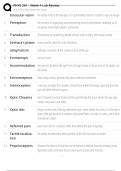
1. binocular vision the ability to focus the two eyes in a coordinated manner in order to see one image
2. Perception the process of organizing and interpreting sensory information, enabling us to
recognize meaningful objects and events
3. Transduction The process of converting outside stimuli, such as light, into neural activity
4. Ishihara's plates items used to check for color blindness
5. astigmatism defective curvature of the cornea or lens of the eye
6. Emmetropic normal vision
7. Accommodation the process by which the eye's lens changes shape to focus near or far objects on
the retina
8. Extroreceptors near body surface, provide info about external enviroment
9. Interocepters a sensory receptor that receives stimuli from within the body, especially from the
gut and other internal organs.
10. Optic Chiasma the X-shaped structure formed at the point below the brain where the two optic
nerves cross over each other.
11. Optic disc Region at the back of the eye where the optic nerve meets the retina. It is the blind
spot of the eye because it contains only nerve fibers, no rods or cones, and is thus
insensitive to light.
12. Referred pain pain that is felt in a location other than where the pain originates
13. Tactile localiza- the ability to determine which portion of the skin has been touched
tion
14. Proprioceptors Respond to internal stimuli but are restricted to skeletal muscles tendons joints
ligaments and connective tissue covering the bones and muscles.
1/2
Study online at https://quizlet.com/_dp5yyo
1. binocular vision the ability to focus the two eyes in a coordinated manner in order to see one image
2. Perception the process of organizing and interpreting sensory information, enabling us to
recognize meaningful objects and events
3. Transduction The process of converting outside stimuli, such as light, into neural activity
4. Ishihara's plates items used to check for color blindness
5. astigmatism defective curvature of the cornea or lens of the eye
6. Emmetropic normal vision
7. Accommodation the process by which the eye's lens changes shape to focus near or far objects on
the retina
8. Extroreceptors near body surface, provide info about external enviroment
9. Interocepters a sensory receptor that receives stimuli from within the body, especially from the
gut and other internal organs.
10. Optic Chiasma the X-shaped structure formed at the point below the brain where the two optic
nerves cross over each other.
11. Optic disc Region at the back of the eye where the optic nerve meets the retina. It is the blind
spot of the eye because it contains only nerve fibers, no rods or cones, and is thus
insensitive to light.
12. Referred pain pain that is felt in a location other than where the pain originates
13. Tactile localiza- the ability to determine which portion of the skin has been touched
tion
14. Proprioceptors Respond to internal stimuli but are restricted to skeletal muscles tendons joints
ligaments and connective tissue covering the bones and muscles.
1/2