

General
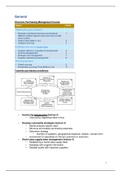
Structure Purchasing Management Course
Towards purchasing excellence
• Insourcing/outsourcing (lecture 2)
• Clear policy regarding make-or-buy
• Develop commodity strategies (lecture 3)
• Spend analysis (spend cube)
• Structure and classify purchasing expenses
• Determine strategy
• Number of suppliers, geographical dispersal, relation, contract form
• Involvement of specialists & internal customers in execution
• World class supply base management (lecture 4)
• Establishing a world-class supply base
• Database with supplier information
• Detailed audits with important suppliers
1
, • Develop and manage supplier relationships (lecture 8)
• Intensify relations with suppliers
• Continuous improvements
• Classification of suppliers: commercial, preferred, partner
• Integration of suppliers in product development (innovation)
• Suppliers with proven competences
• Using specific knowledge
• Supplier integration into order fulfillment process
• Outsource logistics and administrative tasks
• Connect suppliers with information systems and production planning
• Develop plans to increase value for customer through purchasing
• Supplier development and quality management (lecture 4)
• Suppliers are invited to participate in suggestions for improvement
• Suppliers are a source of new ideas
• Strategic cost management (lecture 7)
• Detailed cost models
• Supply chain analysis and measures to decrease supply chain costs
together with suppliers
• Sharing of advantages is necessary
Learning goals
Lecture 1
1. Explain and assess impact of purchasing organizational competitiveness;
2. Asses applicability of methods, techniques and instruments
3. Reflect on purchasing issues in a critical and academic manner
4. Analyze relevant purchasing topics from a managerial perspective
Lecture 2
• Understanding the difference between offshoring, reshoring, onshore-
outsourcing, nearshore-outsourcing, and offshore-outsourcing
• Understanding outsourcing and its main advantages and disadvantages
• Identifying when organizations should make or buy based on transaction costs or
strategic resources and capabilities
• Understanding how to use an integrated model of TCE and RBV on deriving
make/buy decisions
• Understanding the inherent complexity of make/buy choices
Lecture 3
• Use the Kraljic Matrix to position products and services
• Different positions require different supply chain strategies (strategic decisions)
• Understand a range of different sourcing strategies and its advantages and disadvantages
• Learn how to apply these sourcing strategies on different product categories on
the Kraljic Matrix
2
,Lecture 4
• Supplier selection is a critical part of supply chain
• The process should reflect the product/service sourced
• Approach
• Time/effort
• Be aware of the limitations of the AHP process
• Remember, the ‘maths’ is not the interesting part!
Lecture 1
People say that purchasing is not a trivial topic…… :
• In 2015 Dutch public entity Rijkswaterstaat (RWS) purchased two speedboats for
around 1 million Euro
• These boats turned out to be useless due to mistake in RWS tender procedure,
not due to (Italian) supplier Arimar
• What went wrong? In purchasing jargon: wrong specifications. Boats not fit for
combination of 1) high speed and 2) high waves
• Interested?!? Boats for sale for at least 75.000 Euro/boat……
Purchasing basics (Ch. 1-3)
• Importance, relevance & scope
• Supply versus value chain
Why is purchasing important?
• Improving purchasing performance may contribute to increased customer value
• Results of Good Purchasing/Supply Management:
• Higher Potential for Profitability
• Outsourcing
• Improved product and service quality
Importance of purchasing to business
Purchasing & Profitability
3
, 4
Structure Purchasing Management Course
Towards purchasing excellence
• Insourcing/outsourcing (lecture 2)
• Clear policy regarding make-or-buy
• Develop commodity strategies (lecture 3)
• Spend analysis (spend cube)
• Structure and classify purchasing expenses
• Determine strategy
• Number of suppliers, geographical dispersal, relation, contract form
• Involvement of specialists & internal customers in execution
• World class supply base management (lecture 4)
• Establishing a world-class supply base
• Database with supplier information
• Detailed audits with important suppliers
1
, • Develop and manage supplier relationships (lecture 8)
• Intensify relations with suppliers
• Continuous improvements
• Classification of suppliers: commercial, preferred, partner
• Integration of suppliers in product development (innovation)
• Suppliers with proven competences
• Using specific knowledge
• Supplier integration into order fulfillment process
• Outsource logistics and administrative tasks
• Connect suppliers with information systems and production planning
• Develop plans to increase value for customer through purchasing
• Supplier development and quality management (lecture 4)
• Suppliers are invited to participate in suggestions for improvement
• Suppliers are a source of new ideas
• Strategic cost management (lecture 7)
• Detailed cost models
• Supply chain analysis and measures to decrease supply chain costs
together with suppliers
• Sharing of advantages is necessary
Learning goals
Lecture 1
1. Explain and assess impact of purchasing organizational competitiveness;
2. Asses applicability of methods, techniques and instruments
3. Reflect on purchasing issues in a critical and academic manner
4. Analyze relevant purchasing topics from a managerial perspective
Lecture 2
• Understanding the difference between offshoring, reshoring, onshore-
outsourcing, nearshore-outsourcing, and offshore-outsourcing
• Understanding outsourcing and its main advantages and disadvantages
• Identifying when organizations should make or buy based on transaction costs or
strategic resources and capabilities
• Understanding how to use an integrated model of TCE and RBV on deriving
make/buy decisions
• Understanding the inherent complexity of make/buy choices
Lecture 3
• Use the Kraljic Matrix to position products and services
• Different positions require different supply chain strategies (strategic decisions)
• Understand a range of different sourcing strategies and its advantages and disadvantages
• Learn how to apply these sourcing strategies on different product categories on
the Kraljic Matrix
2
,Lecture 4
• Supplier selection is a critical part of supply chain
• The process should reflect the product/service sourced
• Approach
• Time/effort
• Be aware of the limitations of the AHP process
• Remember, the ‘maths’ is not the interesting part!
Lecture 1
People say that purchasing is not a trivial topic…… :
• In 2015 Dutch public entity Rijkswaterstaat (RWS) purchased two speedboats for
around 1 million Euro
• These boats turned out to be useless due to mistake in RWS tender procedure,
not due to (Italian) supplier Arimar
• What went wrong? In purchasing jargon: wrong specifications. Boats not fit for
combination of 1) high speed and 2) high waves
• Interested?!? Boats for sale for at least 75.000 Euro/boat……
Purchasing basics (Ch. 1-3)
• Importance, relevance & scope
• Supply versus value chain
Why is purchasing important?
• Improving purchasing performance may contribute to increased customer value
• Results of Good Purchasing/Supply Management:
• Higher Potential for Profitability
• Outsourcing
• Improved product and service quality
Importance of purchasing to business
Purchasing & Profitability
3
, 4




