Chapter 01 – Specify the Question: Using Business Analytics to Address Business Questions
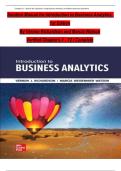
Solution Manual for Introduction to Business Analytics,
1st Edition
By Vernon Richardson and Marcia Watson
Verified Chapter's 1 - 12 | Complete
, Chapter 01 – Specify the Question: Using Business Analytics to Address Business Questions
TABLE OF CONTENTS
Chapter 1: Specify the Question: Using Business Analytics to Address Business Questions
Chapter 2: Obtain the Data: An Introduction to Business Data Sources
Chapter 3: Analyze the Data: Basic Statistics and Tools Required in Business Analytics
Chapter 4: Analyze the Data: Exploratory Business Analytics (Descriptive Analytics and Diagnostic Analytics)
Chapter 5: Analyze the Data: Confirmatory Business Analytics (Predictive Analytics and Prescriptive Analytics)
Chapter 6: Report the Results: Using Data Visualization
Chapter 7: Marketing Analytics
Chapter 8: Accounting Analytics
Chapter 9: Financial Analytics
Chapter 10: Operations Analytics
Chapter 11: Advanced Business Analytics
Chapter 12: Using the SOAR Analytics Model to Put It All Together: Three Capstone Projects
, Chapter 01 – Specify the Question: Using Business Analytics to Address Business Questions
Chapter 1 End-of-Chapter Assignment Solutions
Multiple Choice Questions
1. (LO 1.1) A coordinated, standardized set of activities conducted by both people and equipment to accomplish a
specific business task is called .
a. business processes
b. business analysis
c. business procedure
d. business value
2. (LO 1.2) According to the information value chain, data combined with context is
a. Information.
b. Knowledge.
c. Insight.
d. Value.
3. (LO 1.5) Which phase of the SOAR analytics model addresses the proper way to communicate results to the
decision maker?
a. Specify the question
b. Obtain the data
c. Analyze the data
d. Report the results
4. (LO 1.5) Which phase of the SOAR analytics model involves finding the most appropriate data needed to address
the business question?
a. Specify the question
b. Obtain the data
c. Analyze the data
d. Report the results
5. (LO 1.5) Which questions seek information about Tesla’s sales in the next quarter?
a. What happened? What is happening?
b. Why did it happen? What are the causes of past results?
c. Will it happen in the future? What is the probability something will happen? Can we forecast what
will happen?
d. What should we do, based on what we expect will happen? How do we optimize our performance based
on potential constraints?
6. (LO 1.5) Which questions seek information on the routing of products from Queretaro, Mexico to Chicago,
United States in the last quarter?
a. What happened? What is happening?
b. Why did it happen? What are the causes of past results?
c. Will it happen in the future? What is the probability something will happen? Can we forecast what will
happen?
d. What should we do, based on what we expect will happen? How do we optimize our performance based
on potential constraints?
, Chapter 01 – Specify the Question: Using Business Analytics to Address Business Questions
7. (LO 1.5) Which questions ask why net income is increasing when revenues are decreasing, counter to
expectations?
a. What happened? What is happening?
b. Why did it happen? What are the causes of past results?
c. Will it happen in the future? What is the probability something will happen? Can we forecast what will
happen?
d. What should we do, based on what we expect will happen? How do we optimize our performance based
on potential constraints?
8. (LO 1.5) Which questions help managers understand how to organize future shipments based on expected
demand?
a. What happened? What is happening?
b. Why ndid nit nhappen? nWhat nare nthe ncauses nof npast nresults?
c. Will nit nhappen nin nthe nfuture? nWhat nis nthe nprobability nsomething nwill nhappen? nCan nwe
nforecast nwhat nwillnhappen?
d. What nshould nwe ndo, nbased non nwhat nwe nexpect nwill nhappen? nHow ndo nwe noptimize nour
nperformancenbased non npotential nconstraints?
9. (LO n1.5) nWhich nterm nrefers nto nthe ncombined naccuracy, nvalidity, nand nconsistency nof ndata nstored
nand nused noverntime?
a. Data nintegrity
b. Data noverload
c. Data nvalue
d. Information nvalue
10. (LO n1.3) nA nspecialist nwho nknows nhow nto nwork nwith, nmanipulate, nand nstatistically ntest ndata nis na
a. decision nmaker.
b. data nscientist.
c. data nanalyst.
d. decision nscientist.
11. (LO n1.4) nWhich ntype nof nanalysts npredicts nthe namount nof nmoney nthat na ncompany nwill nreceive nfrom nits
ncustomers ntonhelp nmanagement nevaluate nfuture ninvestments nbased non nexpected ninvestment
nperformance, nsuch nas ninvestments nin nequipment nor nemployee ntraining?
a. Marketing nanalyst
b. Operations nanalyst
c. Financial nanalyst
d. Accounting nanalyst
12. (LO n1.4) nWhich ntype nof nanalyst naddresses nquestions nregarding ntax nand nauditing?
a. Marketing nanalyst
b. Operations nanalyst
c. Financial nanalyst
d. Accounting nanalyst
13. (LO n1.5) nSuppose na ncompany nhas ntimely nproduct nreviews nthat nare navailable nwhen nneeded, nbut nthe
nreviews narenbiased. nThese nproduct nreviews nare nwhich ntype nof ndata?
a. Reliable
b. Relevant
c. Curated
d. Consistent
© nMcGraw nHill nLLC. nAll nrights nreserved. nNo nreproduction nor ndistribution nwithout nthe nprior nwritten nconsent nof nMcGraw nHill
nLLC.
4
Solution Manual for Introduction to Business Analytics,
1st Edition
By Vernon Richardson and Marcia Watson
Verified Chapter's 1 - 12 | Complete
, Chapter 01 – Specify the Question: Using Business Analytics to Address Business Questions
TABLE OF CONTENTS
Chapter 1: Specify the Question: Using Business Analytics to Address Business Questions
Chapter 2: Obtain the Data: An Introduction to Business Data Sources
Chapter 3: Analyze the Data: Basic Statistics and Tools Required in Business Analytics
Chapter 4: Analyze the Data: Exploratory Business Analytics (Descriptive Analytics and Diagnostic Analytics)
Chapter 5: Analyze the Data: Confirmatory Business Analytics (Predictive Analytics and Prescriptive Analytics)
Chapter 6: Report the Results: Using Data Visualization
Chapter 7: Marketing Analytics
Chapter 8: Accounting Analytics
Chapter 9: Financial Analytics
Chapter 10: Operations Analytics
Chapter 11: Advanced Business Analytics
Chapter 12: Using the SOAR Analytics Model to Put It All Together: Three Capstone Projects
, Chapter 01 – Specify the Question: Using Business Analytics to Address Business Questions
Chapter 1 End-of-Chapter Assignment Solutions
Multiple Choice Questions
1. (LO 1.1) A coordinated, standardized set of activities conducted by both people and equipment to accomplish a
specific business task is called .
a. business processes
b. business analysis
c. business procedure
d. business value
2. (LO 1.2) According to the information value chain, data combined with context is
a. Information.
b. Knowledge.
c. Insight.
d. Value.
3. (LO 1.5) Which phase of the SOAR analytics model addresses the proper way to communicate results to the
decision maker?
a. Specify the question
b. Obtain the data
c. Analyze the data
d. Report the results
4. (LO 1.5) Which phase of the SOAR analytics model involves finding the most appropriate data needed to address
the business question?
a. Specify the question
b. Obtain the data
c. Analyze the data
d. Report the results
5. (LO 1.5) Which questions seek information about Tesla’s sales in the next quarter?
a. What happened? What is happening?
b. Why did it happen? What are the causes of past results?
c. Will it happen in the future? What is the probability something will happen? Can we forecast what
will happen?
d. What should we do, based on what we expect will happen? How do we optimize our performance based
on potential constraints?
6. (LO 1.5) Which questions seek information on the routing of products from Queretaro, Mexico to Chicago,
United States in the last quarter?
a. What happened? What is happening?
b. Why did it happen? What are the causes of past results?
c. Will it happen in the future? What is the probability something will happen? Can we forecast what will
happen?
d. What should we do, based on what we expect will happen? How do we optimize our performance based
on potential constraints?
, Chapter 01 – Specify the Question: Using Business Analytics to Address Business Questions
7. (LO 1.5) Which questions ask why net income is increasing when revenues are decreasing, counter to
expectations?
a. What happened? What is happening?
b. Why did it happen? What are the causes of past results?
c. Will it happen in the future? What is the probability something will happen? Can we forecast what will
happen?
d. What should we do, based on what we expect will happen? How do we optimize our performance based
on potential constraints?
8. (LO 1.5) Which questions help managers understand how to organize future shipments based on expected
demand?
a. What happened? What is happening?
b. Why ndid nit nhappen? nWhat nare nthe ncauses nof npast nresults?
c. Will nit nhappen nin nthe nfuture? nWhat nis nthe nprobability nsomething nwill nhappen? nCan nwe
nforecast nwhat nwillnhappen?
d. What nshould nwe ndo, nbased non nwhat nwe nexpect nwill nhappen? nHow ndo nwe noptimize nour
nperformancenbased non npotential nconstraints?
9. (LO n1.5) nWhich nterm nrefers nto nthe ncombined naccuracy, nvalidity, nand nconsistency nof ndata nstored
nand nused noverntime?
a. Data nintegrity
b. Data noverload
c. Data nvalue
d. Information nvalue
10. (LO n1.3) nA nspecialist nwho nknows nhow nto nwork nwith, nmanipulate, nand nstatistically ntest ndata nis na
a. decision nmaker.
b. data nscientist.
c. data nanalyst.
d. decision nscientist.
11. (LO n1.4) nWhich ntype nof nanalysts npredicts nthe namount nof nmoney nthat na ncompany nwill nreceive nfrom nits
ncustomers ntonhelp nmanagement nevaluate nfuture ninvestments nbased non nexpected ninvestment
nperformance, nsuch nas ninvestments nin nequipment nor nemployee ntraining?
a. Marketing nanalyst
b. Operations nanalyst
c. Financial nanalyst
d. Accounting nanalyst
12. (LO n1.4) nWhich ntype nof nanalyst naddresses nquestions nregarding ntax nand nauditing?
a. Marketing nanalyst
b. Operations nanalyst
c. Financial nanalyst
d. Accounting nanalyst
13. (LO n1.5) nSuppose na ncompany nhas ntimely nproduct nreviews nthat nare navailable nwhen nneeded, nbut nthe
nreviews narenbiased. nThese nproduct nreviews nare nwhich ntype nof ndata?
a. Reliable
b. Relevant
c. Curated
d. Consistent
© nMcGraw nHill nLLC. nAll nrights nreserved. nNo nreproduction nor ndistribution nwithout nthe nprior nwritten nconsent nof nMcGraw nHill
nLLC.
4