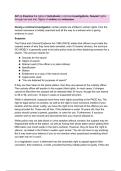
AC1.4- Examine the rights of individuals in criminal investigations. Suspect rights
through bail and trial. Rights of victims and witnesses.
During a criminal investigation, certain people are entitled to certain rights, from the
moment someone is initially searched and all the way to a witness who is giving
evidence in court.
Suspects
The Police and Criminal Evidence Act 1984 (PACE) states that officers must make the
suspect aware of why they have been arrested, even if it seems obvious, the acronym
GO WISELY is generally used to list what police must do when detaining someone for a
search. The acronym stands for:
★ Grounds for the search
★ Object of search
★ Warrant card (if the officer is in plain clothes)
★ Identification
★ Station
★ Entitlement to a copy of the search record
★ Legal power used
★ “You are detained for purposes of search”
If they are then taken to the police station, then they are passed to the custody officer.
The custody officer will explain to the suspect their rights. In most cases, if charges
cannot be filed then the suspect will be released after 24 hours, though this can extend
to 48 or 96, and even 14 days in cases of suspected terrorism.
While in detainment, suspects have three main rights according to the PACE Act; The
right to legal advice via solicitor, as well as the right to have someone notified of your
location and the arrest. Lastly, you have the right to be informed of the offence you are
being arrested for. These are all free. If the detainee is under 18 years old, then the
police should contact a parent, guardian, or carer for you. Furthermore, if you/your
solicitor wish to see records and documents then you must be allowed to.
While police may not take blood or urine samples without consent, the suspect may be
fingerprinted while at the station, as well as having their photo taken and/or getting their
DNA taken (via mouth swab or the skin’s surface). However, they do have the ‘right to
silence’, as stated in the Police’s caution upon arrest: “You do not have to say anything.
But it may harm your defence if you do not mention when questioned something which
you later rely on in court”.
In a magistrate’s court, a defendant has the automatic right to appeal against their
conviction, their sentence, or both, provided that they initially plead not guilty. If they did
through bail and trial. Rights of victims and witnesses.
During a criminal investigation, certain people are entitled to certain rights, from the
moment someone is initially searched and all the way to a witness who is giving
evidence in court.
Suspects
The Police and Criminal Evidence Act 1984 (PACE) states that officers must make the
suspect aware of why they have been arrested, even if it seems obvious, the acronym
GO WISELY is generally used to list what police must do when detaining someone for a
search. The acronym stands for:
★ Grounds for the search
★ Object of search
★ Warrant card (if the officer is in plain clothes)
★ Identification
★ Station
★ Entitlement to a copy of the search record
★ Legal power used
★ “You are detained for purposes of search”
If they are then taken to the police station, then they are passed to the custody officer.
The custody officer will explain to the suspect their rights. In most cases, if charges
cannot be filed then the suspect will be released after 24 hours, though this can extend
to 48 or 96, and even 14 days in cases of suspected terrorism.
While in detainment, suspects have three main rights according to the PACE Act; The
right to legal advice via solicitor, as well as the right to have someone notified of your
location and the arrest. Lastly, you have the right to be informed of the offence you are
being arrested for. These are all free. If the detainee is under 18 years old, then the
police should contact a parent, guardian, or carer for you. Furthermore, if you/your
solicitor wish to see records and documents then you must be allowed to.
While police may not take blood or urine samples without consent, the suspect may be
fingerprinted while at the station, as well as having their photo taken and/or getting their
DNA taken (via mouth swab or the skin’s surface). However, they do have the ‘right to
silence’, as stated in the Police’s caution upon arrest: “You do not have to say anything.
But it may harm your defence if you do not mention when questioned something which
you later rely on in court”.
In a magistrate’s court, a defendant has the automatic right to appeal against their
conviction, their sentence, or both, provided that they initially plead not guilty. If they did