Kaplan pharmacology — 80 questions
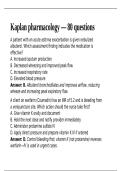
A patient with an acute asthma exacerbation is given nebulized
albuterol. Which assessment finding indicates the medication is
effective?
A. Increased sputum production
B. Decreased wheezing and improved peak flow
C. Increased respiratory rate
D. Elevated blood pressure
Answer: B. Albuterol bronchodilates and improves airflow, reducing
wheeze and increasing peak expiratory flow.
A client on warfarin (Coumadin) has an INR of 5.2 and is bleeding from
a venipuncture site. Which action should the nurse take first?
A. Give vitamin K orally and document
B. Hold the next dose and notify provider immediately
C. Administer protamine sulfate IV
D. Apply direct pressure and prepare vitamin K IV if ordered
Answer: D. Control bleeding first; vitamin K (not protamine) reverses
warfarin—IV is used in urgent cases.
,A patient prescribed lisinopril reports a persistent dry cough. Which is
the best recommendation?
A. Discontinue lisinopril and start an ARB after discussing with provider
B. Ignore the cough, it will resolve in a few days
C. Take codeine for cough suppression
D. Reduce the dose by half and continue therapy
Answer: A. ACE inhibitors cause a persistent dry cough; an ARB is an
acceptable alternative if cough intolerable.
A diabetic patient is receiving regular insulin at 0730. At what time is
the peak effect likely, increasing risk of hypoglycemia?
A. 0800–0830
B. 0900–1100
C. 1200–1400
D. 2000–2200
Answer: B. Regular insulin peaks about 2–4 hours after
administration.
A client on digoxin has nausea, visual changes (yellow halos), and
bradycardia. Which lab should the nurse check?
A. Serum potassium and digoxin level
B. Serum magnesium only
,C. CBC and hemoglobin
D. Serum creatinine only
Answer: A. Digoxin toxicity is associated with GI and visual
symptoms; hypokalemia potentiates toxicity—check digoxin level and
K+.
A nurse administers morphine IV PRN for severe pain. Which side effect
requires immediate intervention?
A. Urinary retention
B. Pinpoint pupils and respiratory rate 6/min
C. Constipation
D. Itching at IV site
Answer: B. Respiratory depression and miosis indicate opioid
overdose—protect airway and give naloxone if needed.
A patient with bacterial endocarditis is started on gentamicin. Which
lab trend is most important to monitor?
A. Serum creatinine and peak/trough levels
B. Platelet count
C. Liver enzymes (AST/ALT)
D. Serum glucose
, Answer: A. Aminoglycosides are nephrotoxic; monitor renal function
and drug levels.
A woman in early pregnancy is taking isotretinoin for acne. The nurse
should teach:
A. Continue medication; no teratogenic risk
B. Use reliable contraception and stop immediately if pregnancy
suspected
C. Take folic acid to prevent birth defects
D. Use over-the-counter topical instead
Answer: B. Isotretinoin is highly teratogenic; strict contraception and
discontinuation if pregnancy occurs.
A patient on heparin infusion has a falling platelet count and new
thrombosis. What is the nurse’s priority action?
A. Stop heparin and notify provider (evaluate for HIT)
B. Increase heparin infusion rate
C. Draw blood cultures
D. Administer protamine sulfate immediately
Answer: A. Heparin-induced thrombocytopenia can cause thrombosis
—stop heparin and notify provider for alternate anticoagulation.
A patient with an acute asthma exacerbation is given nebulized
albuterol. Which assessment finding indicates the medication is
effective?
A. Increased sputum production
B. Decreased wheezing and improved peak flow
C. Increased respiratory rate
D. Elevated blood pressure
Answer: B. Albuterol bronchodilates and improves airflow, reducing
wheeze and increasing peak expiratory flow.
A client on warfarin (Coumadin) has an INR of 5.2 and is bleeding from
a venipuncture site. Which action should the nurse take first?
A. Give vitamin K orally and document
B. Hold the next dose and notify provider immediately
C. Administer protamine sulfate IV
D. Apply direct pressure and prepare vitamin K IV if ordered
Answer: D. Control bleeding first; vitamin K (not protamine) reverses
warfarin—IV is used in urgent cases.
,A patient prescribed lisinopril reports a persistent dry cough. Which is
the best recommendation?
A. Discontinue lisinopril and start an ARB after discussing with provider
B. Ignore the cough, it will resolve in a few days
C. Take codeine for cough suppression
D. Reduce the dose by half and continue therapy
Answer: A. ACE inhibitors cause a persistent dry cough; an ARB is an
acceptable alternative if cough intolerable.
A diabetic patient is receiving regular insulin at 0730. At what time is
the peak effect likely, increasing risk of hypoglycemia?
A. 0800–0830
B. 0900–1100
C. 1200–1400
D. 2000–2200
Answer: B. Regular insulin peaks about 2–4 hours after
administration.
A client on digoxin has nausea, visual changes (yellow halos), and
bradycardia. Which lab should the nurse check?
A. Serum potassium and digoxin level
B. Serum magnesium only
,C. CBC and hemoglobin
D. Serum creatinine only
Answer: A. Digoxin toxicity is associated with GI and visual
symptoms; hypokalemia potentiates toxicity—check digoxin level and
K+.
A nurse administers morphine IV PRN for severe pain. Which side effect
requires immediate intervention?
A. Urinary retention
B. Pinpoint pupils and respiratory rate 6/min
C. Constipation
D. Itching at IV site
Answer: B. Respiratory depression and miosis indicate opioid
overdose—protect airway and give naloxone if needed.
A patient with bacterial endocarditis is started on gentamicin. Which
lab trend is most important to monitor?
A. Serum creatinine and peak/trough levels
B. Platelet count
C. Liver enzymes (AST/ALT)
D. Serum glucose
, Answer: A. Aminoglycosides are nephrotoxic; monitor renal function
and drug levels.
A woman in early pregnancy is taking isotretinoin for acne. The nurse
should teach:
A. Continue medication; no teratogenic risk
B. Use reliable contraception and stop immediately if pregnancy
suspected
C. Take folic acid to prevent birth defects
D. Use over-the-counter topical instead
Answer: B. Isotretinoin is highly teratogenic; strict contraception and
discontinuation if pregnancy occurs.
A patient on heparin infusion has a falling platelet count and new
thrombosis. What is the nurse’s priority action?
A. Stop heparin and notify provider (evaluate for HIT)
B. Increase heparin infusion rate
C. Draw blood cultures
D. Administer protamine sulfate immediately
Answer: A. Heparin-induced thrombocytopenia can cause thrombosis
—stop heparin and notify provider for alternate anticoagulation.