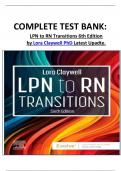
Test Bank for Robbins Basic Pathology 11th
b b b b b b
Editionb b
by Vinay Kumar, Abul K. Abba
b b b b b b
Chapters 1 - 24 b b b b
,Table of Content b b
Chapter 1. The Cell as a Unit of Health and Disease
b b b b b b b b b b
Chapter 2. Cell Injury, Cell Death, and Adaptations
b b b b b b b
Chapter 3. Inflammation and Repair
b b b b
Chapter 4. Hemodynamic Disorders, Thromboembolism, and Shock
b b b b b b
Chapter 5. Diseases of the Immune System
b b b b b b
Chapter 6. Neoplasia
b b
Chapter 7. Genetic and Pediatric Diseases
b b b b b
Chapter 8. Environmental and Nutritional Diseases
b b b b b
Chapter 9. General Pathology of Infectious Diseases
b b b b b b
Chapter 10. Blood Vessels
b b b
Chapter 11. Heart
b b
Chapter 12. Hematopoietic and Lymphoid Systems
b
b b b b b
Chapter 13. Lung
b b
Chapter 14. Kidney and Its Collecting System
b b b b b b
Chapter 15. Oral Cavities and Gastrointestinal Tract
b b b b b b
Chapter 16. Liver and Gallbladder
b b b b
,Chapter 17. Pancreas
b b
Chapter 18. Male Genital System and Lower Urinary Tract
b b b b b b b b
Chapter 19. Female Genital System and Breast
b b b b b b
Chapter 20. Endocrine System
b b b
Chapter 21. Bones, Joints, and Soft Tissue Tumors
b b b b b b b
Chapter 22. Peripheral Nerves and Muscles
b b b b b
Chapter 23. Central Nervous System
b b b b
Chapter 24. Skin
b
b b
, Robbins Basic Pathology 11th Edition KymarAbbas Test Bank
b b b b b b b b
Chapter 1.The Cell as a Unit of Health and Disease
b b b b b b b b b b
1 The nucleus b , which is essential for function and
b b b b b b
survival of the cell.
b b b b
A) is the site of protein synthesis
b b b b b
B) contains the genetic code b b b
C) transforms cellularenergy b b
D) initiates aerobic metabolism b b
2 Although energy is not made in mitochondria, they are known as
b b b b b b b b b b
the power plants of the cell because they:
b b b b b b b b
A) containRNAfor protein synthesis. b b b b
B) utilizeglycolysis foroxidativeenergy. b b b b
C) extractenergy from organic compounds. b b b b
D) storecalciumbonds for muscle contractions.
b b b b b
3 Although the basic structure of the cell plasma membrane is
b b b b b b b b b
formed by a lipid bilayer, most of the specific membrane
b b b b b b b b b b
functions are carried out by:
b b b b b
A) boundandtransmembraneproteins. b b b
B) complex, longcarbohydratechains. b b b
C) surfaceantigens and hormone receptors. b b b b
D) a gating systemof selective ion channels.
b b b b b b
4 Toeffectivelyrelaysignals,cell-to-cellcommunication
b b b b b
utilizes chemical messenger systems that:
b b b b b
A) displace surfacereceptor proteins. b b b
B) accumulate within cell gap junctions. b b b b
b b b b b b
Editionb b
by Vinay Kumar, Abul K. Abba
b b b b b b
Chapters 1 - 24 b b b b
,Table of Content b b
Chapter 1. The Cell as a Unit of Health and Disease
b b b b b b b b b b
Chapter 2. Cell Injury, Cell Death, and Adaptations
b b b b b b b
Chapter 3. Inflammation and Repair
b b b b
Chapter 4. Hemodynamic Disorders, Thromboembolism, and Shock
b b b b b b
Chapter 5. Diseases of the Immune System
b b b b b b
Chapter 6. Neoplasia
b b
Chapter 7. Genetic and Pediatric Diseases
b b b b b
Chapter 8. Environmental and Nutritional Diseases
b b b b b
Chapter 9. General Pathology of Infectious Diseases
b b b b b b
Chapter 10. Blood Vessels
b b b
Chapter 11. Heart
b b
Chapter 12. Hematopoietic and Lymphoid Systems
b
b b b b b
Chapter 13. Lung
b b
Chapter 14. Kidney and Its Collecting System
b b b b b b
Chapter 15. Oral Cavities and Gastrointestinal Tract
b b b b b b
Chapter 16. Liver and Gallbladder
b b b b
,Chapter 17. Pancreas
b b
Chapter 18. Male Genital System and Lower Urinary Tract
b b b b b b b b
Chapter 19. Female Genital System and Breast
b b b b b b
Chapter 20. Endocrine System
b b b
Chapter 21. Bones, Joints, and Soft Tissue Tumors
b b b b b b b
Chapter 22. Peripheral Nerves and Muscles
b b b b b
Chapter 23. Central Nervous System
b b b b
Chapter 24. Skin
b
b b
, Robbins Basic Pathology 11th Edition KymarAbbas Test Bank
b b b b b b b b
Chapter 1.The Cell as a Unit of Health and Disease
b b b b b b b b b b
1 The nucleus b , which is essential for function and
b b b b b b
survival of the cell.
b b b b
A) is the site of protein synthesis
b b b b b
B) contains the genetic code b b b
C) transforms cellularenergy b b
D) initiates aerobic metabolism b b
2 Although energy is not made in mitochondria, they are known as
b b b b b b b b b b
the power plants of the cell because they:
b b b b b b b b
A) containRNAfor protein synthesis. b b b b
B) utilizeglycolysis foroxidativeenergy. b b b b
C) extractenergy from organic compounds. b b b b
D) storecalciumbonds for muscle contractions.
b b b b b
3 Although the basic structure of the cell plasma membrane is
b b b b b b b b b
formed by a lipid bilayer, most of the specific membrane
b b b b b b b b b b
functions are carried out by:
b b b b b
A) boundandtransmembraneproteins. b b b
B) complex, longcarbohydratechains. b b b
C) surfaceantigens and hormone receptors. b b b b
D) a gating systemof selective ion channels.
b b b b b b
4 Toeffectivelyrelaysignals,cell-to-cellcommunication
b b b b b
utilizes chemical messenger systems that:
b b b b b
A) displace surfacereceptor proteins. b b b
B) accumulate within cell gap junctions. b b b b