Comprehensive Module, with Rationale
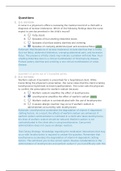
Questions 1. 1.ID: A nurse in a physician's office is reviewing the medical record of a child with a diagnosis of lactose intolerance. Which of the following findings does the nurse expect to see documented in the child's record? A. Fatty stools B. Episodes of foul-smelling ribbonlike stools C. Episodes of profuse watery diarrhea and vomiting D. Episodes of cramping abdominal pain and excessive flatus Correct Rationale: Manifestations of lactose intolerance include diarrhea that is frothy (but not fatty), abdominal distention, cramping abdominal pain, and excessive flatus. The presence of fatty stools may indicate a problem with bile flow. Foul-smelling ribbonlike stool is a clinical manifestation of Hirschsprung disease. Profuse watery diarrhea and vomiting is one clinical manifestation of celiac disease. Awarded 1.0 points out of 1.0 possible points. 2. 2.ID: Warfarin sodium (Coumadin) is prescribed for a hospitalized client. While transcribing the physician's prescription, the nurse notes that the client is taking levothyroxine (Synthroid) to treat hypothyroidism. The nurse calls the physician to confirm the prescription for warfarin sodium because: A. Warfarin sodium amplifies the effect of levothyroxine B. Levothyroxine amplifies the effect of warfarin sodium Correct C. Warfarin sodium is contraindicated with the use of levothyroxine D. A severe allergic reaction may occur if warfarin sodium is administered concurrently with levothyroxine Rationale: Levothyroxine accelerates the degradation of vitamin K–dependent clotting factors. As a result, the effects of warfarin sodium are enhanced. If warfarin sodium administration is instituted in a client who takes levothyroxine, the dose of warfarin sodium should be reduced. Warfarin sodium is not contraindicated in the client who is using levothyroxine. Concurrent administration does not cause an allergic reaction. Test-Taking Strategy: Knowledge regarding the medication interactions that may occur with levothyroxine is required to answer the question. Remember that levothyroxine accelerates the degradation of vitamin K–dependent clotting factors. This will direct you to the correct option. Review considerations in the administration of levothyroxine and warfarin sodium if you had difficulty with this question. Reference: Lehne, R. (2010). Pharmacology for nursing care (7th ed., p. 694). St. Louis: Saunders. Cognitive Ability: Understanding Client Needs: Safe and Effective Care Environment Integrated Process: Nursing Process/Implementation Content Area: Pharmacology Awarded 1.0 points out of 1.0 possible points. 3. 3.ID: A nurse is caring for a client who is immobilized in skeletal traction after sustaining a leg fracture in a motor vehicle crash. The nurse notes that the client is restless, and the client complains of being bored. Which problem does the nurse identify on the basis of this information? A. Lack of control B. Lack of physical mobility C. Lack of adequate diversional activity Correct D. Lack of energy to bathe and feed self Rationale: A characteristic of lack of adequate diversional activity is the expression of boredom by the client. The question does not identify client difficulties with coordination, range of motion, or muscle strength, which would lack of physical mobility. Nor does the question address client’s lack of energy to perform activities of daily living (bathing/hygiene self-care deficit) or lack of control. Awarded 1.0 points out of 1.0 possible points. 4. 4.ID: A nurse in a physician's office is conducting a 2-week postpartum assessment of a client. During abdominal assessment, the nurse is unable to palpate the uterine fundus. This finding would prompt the nurse to: A. Document the findings Correct B. Ask the physician to see the client immediately C. Ask another nurse to check for the uterine fundus D. Place the client in the supine position for 5 minutes, then recheck the abdomen Rationale: Involution is the progressive descent of the uterus into the pelvic cavity after delivery. Twenty-four hours after birth, descent of the fundus begins at a rate of approximately 1 fingerbreadth, or approximately 1 cm, per day. By the 10th to 14th day, the fundus is in the pelvic cavity and cannot be palpated abdominally. Asking the physician to see the client immediately, having another nurse check for the uterine fundus, and placing the client in the supine position for 5 minutes and rechecking the abdomen are all incorrect and unnecessary actions in light of the assessment finding. Awarded 1.0 points out of 1.0 possible points. 5. 5.ID: A nurse is providing instruction about insulin therapy and its administration to an adolescent client who has just been found to have diabetes mellitus. Which statement by the client indicates a need for further instruction? A. "It’s important to rotate injection sites." B. "I need to store the insulin in a cool, dry place." C. "I need to keep any unopened bottles of insulin in the freezer." Correct D. "I need to check the expiration date on the insulin before I use it." Rationale: Insulin is stored in a cool, dry place. It should not be placed in the freezer or exposed to excess heat or agitation. Injection sites should be rotated to ensure adequate insulin absorption and to prevent complications of insulin administration. Once a bottle of insulin has been opened, it is dated and discarded as recommended. The client should check the expiration date on the insulin vial before using it. Awarded 1.0 points out of 1.0 possible points. 6. 6.ID: A client with myasthenia gravis is taking neostigmine bromide (Prostigmin). The nurse determines that the client is gaining a therapeutic effect from the medication after noting: A. Bradycardia B. Increased heart rate C. Decreased blood pressure D. Improved swallowing function Correct Rationale: Neostigmine bromide, a cholinergic medication that prevents the destruction of acetylcholine, is used to treat myanthenia gravis. The nurse would monitor the client for a therapeutic response, which includes increased muscle strength, an easing of fatigue, and improved chewing and swallowing function. Bradycardia, increased heart rate, and decreased blood pressure are signs of an adverse reaction to the medication. Awarded 1.0 points out of 1.0 possible points. 7. 7.ID: A nurse is assessing a client with hepatitis for signs of jaundice. Which area does the nurse check, knowing that it will provide the best data regarding the presence of jaundice? A. Lips B. Soles C. Palms D. Mucous membranes Correct Rationale: Assessment of the skin, sclera, and mucous membranes provides the best data regarding the presence of jaundice. The color of the lips provides data regarding the presence of cyanosis. Although assessment of the skin provides adequate data regarding jaundice, the soles and palms are not the best areas of skin for assessment. Awarded 1.0 points out of 1.0 possible points. 8. 8.ID: A client with advanced chronic renal failure (CRF) and oliguria has been taught about sodium and potassium restriction between dialysis treatments. The nurse determines that the client understands this restriction if the client states that it is acceptable to use: A. Salt substitutes B. Herbs and spices Correct C. Salt with cooking only D. Processed foods as desired Rationale: Most clients with renal failure retain sodium. The client with renal failure is instructed not to add salt at the table or during food preparation. Herbs and spices may be used as an alternative to salt to enhance the flavor of food. The client with advanced CRF is instructed to limit potassium intake. The client is also instructed to avoid salt substitutes, many of which are composed of potassium chloride, if oliguria is present. Processed foods are discouraged because they are high in sodium. Awarded 1.0 points out of 1.0 possible points. 9. 9.ID: A client with chronic renal failure who will require dialysis three times a week for the rest of his life says to the nurse, "Why should I even bother to watch what I eat and drink? It doesn't really matter what I do if I’m never going to get better!" On the basis of the client's statement, the nurse determines that the client is experiencing which problem? A. Anxiety B. Powerlessness Correct C. Ineffective coping D. Disturbed body image Rationale: Powerlessness is present when a client believes that he or she has no control over the situation or that his or her actions will not affect an outcome in any significant way. Anxiety is a vague uneasy feeling of apprehension. Some factors in anxiety include a threat or perceived threat to physical or emotional integrity or self-concept, changes in role function, and a threat to or change in socioeconomic status. Ineffective coping is present when the client exhibits impaired adaptive abilities or behaviors in meeting the demands or roles expected. Disturbed body image is diagnosed when there is an alteration in the way the client perceives his or her own body image. Awarded 1.0 points out of 1.0 possible points. 10. 10.ID: Cascara sagrada has been prescribed for a client with diminished colonic motor response as a means of promoting defecation. The nurse provides information to the client about the medication and tells the client to: A. Increase fluid intake Correct B. Consume low-fiber foods C. Consume foods that are low in potassium D. Contact the physician if the urine turns yellow-brown Rationale: Cascara sagrada is a stimulant laxative. The nurse encourages the client to increase fluid intake, to consume a high-fiber diet, and to exercise. Hypokalemia may result from use of the medication, so the nurse encourages the client to consume foods high in potassium. The client’s urine may turn pink-red, red-violet, red-brown, or yellow-brown, but the client is told that this is a temporary, harmless effect. Awarded 1.0 points out of 1.0 possible points. 11. 11.ID: A male client arrives at the emergency department and reports to the nurse, "I woke up this morning and couldn't move my arms." He also tells the nurse that he works in a factory and witnessed an accident 3 weeks ago in which a fellow employee's hands were severed by a machine. What is the priority response by the nurse? A. Assessing the client for organic causes of loss of arm movement Correct B. Calling the crisis intervention team and asking them to assess the client C. Performing active and passive range-of-motion (ROM) exercises of the client's arms D. Asking the client to move his arms and documenting the loss of movement he has experienced Rationale: The priority is ruling out any neurological disorders. After it has been determined that there is no physiological basis for the problem, further psychiatric evaluation can be done. Encouraging the client to move his arms and performing active and passive ROM exercises have no beneficial effect in this situation. In fact, either option could be harmful if there is a physiological basis for the client’s problem. Awarded 1.0 points out of 1.0 possible points. 12. 12.ID: A nurse is monitoring a hospitalized client who is being treated for preeclampsia. Which items of the following information elicited during the assessment indicate that the condition has not yet resolved? Type the option number that is the correct answer. Answer: ______ Nursing Progress Notes A. Hyperreflexia is present. B. Urinary protein is not detectable. C. Urine output is 45 mL/hr. D. Blood pressure is 128/78 mm Hg.

Geschreven voor
- Instelling
- University Of South Florida
- Vak
- Comprehensive Module, with Rationale (COMPREHENSIVEMODULE,WITHRATIONALE)
Documentinformatie
- Geüpload op
- 22 januari 2021
- Aantal pagina's
- 191
- Geschreven in
- 2020/2021
- Type
- Tentamen (uitwerkingen)
- Bevat
- Vragen en antwoorden
Onderwerpen
-
questions 1 1id 383709206 a nurse in a physicians office is reviewing the medical record of a child with a diagnosis of lactose intolerance which of the following findings does the nurse expec

Ook beschikbaar in voordeelbundel