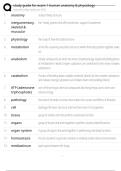
study guide for exam 1 human anatomy & physiology
Study online at https://quizlet.com/_817y5
1. anatomy study of body structure
2. integumentary, the 3 body systems that offer protection, support & movement
skeletal &
muscular
3. physiology the study of how the body functions
4. metabolism all the life-sustaining reactions that occur within the body systems together make
up
5. anabolism simple compounds are built into more complex(energy-required building phase
of metabolism in which simpler substances are combined to form more complex
substances)
6. catabolism Process of breaking down complex materials (foods) to form simpler substances
and release energy (substances are broken down into building blocks)
7. ATP (adenosine one of the principal chemical compounds that living things use to store and
triphosphate) release energy
8. pathology the branch of medical science that studies the causes and effects of diseases
9. cell (biology) the basic structural and functional unit of all organisms
10. tissue group of similar cells that perform a particular function
11. organs group of tissues that work together to perform closely related functions
12. organ system A group of organs that work together in performing vital body functions.
13. homeostasis Process by which organisms maintain a relatively stable internal environment.
14. mediastinum open space between the lungs
, study guide for exam 1 human anatomy & physiology
Study online at https://quizlet.com/_817y5
15. muscular system includes smooth, cardiac & skeletal muscle tissues, gives support, structure, and
movement throughout the body
16. nervous system The body system organized into the brain, spinal cord, and nerves, that send and
receive messages and integrate the body's activities.
17. endocrine sys- the system of glands that produce secretions that help to control bodily metabolic
tem activity such as growth, nutrient utilization, & reproduction
18. cardiovascular the heart & blood vessels make up the system involved in circulating blood and
system lymph through the body
19. lymphatic system these vessels assist in circulation by returning fluids from tissues to blood. The
tonsils & thymus gland play a role in immunity, protecting from disease. This
system also aids in the absorption of dietary fats
20. respiratory sys- The organ system responsible for the intake of oxygen and diffusion of that gas
tem into the blood and the elimination of carbon dioxide from the body. Important
structures of the system are the pharynx, larynx, trachea, bronchi, bronchioles,
and lungs. Alveoli in the lungs are the location of gas exchange with the blood.
The movement of the muscular diaphragm allows the lungs to inhale and exhale.
21. digestive system provides the body with nutrients, water, and electrolytes essential for health.
These organs serve to ingest, digest, and absorb food and eliminate the remains
(mouth, esophagus, stomach, small & large intestine, liver, gallbladder, & pan-
creas)
22. urinary system consisting of the kidneys, ureters, bladder, and urethra, removes wastes from the
blood and helps to maintain water and electrolyte balance
23. reproductive sys- organs and tissues involved in the production and maturation of gametes and in
tem their union and subsequent development as offspring
24.
, study guide for exam 1 human anatomy & physiology
Study online at https://quizlet.com/_817y5
the difference negative feedback systems reverses a condition to bring it back to a norm, positive
between nega- feedback intensifies a response
tive & positive
feedback
25. the difference extracellular fluid includes all body fluids outside the cells (bathes the cells, carries
between intracel- nutrients to & from cells & transports nutrients into and out of cells). Intracellular
lular and extra- fluid is contained within the cells
cellular fluid
26. superior above or in a higher position
27. inferior below or lower
28. anterior or ven- toward belly surface or front of body
tral
29. medial nearer to midline of body, dividing into left & right
30. lateral away from midline, toward the side
31. proximal nearer to the origin of a structure
32. distal farther from the origin
33. frontal or coronal divides the body into anterior or ventral (front) and posterior or dorsal (back)
plane sections
34. sagittal plane a vertical plane that divides the body into right and left parts
35. midsagittal plane a cut exactly down the midline of body
36. transverse plane horizontal division of the body into upper (superior) and lower (inferior) portions
37. dorsal cavity
, study guide for exam 1 human anatomy & physiology
Study online at https://quizlet.com/_817y5
body cavity that is located toward the back part of the body; divided into the cranial
cavity and the spinal cavity
38. ventral cavity cavity along the anterior side of the body made of the abdominal cavity and the
thoracic cavity
39. heart, lungs & the organs of the thoracic cavity
large blood ves-
sels that join the
heart
40. diaphragm a muscle used in breathing that separates the thoracic & abdominopelvic cavities
41. abdominal & the 2 regions that the abdominopelvic cavity is subdivided
pelvic cavities
42. the organs in the stomach, most of the intestine, the liver, gallbladder, pancreas & spleen
abdominal cavity
43. the organs of the urinary bladder, rectum & internal parts of the reproductive system
pelvic cavity
44. the 3 central re- epigastric region (inferior to breastbone),
gions, from supe- umbilical region (around the naval),&
rior to inferior hypogastric region (most inferior of all midline)
45. the regions on left & right hypochondriac regions (inferior to ribs),
the right & left, left & right lumbar regions (level - lumbar of spine), &
from superior to left & right iliac or inguinal region
inferior
46. the 4 quadrants right & left upper quadrant
of the abdomen right & left lower quadrant
Study online at https://quizlet.com/_817y5
1. anatomy study of body structure
2. integumentary, the 3 body systems that offer protection, support & movement
skeletal &
muscular
3. physiology the study of how the body functions
4. metabolism all the life-sustaining reactions that occur within the body systems together make
up
5. anabolism simple compounds are built into more complex(energy-required building phase
of metabolism in which simpler substances are combined to form more complex
substances)
6. catabolism Process of breaking down complex materials (foods) to form simpler substances
and release energy (substances are broken down into building blocks)
7. ATP (adenosine one of the principal chemical compounds that living things use to store and
triphosphate) release energy
8. pathology the branch of medical science that studies the causes and effects of diseases
9. cell (biology) the basic structural and functional unit of all organisms
10. tissue group of similar cells that perform a particular function
11. organs group of tissues that work together to perform closely related functions
12. organ system A group of organs that work together in performing vital body functions.
13. homeostasis Process by which organisms maintain a relatively stable internal environment.
14. mediastinum open space between the lungs
, study guide for exam 1 human anatomy & physiology
Study online at https://quizlet.com/_817y5
15. muscular system includes smooth, cardiac & skeletal muscle tissues, gives support, structure, and
movement throughout the body
16. nervous system The body system organized into the brain, spinal cord, and nerves, that send and
receive messages and integrate the body's activities.
17. endocrine sys- the system of glands that produce secretions that help to control bodily metabolic
tem activity such as growth, nutrient utilization, & reproduction
18. cardiovascular the heart & blood vessels make up the system involved in circulating blood and
system lymph through the body
19. lymphatic system these vessels assist in circulation by returning fluids from tissues to blood. The
tonsils & thymus gland play a role in immunity, protecting from disease. This
system also aids in the absorption of dietary fats
20. respiratory sys- The organ system responsible for the intake of oxygen and diffusion of that gas
tem into the blood and the elimination of carbon dioxide from the body. Important
structures of the system are the pharynx, larynx, trachea, bronchi, bronchioles,
and lungs. Alveoli in the lungs are the location of gas exchange with the blood.
The movement of the muscular diaphragm allows the lungs to inhale and exhale.
21. digestive system provides the body with nutrients, water, and electrolytes essential for health.
These organs serve to ingest, digest, and absorb food and eliminate the remains
(mouth, esophagus, stomach, small & large intestine, liver, gallbladder, & pan-
creas)
22. urinary system consisting of the kidneys, ureters, bladder, and urethra, removes wastes from the
blood and helps to maintain water and electrolyte balance
23. reproductive sys- organs and tissues involved in the production and maturation of gametes and in
tem their union and subsequent development as offspring
24.
, study guide for exam 1 human anatomy & physiology
Study online at https://quizlet.com/_817y5
the difference negative feedback systems reverses a condition to bring it back to a norm, positive
between nega- feedback intensifies a response
tive & positive
feedback
25. the difference extracellular fluid includes all body fluids outside the cells (bathes the cells, carries
between intracel- nutrients to & from cells & transports nutrients into and out of cells). Intracellular
lular and extra- fluid is contained within the cells
cellular fluid
26. superior above or in a higher position
27. inferior below or lower
28. anterior or ven- toward belly surface or front of body
tral
29. medial nearer to midline of body, dividing into left & right
30. lateral away from midline, toward the side
31. proximal nearer to the origin of a structure
32. distal farther from the origin
33. frontal or coronal divides the body into anterior or ventral (front) and posterior or dorsal (back)
plane sections
34. sagittal plane a vertical plane that divides the body into right and left parts
35. midsagittal plane a cut exactly down the midline of body
36. transverse plane horizontal division of the body into upper (superior) and lower (inferior) portions
37. dorsal cavity
, study guide for exam 1 human anatomy & physiology
Study online at https://quizlet.com/_817y5
body cavity that is located toward the back part of the body; divided into the cranial
cavity and the spinal cavity
38. ventral cavity cavity along the anterior side of the body made of the abdominal cavity and the
thoracic cavity
39. heart, lungs & the organs of the thoracic cavity
large blood ves-
sels that join the
heart
40. diaphragm a muscle used in breathing that separates the thoracic & abdominopelvic cavities
41. abdominal & the 2 regions that the abdominopelvic cavity is subdivided
pelvic cavities
42. the organs in the stomach, most of the intestine, the liver, gallbladder, pancreas & spleen
abdominal cavity
43. the organs of the urinary bladder, rectum & internal parts of the reproductive system
pelvic cavity
44. the 3 central re- epigastric region (inferior to breastbone),
gions, from supe- umbilical region (around the naval),&
rior to inferior hypogastric region (most inferior of all midline)
45. the regions on left & right hypochondriac regions (inferior to ribs),
the right & left, left & right lumbar regions (level - lumbar of spine), &
from superior to left & right iliac or inguinal region
inferior
46. the 4 quadrants right & left upper quadrant
of the abdomen right & left lower quadrant