IBS
SELS
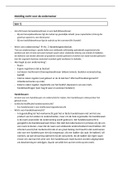
watched reviewed date topic
22 sept Lecture 1 – Ch. 1 Ghemawat (general strategy)
o Textbook: Ch. 1 Ghemawat
o Article: Collis & Rukstad (2008)
o Article: Whittington: the crafts of strategy
o Article: Casadesus (2011)
29 sept Lecture 2 – Ch. 2 Ghemawat (Porter)
o Textbook: Ch. 2 Ghemawat
o Case: wine industry example
o Article: Porter (2008)
o Article: Comparing Porter vs. Kim & Mauborgne
6 oct Lecture 3 – Ch. 3 and 5 Ghemawat (sustainable comp. strat.)
o Textbook: Ch. 3 Ghemawat
o Textbook: Ch. 5 Ghemawat
13 oct Lecture 4 – Ghemawat (corporate strategy) + Koller (value creation)
o Article: Martin & Sayrak
o Article: Collis & Montgomery
o Article: Baghai
o Textbook: Ch. 3 – Koller
o Article: Van Alstyne
20 oct Lecture 5 – FDI country data
o Article: Alfaro Charlton
o Article: UNCTAD World Investment Report
3 dec Lecture 14 – Ch. 13 Verbeke (cross-border M&As)
o Article: AB Inbev merger
8 dec Lecture 15 – Ch. 15 – Verbeke (EMNEs)
o Case: Tencent
o Article: Mathews (2006)
o Article: Emerging market multinationals
10 dec Lecture 16 – integrated case (Tata)
o Case: Tata (article + questions)
Assignments:
o Uber
o Uber continued
o FDI flow analysis
o AB Inbev
o Tencent
,SLANGEN
watched reviewed date topic
27 oct Lecture 6 – Guest lecture (CEOs)
3 nov Lecture 7 – Ch. 1 Verbeke (three concepts and four archetypes)
o Textbook: Ch. 1 Verbeke
o Video 1
o Video 2
5 nov Lecture 8 – Ch. 1 Verbeke (three concepts and four archetypes)
o Article: US and Chinese tech firms
10 nov Lecture 9 – Ch. 2 Verbeke (FSAs)
o Textbook: Ch. 2 Verbeke
o Case: Ikea
o Video on Japan Inc
o Article: Japan Inc
12 nov Lecture 10 – Ch. 3 Verbeke (LAs)
o Textbook: Ch. 3 Verbeke
o Video 3
o Article: Diamond model application: India’s IT consultancies
17 nov Lecture 11 – Ch. 4 Verbeke (Las)
o Textbook: Ch. 4 Verbeke
o Article: Hutzschenreuter (2014)
24 nov Lecture 12 – Ch. 5 Verbeke (FSAs and Las in MNEs)
o Textbook: Ch. 5 Verbeke
o Video on Harzing’s MNE types
o Video on Bartlett and Ghoshal’s model of foreign subsidiary roles
o Article: Harzing (2000)
1 dec Lecture 13 – Ch. 12 Verbeke (international strategic alliances)
o Textbook: Ch. 12 Verbeke
o Video on strategic alliances
Assignments:
o Honda
o IKEA
o Walmart
o Nestlé
o Danone & Wahaha
, IBS – A. SELS LECTURE 1 – 22/09/2020
What is strategy and why is it important?
Learning objectives
At the end of this chapter you should be able to:
1) Explain why every organization needs a sound strategy to compete successfully, manage the conduct of its
business, and strengthen its prospects for long-term success.
2) Illustrate how an organization’s strategy tends to evolve over time because of changing circumstances and on-
going management efforts to improve the organization’s strategy.
3) Justify why it is important for an organization to have a viable business model that outlines the organization’s
customer value proposition and its profit formula.
4) Explain the tests that are used to identify a good strategy.
Historical perspective of strategic thinking
First, look at the strategy of Accor (VIDEO).
• Brands of Accor: Ibis, Sofitel, Novotel, Fairmont, Mondrian.
- Added value of adding Swissotel: different from existing portfolio + they were competitors.
- Value proposition of hotel business: trust, hospitality,…
• “If we wish to increase the yield of grain in a certain field and on analysis it appears that the soil lacks potash,
potash may be said to be the strategic (or limiting) factor.” - Chester I. Barnard (economic historian): increases
performance
• “The term “strategy” is intended to focus on the interdependence of the adversaries’ decisions and on their
expectations about each other’s behavior.” - Thomas C. Schelling – depends on what others do
• “Strategy can be defined as the determination of the basic long-term goals and objectives of an enterprise, and
the adoption of courses of action and the allocation of resources necessary for carrying out those goals.” - Alfred
D. Chandler, Jr. – long-term
• Many definitions of strategic thinking exist
• Academics, managers, and consultants identify patterns (Toledo: academic papers + from consultancy)
• Path-dependence (mid-1980s) – your strategy now depends on what you did yesterday
Different levels in decision making
strategic
Strategic: this course: CEO/board: increases performance + depends on what others
tactical
are doing + long-term decision (3+ years)
operational
Tactical + operational: lower levels in companies
Origins of Strategic Thinking
• Military Interpretations – strategy comes from the military
- Ancient Greek origins
- Carl von Clausewitz (early first half 19th Century) – one of the advisors that Napoleon was inspired by:
also BCG applies insights from Clausewitz
® Clausewitz on Strategy (BOOK) – Abstract:
What can we learn from the detailed exegesis of Carl von Clausewitz for the study of strategy? Based on a detailed reading
of Clausewitz' book On War, this paper proposes that Clausewitz' reflections on strategy unfold along two parallel arguments.
First, he explores the principal difficulties of a positive theory of strategy. This critical inquiry shows how quantities and
qualities influence each other in war; how events emerge rather uncontrollably from the interplay of action and reaction; and
how the fog of war puts a veil of uncertainty over all information. Clausewitz's fundamental critique leads him to the
conclusion that a normative theory of strategy is impossible. Clausewitz' second stream of thought investigates how strategy
could be studied instead. On the one hand – and based on his famous dictum that war is the continuation of politics by other
means – he suggests understanding strategy as a socio-political (rhetorical) mechanism through which people can be
convinced in deliberations about a specific course of action. On the other hand, Clausewitz also reflects on the pedagogy
1
,IBS – A. SELS LECTURE 1 – 22/09/2020
of strategy. He concludes that theory may be useful to educate the mind of the future leader, but not to accompany him on
the battlefield. The contribution this paper hopes to make to The Age of Strategy: Exploring the Cultural, Organizational,
and Political Dimensions of Strategy is twofold: first, the study of Clausewitz represents a contribution to the study of the
history of strategic thought. The second contribution is aimed at the relation between strategy as theory and practice.
Following Raymond Aron's suggestion, On War does not offer a normative doctrine but rather a critical theory that equips
the student of strategy to understand the task at hand ‘without entertaining any absurd claim to communicate the secret of
victory.’
• First Industrial Revolution (mid-1700s to mid-1800s) – before there was not really strategic decision making:
economics is older than strategy – most companies are oligopolies with a lot of strategic behavior
- Failed to induce strategic thinking or behavior
- Companies lacked power to influence market outcomes
- Adam Smith’s “invisible hand”
• Second Industrial Revolution (second half of 19th Century)
• Railroads built mass markets (1850)
• Improved access to capital and credit allowed economies of scale to emerge
• Alfred D. Chandler, Jr. - said: strategy is a long-term thing: the idea is to survive more than 3y
- “visible hand” superseded “invisible hand” – invisible hand: laissez faire, laissez passer: S and D will go
to equilibrium vs visible hand: need for management and control
• Second Industrial Revolution (late 19th Century)
- Large, vertically integrated companies emerged in U.S., then Europe
• Captains of industry articulated strategic thinking
- GM - Alfred Sloan (1923-1946) - general motors
- New Jersey Bell - Chester Barnard (1930s)
• World War II era (1939 - 1945)
- Allocating scarce resources across the economy was problematic – you need to be strategic
- “learning curves” concept (1920s – 1930s)
- The Theory of Games and Economic Behavior (1944)
® John von Neumann
® Oskar Morgenstern
® Jewish economists who moved to the US and
developed game theory
• Zero-sum game:
- companies are enemies: what I win is what you lose – then:
prisoner’s dilemma: collude or not – strategic decision making
– eg. vitamin cartel
• World War II era (1939 - 1945) - limited resources
- Strategic thinking guides management decisions
- Peter Drucker – not that important
® company could exert positive control over market forces by using formal planning
• Strategic nature seemed to lie fallow (1950s)
- Excess demand existed for many products
- Korean War: boost in demand
- Europe and Japan: postwar delocations: greater governmental interference
- Poorer countries: government rather than market forces (after colonization)
• Post WWII
- inter-service competition among the U.S. military divisions
® Army, Navy, Air Force, Marines (Selznik) – learned a lot from competition between army, navy,…
during the war. Companies need to find what they are good at (and better than others) = distinctive
competence
- bridged strategic concept development to business applications
- distinctive competence had great resonance for strategic management
2
, IBS – A. SELS LECTURE 1 – 22/09/2020
Academic Underpinnings
• Eminent economists produced earliest academic writings about strategy (economics of strategy, by economists
in business schools) – strategy is very much linked to economics
- John Commons: institutionalist: focus on strategic factors
- Chester Barnard: potash example (intro)
- Ronald Coase: why firms exist
- Joseph Schumpeter: business strategy rather than price setting mechanism
- Edith Penrose: growth by resources
• Elite U.S. business schools emerged – first strategy courses, were called “business policy”
- Wharton (1881)
- Harvard (1908)
® managers should be trained to think strategically
® required second-year course in Business Policy (1912)
® students gain a broader perspective faced by executives
• Harvard Business Policy Professor’s
- George Albert Smith, Jr.
- C. Roland Christensen - “book: an innovator’s perspective”: strategy and innovation are very much related
® Does a firm's strategy match its competitive environment? – first: external analysis – look at
competition – always need to learn more about the industry first – read, read, read
® Do a company’s policies fit together into a program that effectively meets the requirements of the
competitive situation?
- Case + industry notes
® George Albert Smith & C. Roland Christensen, Suggestions to Instructors on Policy Formulation
(Chicago,: R.D. Irwin, 1951), p. 3–4.
• Professor Kenneth Andrews
- conclusions motivated by Swiss watchmakers
- differences in performance and industry strategies
- industry notes/company cases standard in Harvard’s Business Policy courses
- B-School discussions focused on SWOT Analysis Framework (1960s) - strengths, weaknesses,
opportunity, and threats
Exhibit 1.1 Andrew’s Strategy Framework
interesting to see: which of the distinctive
competences is going to be superior
giving the company a sustainable
competitive advantage = long-term
advantage
3
, IBS – A. SELS LECTURE 1 – 22/09/2020
Academic Underpinnings: external analysis
• Harvard Business Policy Conference (1963)
- Diffused SWOT concept in academia and management practice
- Defining a firm’s distinctive competencies was still problematic
Exhibit 1.2 Ansoff’s product/mission matrix
Diversification is more expensive than market penetration
eg. Colruyt
eg. Carrefour eg. AH
• Stanford Research Institute Study
- In-house formal planning departments (1963) – portfolio planning
• General Electric (GE) was a leader in developing planning techniques
- Used business school faculty
- Developed computer-based “Profitability Optimization Model” (PROM)
- Sought help of private consulting firms (BCG)
Big eight consulting firms
• Arthur Andersen now called “Accenture”
• Coopers & Lybrand
• Ernst & Whinney
• Arthur Young
• KPMG Peat Marwick
• Deloitte, Haskins & Sells
• Touche Ross
• PriceWaterhouse
• McKinsey & Company
• Booz Allen
• Sogeti (F) acquired Cap and Gemini
• Interested in a consulting firm job? http://www.careers-in-business.com/consulting/topfirms.htm
- Journals by consultancies: Outlook, Executive Agenda, Strategy & Business, Perspectives, Deloitte
Research, McKinsey Quarterly
The Rise of Strategy Consultants make strategic models quatifiable
• Boston Consulting Group (BCG) (1963)
- Applied quantitative research methods to business strategy
- Bruce Henderson, Founder
® good strategy primarily based on logic
- Drew from academic knowledge base
® Seymour Tilles, Harvard Business Policy Lecturer
4
SELS
watched reviewed date topic
22 sept Lecture 1 – Ch. 1 Ghemawat (general strategy)
o Textbook: Ch. 1 Ghemawat
o Article: Collis & Rukstad (2008)
o Article: Whittington: the crafts of strategy
o Article: Casadesus (2011)
29 sept Lecture 2 – Ch. 2 Ghemawat (Porter)
o Textbook: Ch. 2 Ghemawat
o Case: wine industry example
o Article: Porter (2008)
o Article: Comparing Porter vs. Kim & Mauborgne
6 oct Lecture 3 – Ch. 3 and 5 Ghemawat (sustainable comp. strat.)
o Textbook: Ch. 3 Ghemawat
o Textbook: Ch. 5 Ghemawat
13 oct Lecture 4 – Ghemawat (corporate strategy) + Koller (value creation)
o Article: Martin & Sayrak
o Article: Collis & Montgomery
o Article: Baghai
o Textbook: Ch. 3 – Koller
o Article: Van Alstyne
20 oct Lecture 5 – FDI country data
o Article: Alfaro Charlton
o Article: UNCTAD World Investment Report
3 dec Lecture 14 – Ch. 13 Verbeke (cross-border M&As)
o Article: AB Inbev merger
8 dec Lecture 15 – Ch. 15 – Verbeke (EMNEs)
o Case: Tencent
o Article: Mathews (2006)
o Article: Emerging market multinationals
10 dec Lecture 16 – integrated case (Tata)
o Case: Tata (article + questions)
Assignments:
o Uber
o Uber continued
o FDI flow analysis
o AB Inbev
o Tencent
,SLANGEN
watched reviewed date topic
27 oct Lecture 6 – Guest lecture (CEOs)
3 nov Lecture 7 – Ch. 1 Verbeke (three concepts and four archetypes)
o Textbook: Ch. 1 Verbeke
o Video 1
o Video 2
5 nov Lecture 8 – Ch. 1 Verbeke (three concepts and four archetypes)
o Article: US and Chinese tech firms
10 nov Lecture 9 – Ch. 2 Verbeke (FSAs)
o Textbook: Ch. 2 Verbeke
o Case: Ikea
o Video on Japan Inc
o Article: Japan Inc
12 nov Lecture 10 – Ch. 3 Verbeke (LAs)
o Textbook: Ch. 3 Verbeke
o Video 3
o Article: Diamond model application: India’s IT consultancies
17 nov Lecture 11 – Ch. 4 Verbeke (Las)
o Textbook: Ch. 4 Verbeke
o Article: Hutzschenreuter (2014)
24 nov Lecture 12 – Ch. 5 Verbeke (FSAs and Las in MNEs)
o Textbook: Ch. 5 Verbeke
o Video on Harzing’s MNE types
o Video on Bartlett and Ghoshal’s model of foreign subsidiary roles
o Article: Harzing (2000)
1 dec Lecture 13 – Ch. 12 Verbeke (international strategic alliances)
o Textbook: Ch. 12 Verbeke
o Video on strategic alliances
Assignments:
o Honda
o IKEA
o Walmart
o Nestlé
o Danone & Wahaha
, IBS – A. SELS LECTURE 1 – 22/09/2020
What is strategy and why is it important?
Learning objectives
At the end of this chapter you should be able to:
1) Explain why every organization needs a sound strategy to compete successfully, manage the conduct of its
business, and strengthen its prospects for long-term success.
2) Illustrate how an organization’s strategy tends to evolve over time because of changing circumstances and on-
going management efforts to improve the organization’s strategy.
3) Justify why it is important for an organization to have a viable business model that outlines the organization’s
customer value proposition and its profit formula.
4) Explain the tests that are used to identify a good strategy.
Historical perspective of strategic thinking
First, look at the strategy of Accor (VIDEO).
• Brands of Accor: Ibis, Sofitel, Novotel, Fairmont, Mondrian.
- Added value of adding Swissotel: different from existing portfolio + they were competitors.
- Value proposition of hotel business: trust, hospitality,…
• “If we wish to increase the yield of grain in a certain field and on analysis it appears that the soil lacks potash,
potash may be said to be the strategic (or limiting) factor.” - Chester I. Barnard (economic historian): increases
performance
• “The term “strategy” is intended to focus on the interdependence of the adversaries’ decisions and on their
expectations about each other’s behavior.” - Thomas C. Schelling – depends on what others do
• “Strategy can be defined as the determination of the basic long-term goals and objectives of an enterprise, and
the adoption of courses of action and the allocation of resources necessary for carrying out those goals.” - Alfred
D. Chandler, Jr. – long-term
• Many definitions of strategic thinking exist
• Academics, managers, and consultants identify patterns (Toledo: academic papers + from consultancy)
• Path-dependence (mid-1980s) – your strategy now depends on what you did yesterday
Different levels in decision making
strategic
Strategic: this course: CEO/board: increases performance + depends on what others
tactical
are doing + long-term decision (3+ years)
operational
Tactical + operational: lower levels in companies
Origins of Strategic Thinking
• Military Interpretations – strategy comes from the military
- Ancient Greek origins
- Carl von Clausewitz (early first half 19th Century) – one of the advisors that Napoleon was inspired by:
also BCG applies insights from Clausewitz
® Clausewitz on Strategy (BOOK) – Abstract:
What can we learn from the detailed exegesis of Carl von Clausewitz for the study of strategy? Based on a detailed reading
of Clausewitz' book On War, this paper proposes that Clausewitz' reflections on strategy unfold along two parallel arguments.
First, he explores the principal difficulties of a positive theory of strategy. This critical inquiry shows how quantities and
qualities influence each other in war; how events emerge rather uncontrollably from the interplay of action and reaction; and
how the fog of war puts a veil of uncertainty over all information. Clausewitz's fundamental critique leads him to the
conclusion that a normative theory of strategy is impossible. Clausewitz' second stream of thought investigates how strategy
could be studied instead. On the one hand – and based on his famous dictum that war is the continuation of politics by other
means – he suggests understanding strategy as a socio-political (rhetorical) mechanism through which people can be
convinced in deliberations about a specific course of action. On the other hand, Clausewitz also reflects on the pedagogy
1
,IBS – A. SELS LECTURE 1 – 22/09/2020
of strategy. He concludes that theory may be useful to educate the mind of the future leader, but not to accompany him on
the battlefield. The contribution this paper hopes to make to The Age of Strategy: Exploring the Cultural, Organizational,
and Political Dimensions of Strategy is twofold: first, the study of Clausewitz represents a contribution to the study of the
history of strategic thought. The second contribution is aimed at the relation between strategy as theory and practice.
Following Raymond Aron's suggestion, On War does not offer a normative doctrine but rather a critical theory that equips
the student of strategy to understand the task at hand ‘without entertaining any absurd claim to communicate the secret of
victory.’
• First Industrial Revolution (mid-1700s to mid-1800s) – before there was not really strategic decision making:
economics is older than strategy – most companies are oligopolies with a lot of strategic behavior
- Failed to induce strategic thinking or behavior
- Companies lacked power to influence market outcomes
- Adam Smith’s “invisible hand”
• Second Industrial Revolution (second half of 19th Century)
• Railroads built mass markets (1850)
• Improved access to capital and credit allowed economies of scale to emerge
• Alfred D. Chandler, Jr. - said: strategy is a long-term thing: the idea is to survive more than 3y
- “visible hand” superseded “invisible hand” – invisible hand: laissez faire, laissez passer: S and D will go
to equilibrium vs visible hand: need for management and control
• Second Industrial Revolution (late 19th Century)
- Large, vertically integrated companies emerged in U.S., then Europe
• Captains of industry articulated strategic thinking
- GM - Alfred Sloan (1923-1946) - general motors
- New Jersey Bell - Chester Barnard (1930s)
• World War II era (1939 - 1945)
- Allocating scarce resources across the economy was problematic – you need to be strategic
- “learning curves” concept (1920s – 1930s)
- The Theory of Games and Economic Behavior (1944)
® John von Neumann
® Oskar Morgenstern
® Jewish economists who moved to the US and
developed game theory
• Zero-sum game:
- companies are enemies: what I win is what you lose – then:
prisoner’s dilemma: collude or not – strategic decision making
– eg. vitamin cartel
• World War II era (1939 - 1945) - limited resources
- Strategic thinking guides management decisions
- Peter Drucker – not that important
® company could exert positive control over market forces by using formal planning
• Strategic nature seemed to lie fallow (1950s)
- Excess demand existed for many products
- Korean War: boost in demand
- Europe and Japan: postwar delocations: greater governmental interference
- Poorer countries: government rather than market forces (after colonization)
• Post WWII
- inter-service competition among the U.S. military divisions
® Army, Navy, Air Force, Marines (Selznik) – learned a lot from competition between army, navy,…
during the war. Companies need to find what they are good at (and better than others) = distinctive
competence
- bridged strategic concept development to business applications
- distinctive competence had great resonance for strategic management
2
, IBS – A. SELS LECTURE 1 – 22/09/2020
Academic Underpinnings
• Eminent economists produced earliest academic writings about strategy (economics of strategy, by economists
in business schools) – strategy is very much linked to economics
- John Commons: institutionalist: focus on strategic factors
- Chester Barnard: potash example (intro)
- Ronald Coase: why firms exist
- Joseph Schumpeter: business strategy rather than price setting mechanism
- Edith Penrose: growth by resources
• Elite U.S. business schools emerged – first strategy courses, were called “business policy”
- Wharton (1881)
- Harvard (1908)
® managers should be trained to think strategically
® required second-year course in Business Policy (1912)
® students gain a broader perspective faced by executives
• Harvard Business Policy Professor’s
- George Albert Smith, Jr.
- C. Roland Christensen - “book: an innovator’s perspective”: strategy and innovation are very much related
® Does a firm's strategy match its competitive environment? – first: external analysis – look at
competition – always need to learn more about the industry first – read, read, read
® Do a company’s policies fit together into a program that effectively meets the requirements of the
competitive situation?
- Case + industry notes
® George Albert Smith & C. Roland Christensen, Suggestions to Instructors on Policy Formulation
(Chicago,: R.D. Irwin, 1951), p. 3–4.
• Professor Kenneth Andrews
- conclusions motivated by Swiss watchmakers
- differences in performance and industry strategies
- industry notes/company cases standard in Harvard’s Business Policy courses
- B-School discussions focused on SWOT Analysis Framework (1960s) - strengths, weaknesses,
opportunity, and threats
Exhibit 1.1 Andrew’s Strategy Framework
interesting to see: which of the distinctive
competences is going to be superior
giving the company a sustainable
competitive advantage = long-term
advantage
3
, IBS – A. SELS LECTURE 1 – 22/09/2020
Academic Underpinnings: external analysis
• Harvard Business Policy Conference (1963)
- Diffused SWOT concept in academia and management practice
- Defining a firm’s distinctive competencies was still problematic
Exhibit 1.2 Ansoff’s product/mission matrix
Diversification is more expensive than market penetration
eg. Colruyt
eg. Carrefour eg. AH
• Stanford Research Institute Study
- In-house formal planning departments (1963) – portfolio planning
• General Electric (GE) was a leader in developing planning techniques
- Used business school faculty
- Developed computer-based “Profitability Optimization Model” (PROM)
- Sought help of private consulting firms (BCG)
Big eight consulting firms
• Arthur Andersen now called “Accenture”
• Coopers & Lybrand
• Ernst & Whinney
• Arthur Young
• KPMG Peat Marwick
• Deloitte, Haskins & Sells
• Touche Ross
• PriceWaterhouse
• McKinsey & Company
• Booz Allen
• Sogeti (F) acquired Cap and Gemini
• Interested in a consulting firm job? http://www.careers-in-business.com/consulting/topfirms.htm
- Journals by consultancies: Outlook, Executive Agenda, Strategy & Business, Perspectives, Deloitte
Research, McKinsey Quarterly
The Rise of Strategy Consultants make strategic models quatifiable
• Boston Consulting Group (BCG) (1963)
- Applied quantitative research methods to business strategy
- Bruce Henderson, Founder
® good strategy primarily based on logic
- Drew from academic knowledge base
® Seymour Tilles, Harvard Business Policy Lecturer
4