For us to even know anything about light, we need ways of making it, measuring it, and using it. In
order to do all of these things, we creatures made of matter need methods of interacting with light.
We know that matter is somehow responsible for the creation of photons, but until now, we really
haven't considered how. Light production falls into two major categories: incandescence and
luminescence. Incandescence is the production of light by any body that contains heat energy, the
energy of vibration. Incandescence is how lament light bulbs produce light. By warming the metal
lament inside the lightbulb using electricity, the metal grows hotter and hotter, emitting more and
more light as the temperature increases. The scienti c principle of blackbody radiation explains how
photons are created by the intense vibrations of atoms and electrons at high temperatures.
Blackbody radiation applies to any object above absolute zero, even those that are very cold since
even small atomic vibrations exist above absolute zero, the coldest possible temperature. The
theory of blackbody radiation describes how the oscillation of atoms in objects creates light waves.
Atoms and electrons sloshing back and forth due to thermal vibrations or heat act as tiny emitters,
creating oscillating electromagnetic elds. This wiggle of electromagnetic eld can be wrapped up
in a neat little bundle we call a photon. Luminescence is the production of light through atomic
transitions, which are sometimes called cold body radiation. In a planetary model of an atom,
electron orbits move in orbits around the nucleus. When an electron jumps from one orbit to
another, it emits or absorbs a photon of speci c energy to do this. There are many subcategories of
luminescent processes. Fluorescence converts UV photons, which we can't see into visible light.
Photo phosphorescence releases energy stored in glowing the dark objects, and triboluminescence
produces light when we chew on hard candies like lifesavers. Now that we've got some light to
work with, let's make sure we can measure its properties. When we want to take a measurement of
light, what are we measuring? We know that the speed of light is denoted by the letter c, and as a
constant, at just under three times 10 to the eight meters per second. What is left is either measure
of wavelength, the frequency, or the energy that the photon packets carry. A typical red laser emits
a beam of photons with a wavelength of 650 nanometers. It could equally be advertised as having
photons oscillating at a frequency of 460 terahertz, or even in terms of the photon energy, 1.9
electron volts. Electron volts may sound like a strange unit, one of many will come across in this
course. It is de ned as the amount of energy that is gained or lost by the charge of a single electron
moving across an electric potential di erence of 1 volt. It is a minuscule amount of energy
equivalent to about 1.6 times 10 to the minus 19 Joules. The naming and labeling of light can be
confusing. The thing to remember is that a photon's energy, wavelength, and frequency can all be
considered as equivalent ways to describe light. While a radio frequency photon emitted by a radio
station is usually characterized by its frequency, say 102.9 megahertz. An X-ray photon is usually
characterized by its energy, say a kiloelectron volt. Visible light photons are often described by their
wavelength, between 400 and 700 nanometers. If you are given one of energy, frequency or
wavelength, there are some very simple mathematical relationships that allow you to determine the
other quantities. The equation relating frequency and wavelength of a photon to the speed of light
is, the wavelength lambda times the frequency f is
equal to the speed of light c. Let's double check the
values we had for our red laser. We've been given its
wavelength at 650 nanometers. So to determine its
frequency, we simply divide the speed of light c by the
wavelength lambda. Remember, in order to calculate
this properly, we need to express both the speed of light
and the wavelength in the common unit of meters. So,
a red photon with a wavelength of 650 nanometers
has an oscillation frequency of 460 terahertz, exactly what I stated before.
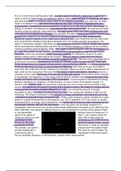
, Incadence The hotter the object the brighter it glows
glows due
to temperature
BlackbodyRadiation is another name for incadescence
the vibration creates an electromagnetic field that can
be packed up into photons
Cold
body radiation Luminance Emission absorbstron
Flocame Converts UV photons to visible
photophosphorecence releases energy in glow in the
dark objects
triboluminescence produces tight when you chew on had
candies dike lightsabers2
Electronvolts C Af
r Energy
E hf
1 Planks constant
p
E htt
Er o
light second 299 792 458M 299 792 458 km
E
gEEBfp
f's I
J39YeiInmese.nd taffy
E mjmaooogamiggaqeaagamain
BpzFzd
iAU 8.3lightminutes 1496 million km
distance between earthandsun
Average
9.5 X 10¹²km
light year
order to do all of these things, we creatures made of matter need methods of interacting with light.
We know that matter is somehow responsible for the creation of photons, but until now, we really
haven't considered how. Light production falls into two major categories: incandescence and
luminescence. Incandescence is the production of light by any body that contains heat energy, the
energy of vibration. Incandescence is how lament light bulbs produce light. By warming the metal
lament inside the lightbulb using electricity, the metal grows hotter and hotter, emitting more and
more light as the temperature increases. The scienti c principle of blackbody radiation explains how
photons are created by the intense vibrations of atoms and electrons at high temperatures.
Blackbody radiation applies to any object above absolute zero, even those that are very cold since
even small atomic vibrations exist above absolute zero, the coldest possible temperature. The
theory of blackbody radiation describes how the oscillation of atoms in objects creates light waves.
Atoms and electrons sloshing back and forth due to thermal vibrations or heat act as tiny emitters,
creating oscillating electromagnetic elds. This wiggle of electromagnetic eld can be wrapped up
in a neat little bundle we call a photon. Luminescence is the production of light through atomic
transitions, which are sometimes called cold body radiation. In a planetary model of an atom,
electron orbits move in orbits around the nucleus. When an electron jumps from one orbit to
another, it emits or absorbs a photon of speci c energy to do this. There are many subcategories of
luminescent processes. Fluorescence converts UV photons, which we can't see into visible light.
Photo phosphorescence releases energy stored in glowing the dark objects, and triboluminescence
produces light when we chew on hard candies like lifesavers. Now that we've got some light to
work with, let's make sure we can measure its properties. When we want to take a measurement of
light, what are we measuring? We know that the speed of light is denoted by the letter c, and as a
constant, at just under three times 10 to the eight meters per second. What is left is either measure
of wavelength, the frequency, or the energy that the photon packets carry. A typical red laser emits
a beam of photons with a wavelength of 650 nanometers. It could equally be advertised as having
photons oscillating at a frequency of 460 terahertz, or even in terms of the photon energy, 1.9
electron volts. Electron volts may sound like a strange unit, one of many will come across in this
course. It is de ned as the amount of energy that is gained or lost by the charge of a single electron
moving across an electric potential di erence of 1 volt. It is a minuscule amount of energy
equivalent to about 1.6 times 10 to the minus 19 Joules. The naming and labeling of light can be
confusing. The thing to remember is that a photon's energy, wavelength, and frequency can all be
considered as equivalent ways to describe light. While a radio frequency photon emitted by a radio
station is usually characterized by its frequency, say 102.9 megahertz. An X-ray photon is usually
characterized by its energy, say a kiloelectron volt. Visible light photons are often described by their
wavelength, between 400 and 700 nanometers. If you are given one of energy, frequency or
wavelength, there are some very simple mathematical relationships that allow you to determine the
other quantities. The equation relating frequency and wavelength of a photon to the speed of light
is, the wavelength lambda times the frequency f is
equal to the speed of light c. Let's double check the
values we had for our red laser. We've been given its
wavelength at 650 nanometers. So to determine its
frequency, we simply divide the speed of light c by the
wavelength lambda. Remember, in order to calculate
this properly, we need to express both the speed of light
and the wavelength in the common unit of meters. So,
a red photon with a wavelength of 650 nanometers
has an oscillation frequency of 460 terahertz, exactly what I stated before.
, Incadence The hotter the object the brighter it glows
glows due
to temperature
BlackbodyRadiation is another name for incadescence
the vibration creates an electromagnetic field that can
be packed up into photons
Cold
body radiation Luminance Emission absorbstron
Flocame Converts UV photons to visible
photophosphorecence releases energy in glow in the
dark objects
triboluminescence produces tight when you chew on had
candies dike lightsabers2
Electronvolts C Af
r Energy
E hf
1 Planks constant
p
E htt
Er o
light second 299 792 458M 299 792 458 km
E
gEEBfp
f's I
J39YeiInmese.nd taffy
E mjmaooogamiggaqeaagamain
BpzFzd
iAU 8.3lightminutes 1496 million km
distance between earthandsun
Average
9.5 X 10¹²km
light year