LECTURE
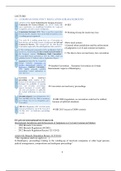
3.1 – EUROPEAN INSOLVENCY REGULATION (EIR) BACKGROUND
→ EEC
→ Working Group for insolvency law.
→two track system:
1.General about jurisdiction and the enforcement
of judgments in civil and commercial matters.
2. The idea to have an insolvency law convention
→ Istanbul Convention – European Convention on Certain
International Aspects of Bankruptcy.
→ Convention on insolvency proceedings.
→ EIR 2000 (regulation, as convention could not be ratified,
because of political situation).
→ EIR 2015 (recast of 2000 version)
EU private international law framework
International Jurisdiction and Enforcement of Judgments in Civil and Commercial Matters
- 1968 Brussels Convention
- 2002 Brussels Regulation (44/2001)
- 2012 Brussels Regulation Recast (1215/2012)
Article1(2) Brussels Regulation Recast (1215/2012)
“This regulation shall not apply to:(…)
b) Bankruptcy: proceedings relating to the winding-up of insolvent companies or other legal persons,
judicial arrangements, compositions and analogous proceedings”
1
, Parallel provision including specifically these proceedings is stated in Recital 7 EIR 2015.
The Brussels recast is a sort of delineation of the EIR; the scope excludes art. 1(2)(b). A similar provision
can be found in one of the recitals of the EIR 2015.
EU Insolvency law framework
Within the EU framework, we can distinguish between three areas:
1. Ad hoc (examples)
- Transfer of Undertakings Directive: CouncilDirective2001/23/EC on the approximation of the laws of
the Member States relating to the safeguarding of employees' rights in the event of transfers of
undertakings, businesses or parts of undertakings or businesses.
o Replacing Council Directive 77/187/EEC of 1977.
- Package Travel Directive
o Directive (EU) 2015/2302 on package travel and linked travel arrangements, Replacing
Council Directive 90/314/EEC of 1990.
2. Procedural
- European Insolvency Regulation (EIR) 1346/2000 – entry into force 31 May 2002.
- European Insolvency Regulation Recast (EIR Recast) 2015/848 – entry into force 26 June 2017
3. Substantive – coordination and harmonization of insolvency law
- Commission Recommendation of 12 March 2014 on a new approach to business failure and insolvency
- EU Directive on restructuring and insolvency (2019)
3.2 – EIR 2015: KEY FEATURES AND INTERPRETATION
Key features
In contrast with the UNCITRAL, which focuses on recognition, the EIR focuses on:
1. Jurisdiction – what court is authorized and competent to judge on the matters presented to it.
2. Applicable law – which country/jurisdiction should be applied with questions related to the insolvency.
3. Recognition and enforcement of foreign judgments
4. Communication and cooperation
5. Insolvency proceedings of members of a group of companies – this is a new item in comparison to the
UNCITRAL Model Law and is important for the cross-border insolvency law.
With respect to feature 5 (group of companies) it is important that you see a difference in structure in the
insolvency regulations. Although the regulation mentions the feature of ‘group of companies’, the base
principle is one debtor:
Main Insolvency proceedings (Optional) Secondary Insolvency Proceedings
Debtor’s COMI (in an EU Member State) – apart Debtor’s ‘establishment’ within the territory of
from Denmark. another Member State.
Against the same debtor as the main proceeding –
territorial (secondary) proceedings.
Could be a rescue or liquidation proceeding May be reorganization or liquidation (EIR 2000:
only liquidation).
The same court appoints an ‘insolvency Effects restricted to local assets
practitioner (EIR 2000: liquidator)
2
3.1 – EUROPEAN INSOLVENCY REGULATION (EIR) BACKGROUND
→ EEC
→ Working Group for insolvency law.
→two track system:
1.General about jurisdiction and the enforcement
of judgments in civil and commercial matters.
2. The idea to have an insolvency law convention
→ Istanbul Convention – European Convention on Certain
International Aspects of Bankruptcy.
→ Convention on insolvency proceedings.
→ EIR 2000 (regulation, as convention could not be ratified,
because of political situation).
→ EIR 2015 (recast of 2000 version)
EU private international law framework
International Jurisdiction and Enforcement of Judgments in Civil and Commercial Matters
- 1968 Brussels Convention
- 2002 Brussels Regulation (44/2001)
- 2012 Brussels Regulation Recast (1215/2012)
Article1(2) Brussels Regulation Recast (1215/2012)
“This regulation shall not apply to:(…)
b) Bankruptcy: proceedings relating to the winding-up of insolvent companies or other legal persons,
judicial arrangements, compositions and analogous proceedings”
1
, Parallel provision including specifically these proceedings is stated in Recital 7 EIR 2015.
The Brussels recast is a sort of delineation of the EIR; the scope excludes art. 1(2)(b). A similar provision
can be found in one of the recitals of the EIR 2015.
EU Insolvency law framework
Within the EU framework, we can distinguish between three areas:
1. Ad hoc (examples)
- Transfer of Undertakings Directive: CouncilDirective2001/23/EC on the approximation of the laws of
the Member States relating to the safeguarding of employees' rights in the event of transfers of
undertakings, businesses or parts of undertakings or businesses.
o Replacing Council Directive 77/187/EEC of 1977.
- Package Travel Directive
o Directive (EU) 2015/2302 on package travel and linked travel arrangements, Replacing
Council Directive 90/314/EEC of 1990.
2. Procedural
- European Insolvency Regulation (EIR) 1346/2000 – entry into force 31 May 2002.
- European Insolvency Regulation Recast (EIR Recast) 2015/848 – entry into force 26 June 2017
3. Substantive – coordination and harmonization of insolvency law
- Commission Recommendation of 12 March 2014 on a new approach to business failure and insolvency
- EU Directive on restructuring and insolvency (2019)
3.2 – EIR 2015: KEY FEATURES AND INTERPRETATION
Key features
In contrast with the UNCITRAL, which focuses on recognition, the EIR focuses on:
1. Jurisdiction – what court is authorized and competent to judge on the matters presented to it.
2. Applicable law – which country/jurisdiction should be applied with questions related to the insolvency.
3. Recognition and enforcement of foreign judgments
4. Communication and cooperation
5. Insolvency proceedings of members of a group of companies – this is a new item in comparison to the
UNCITRAL Model Law and is important for the cross-border insolvency law.
With respect to feature 5 (group of companies) it is important that you see a difference in structure in the
insolvency regulations. Although the regulation mentions the feature of ‘group of companies’, the base
principle is one debtor:
Main Insolvency proceedings (Optional) Secondary Insolvency Proceedings
Debtor’s COMI (in an EU Member State) – apart Debtor’s ‘establishment’ within the territory of
from Denmark. another Member State.
Against the same debtor as the main proceeding –
territorial (secondary) proceedings.
Could be a rescue or liquidation proceeding May be reorganization or liquidation (EIR 2000:
only liquidation).
The same court appoints an ‘insolvency Effects restricted to local assets
practitioner (EIR 2000: liquidator)
2