Summary of the book Consumption and life-styles: a short introduction, written by Dieter Bögenhold & Farah Naz
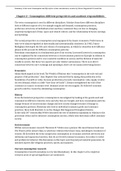
Chapter 2 – Consumption: different perspectives and academic responsibilities
The term consumption is used in different disciplines. Scholars from these different disciplines
look at different aspects of it, for example supply and demand; consumption practices;
preference structures of individual actors and how consistent they are due to changing
empirical background of time, space and related culture; and the relationship between earnings
and spending.
The social perspective on consumption was long ignored by classic economics. Preferences in
taste were almost regarded as historically and internationally consistent. In 1985, Franco
Modigliani developed the life cycle theory of consumption, in which he describes how different
phases in life account for different consumption patterns.
Nowadays consumption is a fundamental part of our society. Increased interest in consumption
can be explained by the connection between a) socioeconomic practices of people in relation to
consumption patterns and b) one’s material condition in society and the division of material
wealth in society. But these two aspects are also relative autonomous. There is no direct
connection between one’s earnings and spending’s, there are too many intervening factors.
Economics
Adam Smith argued in his book The Wealth of Nations that “consumption is the sole end and
purpose of all production”. Jean-Baptiste Say criticized this by saying that production is the
foundation of wealth or value, because production proceeds consumption. (aka, supply creates
its own demand, which is a little “kort door de bocht”). Keynes strengthened the role of the
customer at a macro-economic level (demand create its own supply). He believed economic
growth could be created by stimulating consumption.
History
From the historical perspective consumption is investigated by looking at the goods used and
consumed in different centuries; how and why they are bought; and how consumption patterns
change because of socioeconomic change and how society changes because of change in
consumption patterns. Historians also look at individual consumer goods and consumer
practices, these both illustrate to us the changes that happened throughout history.
In the early 20th century Max Weber discussed the rise of industrial capitalism in relation to the
protestant ethics and its inherent consumption ascetics, which later historians called consumer
society.
Socioeconomic
Within socioeconomic research Thorstein B. Veblen was a pioneer. His most famous book was
The Theory of the Leisure Class, in which he criticized the leisure class, including its treatment of
women. He described the term conspicuous consumption as economic activities driven by non-
utilitarian and impractical motives, that do not fit with rational economics, but rather to tribal
and prehistoric behavior. His discussion on this topic went beyond just material possession, he
included aspects like religious practices, sports, and manners.
Current consumption research
Consumption research nowadays is very interdisciplinary. In this chapter a few empirical
research areas of special significance are mentioned.
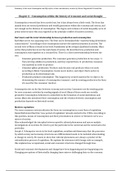
Chapter 2 – Consumption: different perspectives and academic responsibilities
The term consumption is used in different disciplines. Scholars from these different disciplines
look at different aspects of it, for example supply and demand; consumption practices;
preference structures of individual actors and how consistent they are due to changing
empirical background of time, space and related culture; and the relationship between earnings
and spending.
The social perspective on consumption was long ignored by classic economics. Preferences in
taste were almost regarded as historically and internationally consistent. In 1985, Franco
Modigliani developed the life cycle theory of consumption, in which he describes how different
phases in life account for different consumption patterns.
Nowadays consumption is a fundamental part of our society. Increased interest in consumption
can be explained by the connection between a) socioeconomic practices of people in relation to
consumption patterns and b) one’s material condition in society and the division of material
wealth in society. But these two aspects are also relative autonomous. There is no direct
connection between one’s earnings and spending’s, there are too many intervening factors.
Economics
Adam Smith argued in his book The Wealth of Nations that “consumption is the sole end and
purpose of all production”. Jean-Baptiste Say criticized this by saying that production is the
foundation of wealth or value, because production proceeds consumption. (aka, supply creates
its own demand, which is a little “kort door de bocht”). Keynes strengthened the role of the
customer at a macro-economic level (demand create its own supply). He believed economic
growth could be created by stimulating consumption.
History
From the historical perspective consumption is investigated by looking at the goods used and
consumed in different centuries; how and why they are bought; and how consumption patterns
change because of socioeconomic change and how society changes because of change in
consumption patterns. Historians also look at individual consumer goods and consumer
practices, these both illustrate to us the changes that happened throughout history.
In the early 20th century Max Weber discussed the rise of industrial capitalism in relation to the
protestant ethics and its inherent consumption ascetics, which later historians called consumer
society.
Socioeconomic
Within socioeconomic research Thorstein B. Veblen was a pioneer. His most famous book was
The Theory of the Leisure Class, in which he criticized the leisure class, including its treatment of
women. He described the term conspicuous consumption as economic activities driven by non-
utilitarian and impractical motives, that do not fit with rational economics, but rather to tribal
and prehistoric behavior. His discussion on this topic went beyond just material possession, he
included aspects like religious practices, sports, and manners.
Current consumption research
Consumption research nowadays is very interdisciplinary. In this chapter a few empirical
research areas of special significance are mentioned.