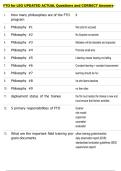
FTO for LEO UPDATED ACTUAL Questions and CORRECT Answers
1. How many philosophies are of the FTO 9
program
2. Philosophy #1 We build to succeed
3. Philosophy #2 No Surprise no secrets
4. Philosophy #3 Mistakes will be tolerated and expected
5. Philosophy #4 Promote small wins
6. Philosophy #5 Listening means hearing not telling
7. Philosophy #6 Constant learning = constant improvement
8. Philosophy #7 learning should be fun
9. Philosophy #8 he who learns teaches
10. Philosophy #9 no free rides
11. deployment status of the trainee the fto must realize the trainee is new and
must ensure that his/her activities
12. 5 primary responsibilities of FTO trainer
role model
supervisor
counselor
evaluator
13. What are the important field training pro- oflcer training guide/checklist
gram documents daily observation report (DOR)
standardized evaluation guidelines (SEG)
supervisors report
, daily observation report performance chart
remedial training plan
14. Officer training guide/ checklist an instructional guide used to instruct a
trainee on various duties they will likely per-
form as an oflcer
15. Daily observation report (DOR) the most important administrative docu-
mentation form in the field training program
16. Standardized evaluation guidelines the San Jose model assessment guideline
used at the end of a shift to determine the
ratings the trainee will receive on the DOR
17. Supervisor's report base on prior DOR rating periods and pro-
vides a basis for remediation and goal set-
ting
18. Daily Observation report performance is a method of tracking the oflcer trainee's
chart performance throughout the program by
transferring ratings from the DOR to a chart
19. Remedial training plan a plan of action developed to assist a trainee
in achieving acceptable performance level in
areas of weakness
20. Training extension policy is a rule provided a specific problem is identified during train-
by the agency as the need arises when: ing
the identified problem is viewed as remedi-
able
the solution of the identified problem is rea-
sonable and appropriate for the agency
, proficiency should be accomplished within
the time specified by the program
21. It is particularly important that the FTO... maintains a positive and objective attitude
when working with a trainee
22. Characteristics of the FTO as a trainer in- - assess and identify training needs
clude - apply appropriate training techniques to
meet those needs
- evaluate the trainee's progress
- refrain from stereotyping or discriminat-
ing
- base all judgments of the trainee's perfor-
mance purely on objective and independent
observations
23. Characteristics of the FTO as a role model - excellence in carrying out duties
- positive oflcer traits and characteristics
- professionalism in bearing and appear-
ance
- a positive attitude
- knowledge of agency goals, rules, codes of
conduct and criminal statutes
24. Characteristics of the FTO as a supervisor - gives clear direction
- reviews written reports for completeness
and accuracy
- conforms to policy and procedures
25. Characteristics of the FTO as an on the job - being a good listener
counselor - showing empathy when discussing work
and personal issues
- building rapport with the trainee
1. How many philosophies are of the FTO 9
program
2. Philosophy #1 We build to succeed
3. Philosophy #2 No Surprise no secrets
4. Philosophy #3 Mistakes will be tolerated and expected
5. Philosophy #4 Promote small wins
6. Philosophy #5 Listening means hearing not telling
7. Philosophy #6 Constant learning = constant improvement
8. Philosophy #7 learning should be fun
9. Philosophy #8 he who learns teaches
10. Philosophy #9 no free rides
11. deployment status of the trainee the fto must realize the trainee is new and
must ensure that his/her activities
12. 5 primary responsibilities of FTO trainer
role model
supervisor
counselor
evaluator
13. What are the important field training pro- oflcer training guide/checklist
gram documents daily observation report (DOR)
standardized evaluation guidelines (SEG)
supervisors report
, daily observation report performance chart
remedial training plan
14. Officer training guide/ checklist an instructional guide used to instruct a
trainee on various duties they will likely per-
form as an oflcer
15. Daily observation report (DOR) the most important administrative docu-
mentation form in the field training program
16. Standardized evaluation guidelines the San Jose model assessment guideline
used at the end of a shift to determine the
ratings the trainee will receive on the DOR
17. Supervisor's report base on prior DOR rating periods and pro-
vides a basis for remediation and goal set-
ting
18. Daily Observation report performance is a method of tracking the oflcer trainee's
chart performance throughout the program by
transferring ratings from the DOR to a chart
19. Remedial training plan a plan of action developed to assist a trainee
in achieving acceptable performance level in
areas of weakness
20. Training extension policy is a rule provided a specific problem is identified during train-
by the agency as the need arises when: ing
the identified problem is viewed as remedi-
able
the solution of the identified problem is rea-
sonable and appropriate for the agency
, proficiency should be accomplished within
the time specified by the program
21. It is particularly important that the FTO... maintains a positive and objective attitude
when working with a trainee
22. Characteristics of the FTO as a trainer in- - assess and identify training needs
clude - apply appropriate training techniques to
meet those needs
- evaluate the trainee's progress
- refrain from stereotyping or discriminat-
ing
- base all judgments of the trainee's perfor-
mance purely on objective and independent
observations
23. Characteristics of the FTO as a role model - excellence in carrying out duties
- positive oflcer traits and characteristics
- professionalism in bearing and appear-
ance
- a positive attitude
- knowledge of agency goals, rules, codes of
conduct and criminal statutes
24. Characteristics of the FTO as a supervisor - gives clear direction
- reviews written reports for completeness
and accuracy
- conforms to policy and procedures
25. Characteristics of the FTO as an on the job - being a good listener
counselor - showing empathy when discussing work
and personal issues
- building rapport with the trainee