ATTACHMENT
Revision booklet
, ATTACHMENT
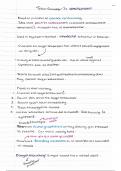
KEY WORDS
ATTACHMENT- an emotional bond between two people. It was a two-
way process that endures over time, leading to certain behaviours such
as clinging and proximity-seeking and serves the function of protecting
an infant.
CAREGIVER- any person who is providing care for a child (parents,
grandparent etc)
INTERACTIONAL SYNCHRONY- when two people interact they tend to
mirror what the other is doing in terms of their facial/body
movements, including imitating behaviours as well as emotions.
RECIPROCITY- Responding to the action of another with a similar
action, where the actions of one partner elicit response from another,
not mirroring but replying with a similar thing.
CAREGIVER-INFANT INTERACTIONS-
Meltzoff and Moore proposed that the child copying the person’s
actions (interactional synchrony) is intentional. However in contrast,
Piaget only thought that true imitation happened after 1 year.
AO3 EVALUATION POINTS.
- Problems with testing infant behaviour, as they can’t talk, can’t
explain their behaviours or decisions. Also may be general activity,
not just specific imitated behaviours
- Failure to replicate interactions between infants due to individual
differences
- Research is valuable as it forms basis of social development
theories
, THE DEVELOPMENT OF ATTACHMENT-
KEY WORDS
MULTIPLE ATTACHMENT- having more than one single caregiver
PRIMARY ATTACHMENT FIGURE- the person who has formed the
closest bond with the child, demonstrated by the intensity of the bond.
This is usually the biological mother.
SEPARATION ANXIETY- distress shown by an infant who is separated by
their primary caregiver
STRANGER ANXIETY- distress shown by an infant who is approached or
picked up by someone who is unfamiliar
THE ROLE OF THE FATHER-
Can either be the primary caregiver (if the mother is not present, or is
not as involved as the father).
However, fathers are usually secondary caregivers, not primary (on
average).
Being secondary caregiver, their role is to be playful, physically more
active and providing more challenging situations for the child to
develop and learn in other aspects of their life. They are there to aid
communication and cognitive/physical development.
AO3 EVALUATION POINTS.
- Unreliable data due to many studies being based off self-report
- Many studies have biased sample groups (middle class usually)
- Cultural variations are not taken into account.
- Stage theories suggest that development is not flexible.
Revision booklet
, ATTACHMENT
KEY WORDS
ATTACHMENT- an emotional bond between two people. It was a two-
way process that endures over time, leading to certain behaviours such
as clinging and proximity-seeking and serves the function of protecting
an infant.
CAREGIVER- any person who is providing care for a child (parents,
grandparent etc)
INTERACTIONAL SYNCHRONY- when two people interact they tend to
mirror what the other is doing in terms of their facial/body
movements, including imitating behaviours as well as emotions.
RECIPROCITY- Responding to the action of another with a similar
action, where the actions of one partner elicit response from another,
not mirroring but replying with a similar thing.
CAREGIVER-INFANT INTERACTIONS-
Meltzoff and Moore proposed that the child copying the person’s
actions (interactional synchrony) is intentional. However in contrast,
Piaget only thought that true imitation happened after 1 year.
AO3 EVALUATION POINTS.
- Problems with testing infant behaviour, as they can’t talk, can’t
explain their behaviours or decisions. Also may be general activity,
not just specific imitated behaviours
- Failure to replicate interactions between infants due to individual
differences
- Research is valuable as it forms basis of social development
theories
, THE DEVELOPMENT OF ATTACHMENT-
KEY WORDS
MULTIPLE ATTACHMENT- having more than one single caregiver
PRIMARY ATTACHMENT FIGURE- the person who has formed the
closest bond with the child, demonstrated by the intensity of the bond.
This is usually the biological mother.
SEPARATION ANXIETY- distress shown by an infant who is separated by
their primary caregiver
STRANGER ANXIETY- distress shown by an infant who is approached or
picked up by someone who is unfamiliar
THE ROLE OF THE FATHER-
Can either be the primary caregiver (if the mother is not present, or is
not as involved as the father).
However, fathers are usually secondary caregivers, not primary (on
average).
Being secondary caregiver, their role is to be playful, physically more
active and providing more challenging situations for the child to
develop and learn in other aspects of their life. They are there to aid
communication and cognitive/physical development.
AO3 EVALUATION POINTS.
- Unreliable data due to many studies being based off self-report
- Many studies have biased sample groups (middle class usually)
- Cultural variations are not taken into account.
- Stage theories suggest that development is not flexible.