

Articles leadership
Team cohesion. “A dynamic process that is reflected in the tendency for a group to
stick together and remain united in the pursuit of its instrumental objectives and/or for
the satisfaction of member affective needs”
Team building. “A method of helping the group to (a) increase effectiveness, (b)
satisfy the needs of its members, or (c) improve work conditions”
Team effectiveness. The extent to which a team achieves its pre-defined purposes.
These purposes may include individual and team-level behaviours, cognitive states,
and affective states
Leadership. Knowing what should be done, and influencing others to cooperate in
doing it
Athlete leadership. An athlete, occupying a formal or informal role within a team, who
influences a group of team members to achieve a common goal”
Artikel 1. Leaderships in sport
, 1. Smith & Smoll’s mediational model of leadership. (youth)
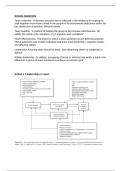
The mediational model outlines four key areas that define leadership within a sports
team: coaching behaviors, how players perceive and remember these behaviors, and
how players react and evaluate them. Additionally, there is a feedback component,
which involves the coach's perception of players' attitudes. These four areas are
shaped by both individual factors (coach and players difference variables) and
external situational factors. Situational factors are nature of the sport, level of
competition and practice vs game. This model takes into account individual
differences and cognitive processes, not only looking at situational factors.
The effects of coaching behaviors on athletes are mediated by the athletes' cognitive
and affective processes the ultimate effects of coaching behaviors are mediated
by the meaning that players attribute to them.
Intrinsically motivated athletes perceived their coaches to be more democratic
and high on positive – information based feedback
2. Chelladurai’s multidimensional model (adult)
Situational characteristics, leader characteristics and member characteristics
influence 3 types of leader behaviours: required, actual and preferred behaviour. In
this model, the situational characteristics are type of team (elite/youth), team goals
and type of task. This influences the required behaviour based on the situation.
,The preferred behaviour is about the preferences of team members about
guidance, social support and feedback (democratic vs autocratic). This is formed by
the members’ personal preferences and needs.
The actual behaviour is shaped by leaders’ experiences and expertise. The leader
should always take into account the required and preferred behaviour in order to
make the best decisions.
Required Leadership Behavior: These are the behaviors that the situation or
organization demands from the leader (e.g., rules, policies, and standards set by the
organization or context).
Outcome: when all three behaviors align (congruent), both member satisfaction and
group performance increase. Leadership effectiveness depends on the alignment of
leader behavior with situational demands and follower preferences.
Higher levels of task-oriented behaviors (i.e., training and instruction, positive
feedback, and democratic behavior) were more strongly associated with task
cohesion.
Coaches perceived to be high on training and instruction, democratic
behavior, social support, and positive feedback and low on autocratic behavior
had teams high on task cohesion
In the transformational process, coaches are expected to (a) incite the higher order
needs of members, (b) motivate them to perform beyond expectations, (c) express
confidence in members, and (d) empower them
Horn’s (2002) Model of Coaching Effectiveness
Horn (2002) introduced a coaching effectiveness model that integrates aspects of the
mediational and multidimensional leadership models in sports. Her model highlights
how antecedents, such as a coach’s values, beliefs, and goals, influence coaching
behaviors, which then affect athletes' performance both directly and indirectly. These
effects are mediated by athletes' perceptions and evaluations of their coach, shaping
their self-perceptions and motivation. Horn's model draws from several psychological
theories and incorporates sociocultural and organizational factors, aligning with key
elements of Chelladurai’s multidimensional model of leadership.
Leadership in youth and adult sport
There is a general belief that the multidimensional model is applicable to adult sports,
and the mediational model is applicable to youth sport.
Sport (fun) in pursuit of pleasure, whereas athletics (competition) is in pursuit of
excellence, where personal discomfort and sacrifices are made. participants have
different attitudes towards the sport and their goals; for example the outcome is more
important and you compare yourself to others from your age/level.
, You become an expert through deliberate practice, which entails training to improve
performance, with exerted effort and not enjoyable.
Leadership qualities to facilitate pursuit of excellence (chelladurai, 2007)
Creating a vision. Convincing that he is capable of performing the task/skills at
hand and ensure commitment
Inspirational communication. Build confidence in the athlete
Individualized and informative communication; show individual support and
emphasize with the athlete.
Recognize attained goals
Promoting of self-efficacy and self-esteem
o Self-efficacy: judgements about what one can accomplish with those
skills
o Self-esteem: belief and confidence in oneself
Emphasis on winning at all costs, not by means of cheating ofc.
Coach should reinforce task orientation (measuring success against own
achievements, striving to improve own performance) against ego orientation
(judge success compared to what others achieve).
o Coaches should still enforce equal recognition, that is when a player
makes a true mistake, he shouldn’t be pampered but may be corrected
and told he made a mistake
o Same for striving to be better than others, namely intrateam rivalry
o task involvement needs to be paramount in the practice stage and ego
involvement in the performance stage
Facilitating flow experience; high level of performance, but it being a positive
experience (like runners’ high) coach designs training in such a way that it
perfectly aligns with what the athlete is capable of to have balance between
challenge and skill
Athlete leadership in sport teams: Current understanding and future
directions
Athlete leadership is ‘an athlete, occupying a formal or informal role within a team,
who influences a group of team members to achieve a common goal’.
- Task leader; focused on accomplishments of group task
- Social leader; concerned with interpersonal relations
o On the field
- External leader; communication to external environment
- Social leader; good atmosphere
o Off the field
Note; a leader can fulfil multiple roles, but this is often not the case as seen in teams.
Team cohesion. “A dynamic process that is reflected in the tendency for a group to
stick together and remain united in the pursuit of its instrumental objectives and/or for
the satisfaction of member affective needs”
Team building. “A method of helping the group to (a) increase effectiveness, (b)
satisfy the needs of its members, or (c) improve work conditions”
Team effectiveness. The extent to which a team achieves its pre-defined purposes.
These purposes may include individual and team-level behaviours, cognitive states,
and affective states
Leadership. Knowing what should be done, and influencing others to cooperate in
doing it
Athlete leadership. An athlete, occupying a formal or informal role within a team, who
influences a group of team members to achieve a common goal”
Artikel 1. Leaderships in sport
, 1. Smith & Smoll’s mediational model of leadership. (youth)
The mediational model outlines four key areas that define leadership within a sports
team: coaching behaviors, how players perceive and remember these behaviors, and
how players react and evaluate them. Additionally, there is a feedback component,
which involves the coach's perception of players' attitudes. These four areas are
shaped by both individual factors (coach and players difference variables) and
external situational factors. Situational factors are nature of the sport, level of
competition and practice vs game. This model takes into account individual
differences and cognitive processes, not only looking at situational factors.
The effects of coaching behaviors on athletes are mediated by the athletes' cognitive
and affective processes the ultimate effects of coaching behaviors are mediated
by the meaning that players attribute to them.
Intrinsically motivated athletes perceived their coaches to be more democratic
and high on positive – information based feedback
2. Chelladurai’s multidimensional model (adult)
Situational characteristics, leader characteristics and member characteristics
influence 3 types of leader behaviours: required, actual and preferred behaviour. In
this model, the situational characteristics are type of team (elite/youth), team goals
and type of task. This influences the required behaviour based on the situation.
,The preferred behaviour is about the preferences of team members about
guidance, social support and feedback (democratic vs autocratic). This is formed by
the members’ personal preferences and needs.
The actual behaviour is shaped by leaders’ experiences and expertise. The leader
should always take into account the required and preferred behaviour in order to
make the best decisions.
Required Leadership Behavior: These are the behaviors that the situation or
organization demands from the leader (e.g., rules, policies, and standards set by the
organization or context).
Outcome: when all three behaviors align (congruent), both member satisfaction and
group performance increase. Leadership effectiveness depends on the alignment of
leader behavior with situational demands and follower preferences.
Higher levels of task-oriented behaviors (i.e., training and instruction, positive
feedback, and democratic behavior) were more strongly associated with task
cohesion.
Coaches perceived to be high on training and instruction, democratic
behavior, social support, and positive feedback and low on autocratic behavior
had teams high on task cohesion
In the transformational process, coaches are expected to (a) incite the higher order
needs of members, (b) motivate them to perform beyond expectations, (c) express
confidence in members, and (d) empower them
Horn’s (2002) Model of Coaching Effectiveness
Horn (2002) introduced a coaching effectiveness model that integrates aspects of the
mediational and multidimensional leadership models in sports. Her model highlights
how antecedents, such as a coach’s values, beliefs, and goals, influence coaching
behaviors, which then affect athletes' performance both directly and indirectly. These
effects are mediated by athletes' perceptions and evaluations of their coach, shaping
their self-perceptions and motivation. Horn's model draws from several psychological
theories and incorporates sociocultural and organizational factors, aligning with key
elements of Chelladurai’s multidimensional model of leadership.
Leadership in youth and adult sport
There is a general belief that the multidimensional model is applicable to adult sports,
and the mediational model is applicable to youth sport.
Sport (fun) in pursuit of pleasure, whereas athletics (competition) is in pursuit of
excellence, where personal discomfort and sacrifices are made. participants have
different attitudes towards the sport and their goals; for example the outcome is more
important and you compare yourself to others from your age/level.
, You become an expert through deliberate practice, which entails training to improve
performance, with exerted effort and not enjoyable.
Leadership qualities to facilitate pursuit of excellence (chelladurai, 2007)
Creating a vision. Convincing that he is capable of performing the task/skills at
hand and ensure commitment
Inspirational communication. Build confidence in the athlete
Individualized and informative communication; show individual support and
emphasize with the athlete.
Recognize attained goals
Promoting of self-efficacy and self-esteem
o Self-efficacy: judgements about what one can accomplish with those
skills
o Self-esteem: belief and confidence in oneself
Emphasis on winning at all costs, not by means of cheating ofc.
Coach should reinforce task orientation (measuring success against own
achievements, striving to improve own performance) against ego orientation
(judge success compared to what others achieve).
o Coaches should still enforce equal recognition, that is when a player
makes a true mistake, he shouldn’t be pampered but may be corrected
and told he made a mistake
o Same for striving to be better than others, namely intrateam rivalry
o task involvement needs to be paramount in the practice stage and ego
involvement in the performance stage
Facilitating flow experience; high level of performance, but it being a positive
experience (like runners’ high) coach designs training in such a way that it
perfectly aligns with what the athlete is capable of to have balance between
challenge and skill
Athlete leadership in sport teams: Current understanding and future
directions
Athlete leadership is ‘an athlete, occupying a formal or informal role within a team,
who influences a group of team members to achieve a common goal’.
- Task leader; focused on accomplishments of group task
- Social leader; concerned with interpersonal relations
o On the field
- External leader; communication to external environment
- Social leader; good atmosphere
o Off the field
Note; a leader can fulfil multiple roles, but this is often not the case as seen in teams.



