CHAPTER 6: MURA
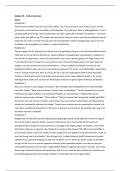
MATCH THE FOLLOWING STATEMENTS WITH THE CORRECT CONCEPTS
Match the following statements with the correct concepts
Selected
Question Correct Match
Match
OCAP [None
B.
Given]
A kind of contingency plan for
processes.
Jidoka [None
E.
Given]
Automation with a human touch
Poka Yoke [None
A.
Given]
Simple and cheap solution
FMEA [None
D.
Given]
A risk analysis tool
Control [None
F.
plan Given]
Inspection plan
Response OCAP (out of control action plan): Plan that is part of SPC
Feedback
:
(Statistic Process Control) and indicates what exactly should
be done in the event of signals that something is going wrong
in the production process; predefined response - for example
in the form of a flowchart - to an Out of Control (OOC)
situation.
The Jidoka principle stands for automatically building in quality
at the source. Machines and operators are given the ability to
signal when an abnormal situation occurs and immediately
stop work. This makes it possible to build quality into every
process and separate the tasks of people and machines,
allowing for more efficient work. Jidoka draws attention to the
causes of problems; work is stopped immediately when the
problem first occurs. This leads to improvements in processes
by eliminating the fundamental causes of defects. Jidoka is
sometimes also called autonomation, automation with human
intelligence. Equipment gains the ability to autonomously
distinguish good parts from bad ones, without an operator
having to supervise this. This eliminates the need for
operators to constantly monitor machines, which results in
major productivity gains because one operator can operate
several machines. This is also called multiprocess handling.
Failure Mode and Effects Analysis (FMEA) is a systematic way to
, identify and prioritize risks within a process; you investigate
how a product or process could fail in its task (failure modes),
what the consequences are for the customer (consequences)
and how likely it is that you will discover the failure mode
(detectability), with the aim of taking preventive action to
undertake.
Technology aimed at analyzing possible failure modes and
their effects. You use the technique to estimate and prioritize
risks by paying attention to three aspects: (i) chance that the
problem will occur, (ii) chance of timely discovery of the
problem, (iii) the damage that the problem may cause. . An
assessment is made for each potential problem (risk) in the
form of a score. Based on these scores, the so-called Risk
Priority Number (RPN) can be determined by multiplying the
different scores together.
Below is the demand for the following four products for the coming period.
A: 2000 pcs
B: 1000 pcs
C: 500 pcs
D: 500 pcs
What is the best planning cycle according to Heijunka?
Selected
[None
Answer:
Given]
Correct
C.
Answer:
FATHER
Response According to Heijunka, as many changes as possible must
Feedback:
be made to promote as much flow as possible and reduce
(interim) stocks.
This is the case where the series size is the smallest,
namely: AABCAABD
Question 7
0 out of 10 points
A pharmacy assistant checks the medication orders from doctors and
notes that various problems occur, such as poorly readable
prescriptions, incomplete instructions, prescribing unregistered
medications, out-of-stock medications, etc. These problems have been
discussed in her teams and prepared the next part of an FMEA. The
FMEA includes scores for severity, frequency (occurence) and detection.
Failure mode Implications Ernst Causes
MATCH THE FOLLOWING STATEMENTS WITH THE CORRECT CONCEPTS
Match the following statements with the correct concepts
Selected
Question Correct Match
Match
OCAP [None
B.
Given]
A kind of contingency plan for
processes.
Jidoka [None
E.
Given]
Automation with a human touch
Poka Yoke [None
A.
Given]
Simple and cheap solution
FMEA [None
D.
Given]
A risk analysis tool
Control [None
F.
plan Given]
Inspection plan
Response OCAP (out of control action plan): Plan that is part of SPC
Feedback
:
(Statistic Process Control) and indicates what exactly should
be done in the event of signals that something is going wrong
in the production process; predefined response - for example
in the form of a flowchart - to an Out of Control (OOC)
situation.
The Jidoka principle stands for automatically building in quality
at the source. Machines and operators are given the ability to
signal when an abnormal situation occurs and immediately
stop work. This makes it possible to build quality into every
process and separate the tasks of people and machines,
allowing for more efficient work. Jidoka draws attention to the
causes of problems; work is stopped immediately when the
problem first occurs. This leads to improvements in processes
by eliminating the fundamental causes of defects. Jidoka is
sometimes also called autonomation, automation with human
intelligence. Equipment gains the ability to autonomously
distinguish good parts from bad ones, without an operator
having to supervise this. This eliminates the need for
operators to constantly monitor machines, which results in
major productivity gains because one operator can operate
several machines. This is also called multiprocess handling.
Failure Mode and Effects Analysis (FMEA) is a systematic way to
, identify and prioritize risks within a process; you investigate
how a product or process could fail in its task (failure modes),
what the consequences are for the customer (consequences)
and how likely it is that you will discover the failure mode
(detectability), with the aim of taking preventive action to
undertake.
Technology aimed at analyzing possible failure modes and
their effects. You use the technique to estimate and prioritize
risks by paying attention to three aspects: (i) chance that the
problem will occur, (ii) chance of timely discovery of the
problem, (iii) the damage that the problem may cause. . An
assessment is made for each potential problem (risk) in the
form of a score. Based on these scores, the so-called Risk
Priority Number (RPN) can be determined by multiplying the
different scores together.
Below is the demand for the following four products for the coming period.
A: 2000 pcs
B: 1000 pcs
C: 500 pcs
D: 500 pcs
What is the best planning cycle according to Heijunka?
Selected
[None
Answer:
Given]
Correct
C.
Answer:
FATHER
Response According to Heijunka, as many changes as possible must
Feedback:
be made to promote as much flow as possible and reduce
(interim) stocks.
This is the case where the series size is the smallest,
namely: AABCAABD
Question 7
0 out of 10 points
A pharmacy assistant checks the medication orders from doctors and
notes that various problems occur, such as poorly readable
prescriptions, incomplete instructions, prescribing unregistered
medications, out-of-stock medications, etc. These problems have been
discussed in her teams and prepared the next part of an FMEA. The
FMEA includes scores for severity, frequency (occurence) and detection.
Failure mode Implications Ernst Causes