Problem 7 1.8
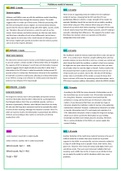
Misconceptions
What are misconceptions?
What is the source of these misconceptions?
Why are misconceptions resistant to years of teaching?
What types of teaching are effective in dealing with misconceptions?
Personal theories
Personal theories- coherent belief systems that encompass cause-and-effect
relationships that people come up with about many aspects of the world around
them
- Help people organise and make sense of personal experiences, classroom subject
matter, and other new information
Theory theory- the perspective of how people organise knowledge i.e. the
theoretical perspective about people’s everyday theories
Theories about the world begin to emerge in the early months of life, long before
children encounter formal scientific theories at school
Sometimes misconceptions result from how things appear to be e.g. the sun looks
like it moves around the earth
Sometimes they are fostered by common expressions in language e.g. sun set and
sun rise
Sometimes they infer incorrect cause-and-effect because two events occur at the
same time- a problem of mistaking correlation for causation
Media can also play a role e.g. some cartoons portray humans living with dinosaurs
Textbooks, teachers, the internet or the general social and cultural group in which
they live may also have an effect
Confirmation bias- look for information that is consistent with your beliefs and
ignore information that disconfirms it
Fostering theory development
Physical or technology-based models can help learners tie ideas together
- Mental models- representations of how concepts and principles interrelate or
how specific systems work – reflect the structure of external reality
- Instructors can facilitate the formation of accurate models by presenting physical
or digital versions of them e.g. a diagram
Group interaction can enhance learners’ theoretical understandings
- Discuss a phenomenon, exchange perspectives and build on one another’s ideas
= learners acquire a more sophisticated understanding
Some theories and mental models can be useful even if they aren’t entirely
accurate
- E.g. the dual store model of memory shows working memory and long-term
memory as two separate entities which makes it easier for students to
understand however it is likely that they are part of one, larger entity
Worldviews
, Worldview- a set of beliefs and assumptions about reality in general e.g. objects in
nature (rocks, trees etc.) are incapable of conscious thought OR have some degree of
consciousness
Culturally transmitted to some degree, with different cultures communicating
somewhat different beliefs
Usually encompass implicit rather than explicit knowledge
Conceptual change
Conceptual change- the process of replacing one’s personal theory or belief system
with another, presumably more adaptive one
Learners of all ages often hold quite stubbornly to certain misconceptions and
counterproductive beliefs about the world. Even after considerable instruction that
explicitly contradicts them
- E.g. climate change – some say recent climate patterns reflect normal year-to-
year variability or the alarming rates in recent years are not the result of human
activity
Why are their beliefs often resistant to change?
Learners existing beliefs affect their interpretations of new information
- Meaningful learning and elaboration- processes that usually facilitate learning-
mean learners are more likely to interpret new information in ways that are
consistent with what they already ‘know’ about the world
- In many cases people continue to believe some or all of what they’ve always
believed despite convincing evidence to the contrary
Most learners have a confirmation bias- learners tend to look for information that
confirms their existing beliefs and ignore or discredit any contradictory evidence
Learners existing beliefs are often consistent with their everyday experiences
- Science bases explanations can often be abstract and difficult to relate to
everyday reality
Some erroneous beliefs are integrated into a cohesive whole. With many
interrelationships existing among various ideas
- Thus, changing misconceptions involves changing an entire organised body of
knowledge (theory or worldview) rather than just a single belief
- E.g. earth centred view- everything moves around the earth
Learners may fail to notice an inconsistency between new information and their
prior beliefs
- People learn new information without letting go of their prior beliefs, so their
long-term memory simultaneously holds inconsistent ideas
- This may be due to learning the new info in a rote manner, without relating it to
things they already know and believe
- Or it may be due to their existing beliefs taking the form of implicit knowledge
which can’t consciously be accessed
- In both cases they don’t realise that the new knowledge contradicts what they
already believe, and they may continue to apply previously acquired beliefs when
interpreting new situations
Learners may have a personal or emotional investment in their existing beliefs
Misconceptions
What are misconceptions?
What is the source of these misconceptions?
Why are misconceptions resistant to years of teaching?
What types of teaching are effective in dealing with misconceptions?
Personal theories
Personal theories- coherent belief systems that encompass cause-and-effect
relationships that people come up with about many aspects of the world around
them
- Help people organise and make sense of personal experiences, classroom subject
matter, and other new information
Theory theory- the perspective of how people organise knowledge i.e. the
theoretical perspective about people’s everyday theories
Theories about the world begin to emerge in the early months of life, long before
children encounter formal scientific theories at school
Sometimes misconceptions result from how things appear to be e.g. the sun looks
like it moves around the earth
Sometimes they are fostered by common expressions in language e.g. sun set and
sun rise
Sometimes they infer incorrect cause-and-effect because two events occur at the
same time- a problem of mistaking correlation for causation
Media can also play a role e.g. some cartoons portray humans living with dinosaurs
Textbooks, teachers, the internet or the general social and cultural group in which
they live may also have an effect
Confirmation bias- look for information that is consistent with your beliefs and
ignore information that disconfirms it
Fostering theory development
Physical or technology-based models can help learners tie ideas together
- Mental models- representations of how concepts and principles interrelate or
how specific systems work – reflect the structure of external reality
- Instructors can facilitate the formation of accurate models by presenting physical
or digital versions of them e.g. a diagram
Group interaction can enhance learners’ theoretical understandings
- Discuss a phenomenon, exchange perspectives and build on one another’s ideas
= learners acquire a more sophisticated understanding
Some theories and mental models can be useful even if they aren’t entirely
accurate
- E.g. the dual store model of memory shows working memory and long-term
memory as two separate entities which makes it easier for students to
understand however it is likely that they are part of one, larger entity
Worldviews
, Worldview- a set of beliefs and assumptions about reality in general e.g. objects in
nature (rocks, trees etc.) are incapable of conscious thought OR have some degree of
consciousness
Culturally transmitted to some degree, with different cultures communicating
somewhat different beliefs
Usually encompass implicit rather than explicit knowledge
Conceptual change
Conceptual change- the process of replacing one’s personal theory or belief system
with another, presumably more adaptive one
Learners of all ages often hold quite stubbornly to certain misconceptions and
counterproductive beliefs about the world. Even after considerable instruction that
explicitly contradicts them
- E.g. climate change – some say recent climate patterns reflect normal year-to-
year variability or the alarming rates in recent years are not the result of human
activity
Why are their beliefs often resistant to change?
Learners existing beliefs affect their interpretations of new information
- Meaningful learning and elaboration- processes that usually facilitate learning-
mean learners are more likely to interpret new information in ways that are
consistent with what they already ‘know’ about the world
- In many cases people continue to believe some or all of what they’ve always
believed despite convincing evidence to the contrary
Most learners have a confirmation bias- learners tend to look for information that
confirms their existing beliefs and ignore or discredit any contradictory evidence
Learners existing beliefs are often consistent with their everyday experiences
- Science bases explanations can often be abstract and difficult to relate to
everyday reality
Some erroneous beliefs are integrated into a cohesive whole. With many
interrelationships existing among various ideas
- Thus, changing misconceptions involves changing an entire organised body of
knowledge (theory or worldview) rather than just a single belief
- E.g. earth centred view- everything moves around the earth
Learners may fail to notice an inconsistency between new information and their
prior beliefs
- People learn new information without letting go of their prior beliefs, so their
long-term memory simultaneously holds inconsistent ideas
- This may be due to learning the new info in a rote manner, without relating it to
things they already know and believe
- Or it may be due to their existing beliefs taking the form of implicit knowledge
which can’t consciously be accessed
- In both cases they don’t realise that the new knowledge contradicts what they
already believe, and they may continue to apply previously acquired beliefs when
interpreting new situations
Learners may have a personal or emotional investment in their existing beliefs