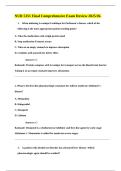
NUR 5351 Final Comprehensive Exam Review 2025/26.
1. When initiating Levodopa/Carbidopa for Parkinson’s disease, which of the
following is the most appropriate patient teaching point?
A. Take the medication with a high-protein meal
B. Stop medication if nausea occurs
C. Take on an empty stomach to improve absorption
D. Combine with antacids for better effect
⬛✓ Answer: C
Rationale: Protein competes with Levodopa for transport across the blood-brain barrier.
Taking it on an empty stomach improves absorption.
2. What is the first-line pharmacologic treatment for mild to moderate Alzheimer’s
disease?
A. Memantine
B. Haloperidol
C. Donepezil
D. Lithium
⬛✓ Answer: C
Rationale: Donepezil is a cholinesterase inhibitor and first-line agent for early-stage
Alzheimer’s. Memantine is added for moderate-severe stages.
3. A patient with alcohol use disorder has advanced liver disease. Which
pharmacologic agent should be avoided?
,A. Disulfiram
B. Naltrexone
C. Acamprosate
D. Gabapentin
⬛✓ Answer: B
Rationale: Naltrexone is hepatotoxic and contraindicated in liver disease. Acamprosate is
renally cleared, and safer here.
, 4. A 10-year-old boy with ADHD is prescribed a stimulant. Which side effect
should you monitor closely?
A. Weight gain
B. Increased appetite
C. Bradycardia
D. Insomnia
⬛✓ Answer: D
Rationale: Stimulants often cause insomnia, decreased appetite, and increased HR/BP.
Monitor growth, sleep, and mood.
5. Which is considered a first-line pharmacologic treatment for chronic insomnia?
A. Alprazolam
B. Diphenhydramine
C. Zolpidem
D. Amitriptyline
✓⬛⬛ Answer: C
Rationale: Zolpidem (a Z-drug) is preferred for short-term insomnia. Benzos and
antihistamines are not first-line due to side effects.
6. Which antidepressant is often preferred in patients with concerns about
sexual side effects?
1. When initiating Levodopa/Carbidopa for Parkinson’s disease, which of the
following is the most appropriate patient teaching point?
A. Take the medication with a high-protein meal
B. Stop medication if nausea occurs
C. Take on an empty stomach to improve absorption
D. Combine with antacids for better effect
⬛✓ Answer: C
Rationale: Protein competes with Levodopa for transport across the blood-brain barrier.
Taking it on an empty stomach improves absorption.
2. What is the first-line pharmacologic treatment for mild to moderate Alzheimer’s
disease?
A. Memantine
B. Haloperidol
C. Donepezil
D. Lithium
⬛✓ Answer: C
Rationale: Donepezil is a cholinesterase inhibitor and first-line agent for early-stage
Alzheimer’s. Memantine is added for moderate-severe stages.
3. A patient with alcohol use disorder has advanced liver disease. Which
pharmacologic agent should be avoided?
,A. Disulfiram
B. Naltrexone
C. Acamprosate
D. Gabapentin
⬛✓ Answer: B
Rationale: Naltrexone is hepatotoxic and contraindicated in liver disease. Acamprosate is
renally cleared, and safer here.
, 4. A 10-year-old boy with ADHD is prescribed a stimulant. Which side effect
should you monitor closely?
A. Weight gain
B. Increased appetite
C. Bradycardia
D. Insomnia
⬛✓ Answer: D
Rationale: Stimulants often cause insomnia, decreased appetite, and increased HR/BP.
Monitor growth, sleep, and mood.
5. Which is considered a first-line pharmacologic treatment for chronic insomnia?
A. Alprazolam
B. Diphenhydramine
C. Zolpidem
D. Amitriptyline
✓⬛⬛ Answer: C
Rationale: Zolpidem (a Z-drug) is preferred for short-term insomnia. Benzos and
antihistamines are not first-line due to side effects.
6. Which antidepressant is often preferred in patients with concerns about
sexual side effects?