, PLEASE USE THIS DOCUMENT AS A GUIDE TO ANSWER YOUR ASSIGNMENT
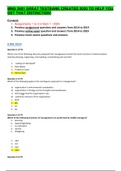
QUESTION 1
1.1. Which of the following best defines Equality of Educational Opportunity
A) Equal academic resources for every student
B) Equal chances for success regardless of social background
C) Special privileges for underprivileged students
D) Eliminating all competitive aspects of education
1.2. Who among the following is most associated with the concept of hegemony in
educational theory?
A) Karl Marx
B) Antonio Gramsci
C) Emile Durkheim
D) Max Weber
1.3. Which of the following best describes the interpretivist approach to education?
A) Focuses on quantifiable data and statistical outcomes.
B) Seeks to understand the subjective meanings students attach to their experiences.
C) Emphasizes the role of education in promoting national economic goals.
D) Views education as a tool for cultural reproduction in a capitalist society.
1.4. According to Foucault, which factors most affect educational practices in a
postmodern society?
A) Knowledge production and power dynamics
B) Standardized testing and curriculum controls
C) Economic incentives in educational reforms
D) Scientific advancements and technological innovation
1.5. How would a Neo-Marxist likely view standardised testing in education?
A) As a method to ensure fair assessment
B) As a tool of cultural reproduction favoring dominant class interests
C) As a means to equalize educational opportunity
D) As a strategy for improving teaching practices
1.6. Feminism, as a form of conflict theory, would most likely focus on which of the
following in education?
A) Standardised testing outcomes
B) Teacher-student interactions
C) Gendered expectations and curriculum biases
D) Individual learning differences
QUESTION 1
1.1. Which of the following best defines Equality of Educational Opportunity
A) Equal academic resources for every student
B) Equal chances for success regardless of social background
C) Special privileges for underprivileged students
D) Eliminating all competitive aspects of education
1.2. Who among the following is most associated with the concept of hegemony in
educational theory?
A) Karl Marx
B) Antonio Gramsci
C) Emile Durkheim
D) Max Weber
1.3. Which of the following best describes the interpretivist approach to education?
A) Focuses on quantifiable data and statistical outcomes.
B) Seeks to understand the subjective meanings students attach to their experiences.
C) Emphasizes the role of education in promoting national economic goals.
D) Views education as a tool for cultural reproduction in a capitalist society.
1.4. According to Foucault, which factors most affect educational practices in a
postmodern society?
A) Knowledge production and power dynamics
B) Standardized testing and curriculum controls
C) Economic incentives in educational reforms
D) Scientific advancements and technological innovation
1.5. How would a Neo-Marxist likely view standardised testing in education?
A) As a method to ensure fair assessment
B) As a tool of cultural reproduction favoring dominant class interests
C) As a means to equalize educational opportunity
D) As a strategy for improving teaching practices
1.6. Feminism, as a form of conflict theory, would most likely focus on which of the
following in education?
A) Standardised testing outcomes
B) Teacher-student interactions
C) Gendered expectations and curriculum biases
D) Individual learning differences