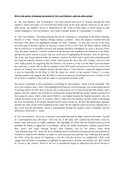
Assess the reasons for Napoleon’s early military
successes.
Paragraph 1: Military reforms and organisation Most important
Creation of Grande Armée standardised training, better discipline,
promotion of merit over nobility
Divisional system divided army into self-contained divisions which
provided greater flexibility and co-ordination
Abandoned slow moving mass infantry for fast moving marches and
rapid advances
o Troops lived off the land rather than relying on supply depots
or trains
Used doctrine of central position to envelop opposing forces
French resources devoted to military with unprecedented
consistency
o 1800-1811 Napoleon raised 1.3 million conscripts
Levee en masse gave France numerical superiority over enemies
o ‘Allowed her two or three times as many losses as her
opponents’ – Hew Strachan
Developed an effective staff that could manage the flow of
communication between the separate elements and effective
control them
The government controlled prices and wages in the arms industry,
which also increased the number of state-run weapons factories
o The result was that the French army would be equipped with a
greater quantity and quality of cannons relative to its
adversaries.
The practice of merit-based promotion was introduced and
expanded during this era
o Many French officers at the beginning of Napoleon’s reign
were promoted from the lower ranks, which provided an
unprecedented level of professionalism, experience, and
motivation in the French officer corps.
o Napoleon personally benefitted from this system, which
allowed his own ascendance in the ranks
Most important as: Without the structural improvements brought about by
military reforms, it's arguable that Napoleon's successes might not have
been as sustained or impactful
"The essential clue to Napoleon’s victories lies in the fact that he
transformed the character of the army by reinforcing it with new blood
and then disciplined it by a system of training and tactics. He made it not
merely larger but immeasurably more efficient." – David Chand;er
Paragraph 2: Tactical brilliance
successes.
Paragraph 1: Military reforms and organisation Most important
Creation of Grande Armée standardised training, better discipline,
promotion of merit over nobility
Divisional system divided army into self-contained divisions which
provided greater flexibility and co-ordination
Abandoned slow moving mass infantry for fast moving marches and
rapid advances
o Troops lived off the land rather than relying on supply depots
or trains
Used doctrine of central position to envelop opposing forces
French resources devoted to military with unprecedented
consistency
o 1800-1811 Napoleon raised 1.3 million conscripts
Levee en masse gave France numerical superiority over enemies
o ‘Allowed her two or three times as many losses as her
opponents’ – Hew Strachan
Developed an effective staff that could manage the flow of
communication between the separate elements and effective
control them
The government controlled prices and wages in the arms industry,
which also increased the number of state-run weapons factories
o The result was that the French army would be equipped with a
greater quantity and quality of cannons relative to its
adversaries.
The practice of merit-based promotion was introduced and
expanded during this era
o Many French officers at the beginning of Napoleon’s reign
were promoted from the lower ranks, which provided an
unprecedented level of professionalism, experience, and
motivation in the French officer corps.
o Napoleon personally benefitted from this system, which
allowed his own ascendance in the ranks
Most important as: Without the structural improvements brought about by
military reforms, it's arguable that Napoleon's successes might not have
been as sustained or impactful
"The essential clue to Napoleon’s victories lies in the fact that he
transformed the character of the army by reinforcing it with new blood
and then disciplined it by a system of training and tactics. He made it not
merely larger but immeasurably more efficient." – David Chand;er
Paragraph 2: Tactical brilliance