RESEARCH SKILLS 2
GEO1-2415
,Table of Contents
Lecture 8: Quantitative data analysis, comparing two groups ........................................... 3
Data types .................................................................................................................................. 3
Normality ................................................................................................................................... 4
Testing for differences between two groups ............................................................................... 4
Student’s T-test: ......................................................................................................................... 5
Mann-Whitney U test ................................................................................................................. 7
Chi-squared test ......................................................................................................................... 7
Lecture 9: Quantitative data analysis, correlation and regression ...................................... 8
What is correlation? ................................................................................................................... 8
Measuring the relationship between two variables .................................................................... 9
Pearson’s R ................................................................................................................................. 9
Spearman’s rank correlation (ρ) ............................................................................................... 10
Regression: ............................................................................................................................... 11
Lecture 10: Qualitative Data Analysis .............................................................................. 12
Induction/Deduction ................................................................................................................ 12
Grounded Theory (GT) ............................................................................................................. 14
Analytical Induction (AI) ........................................................................................................... 17
Thematic Analysis (TA) ............................................................................................................. 18
Narrative Analysis (NA) ............................................................................................................ 19
Abductive Analysis (AA)............................................................................................................ 20
Narrative Analysis (NA) ............................................................................................................ 20
Lecture 11: Interdisciplinarity and mixed-methods .......................................................... 21
Philosophy of science ............................................................................................................... 21
Ontology: ................................................................................................................................. 22
Epistomology............................................................................................................................ 23
Methodology:........................................................................................................................... 23
Lecture 12: Reporting and Quality Criteria ....................................................................... 24
Classic structure ....................................................................................................................... 24
Quantitative researchers .......................................................................................................... 25
Qualitative researchers ............................................................................................................ 27
Underlying principles in all research ......................................................................................... 28
Causation and Making good arguments .................................................................................... 28
Identifying causal mechanisms ................................................................................................. 30
Writing and making arguments ................................................................................................ 31
1
,Lecture 13: Philosophy of Science .................................................................................... 32
Epistemology:........................................................................................................................... 33
Ontology: ................................................................................................................................. 33
Paradigms ................................................................................................................................ 34
Implications.............................................................................................................................. 35
Normative research .................................................................................................................. 36
2
, Lecture 8: Quantitative data analysis, comparing two groups
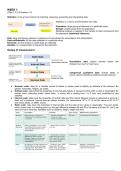
Data types
Nominal data (just names, no relationship across names):
• Did you study for the exam? Answer: Yes/No
• What is your hair color? Hair color: red, blond, brown, black
Ordinal data (puts results on order, but no specific distance):
• How much did you study for the exam?
o Very little
o Little
o A lot
o Really a lot
Scale data (results on a numeric scale of measurement):
• How tall are you?
o Can be any number measured in [cm], or [m]
o Units of scale variables: it is crucial that the units are consistent within and
across measurements
3
GEO1-2415
,Table of Contents
Lecture 8: Quantitative data analysis, comparing two groups ........................................... 3
Data types .................................................................................................................................. 3
Normality ................................................................................................................................... 4
Testing for differences between two groups ............................................................................... 4
Student’s T-test: ......................................................................................................................... 5
Mann-Whitney U test ................................................................................................................. 7
Chi-squared test ......................................................................................................................... 7
Lecture 9: Quantitative data analysis, correlation and regression ...................................... 8
What is correlation? ................................................................................................................... 8
Measuring the relationship between two variables .................................................................... 9
Pearson’s R ................................................................................................................................. 9
Spearman’s rank correlation (ρ) ............................................................................................... 10
Regression: ............................................................................................................................... 11
Lecture 10: Qualitative Data Analysis .............................................................................. 12
Induction/Deduction ................................................................................................................ 12
Grounded Theory (GT) ............................................................................................................. 14
Analytical Induction (AI) ........................................................................................................... 17
Thematic Analysis (TA) ............................................................................................................. 18
Narrative Analysis (NA) ............................................................................................................ 19
Abductive Analysis (AA)............................................................................................................ 20
Narrative Analysis (NA) ............................................................................................................ 20
Lecture 11: Interdisciplinarity and mixed-methods .......................................................... 21
Philosophy of science ............................................................................................................... 21
Ontology: ................................................................................................................................. 22
Epistomology............................................................................................................................ 23
Methodology:........................................................................................................................... 23
Lecture 12: Reporting and Quality Criteria ....................................................................... 24
Classic structure ....................................................................................................................... 24
Quantitative researchers .......................................................................................................... 25
Qualitative researchers ............................................................................................................ 27
Underlying principles in all research ......................................................................................... 28
Causation and Making good arguments .................................................................................... 28
Identifying causal mechanisms ................................................................................................. 30
Writing and making arguments ................................................................................................ 31
1
,Lecture 13: Philosophy of Science .................................................................................... 32
Epistemology:........................................................................................................................... 33
Ontology: ................................................................................................................................. 33
Paradigms ................................................................................................................................ 34
Implications.............................................................................................................................. 35
Normative research .................................................................................................................. 36
2
, Lecture 8: Quantitative data analysis, comparing two groups
Data types
Nominal data (just names, no relationship across names):
• Did you study for the exam? Answer: Yes/No
• What is your hair color? Hair color: red, blond, brown, black
Ordinal data (puts results on order, but no specific distance):
• How much did you study for the exam?
o Very little
o Little
o A lot
o Really a lot
Scale data (results on a numeric scale of measurement):
• How tall are you?
o Can be any number measured in [cm], or [m]
o Units of scale variables: it is crucial that the units are consistent within and
across measurements
3