WEEK 3
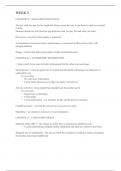
CHAPTER 22 - MANAGING INCENTIVES
You get what you pay for but might not always mean the way to get there is what you wanted
to ache
Stronger incentives will close the gap between what you pay for and what you want
Piece rate is not good when quality is important
A tournament is based on relative performance so not based on direct sales (risks with
unequal abilities)
Nudge = factors that help push people towards desired behaviour
CHAPTER 24 - ASYMMETRIC INFORMATION
= when a party have more or better information that the other in an exchange
Moral hazard = when an agent tries to exploit an information advantage in a dishonest or
undesirable way
To overcome:
– Provide more information
– Create better incentives (to align two party’s incentives)
Adverse selection: when people that shouldn’t get the product get it
To overcome:
– Inspections or checkups
– Group plans
– Conscientiousness - e.g. healthier people should get less insurance
Credible promise = one that the person has an incentive to keep
Signalling = an expensive actions to reveal information
CHAPTER 25 - CONSUMER CHOICE
Marginal utility (MU) = the change in utility from consuming an additional unit
– Usually diminishing marginal utility (additional unit adds less utility to previous)
Marginal rate of substitution = the rate at which the consumer is willing to trade one product
for another and remain indifferent
CHAPTER 22 - MANAGING INCENTIVES
You get what you pay for but might not always mean the way to get there is what you wanted
to ache
Stronger incentives will close the gap between what you pay for and what you want
Piece rate is not good when quality is important
A tournament is based on relative performance so not based on direct sales (risks with
unequal abilities)
Nudge = factors that help push people towards desired behaviour
CHAPTER 24 - ASYMMETRIC INFORMATION
= when a party have more or better information that the other in an exchange
Moral hazard = when an agent tries to exploit an information advantage in a dishonest or
undesirable way
To overcome:
– Provide more information
– Create better incentives (to align two party’s incentives)
Adverse selection: when people that shouldn’t get the product get it
To overcome:
– Inspections or checkups
– Group plans
– Conscientiousness - e.g. healthier people should get less insurance
Credible promise = one that the person has an incentive to keep
Signalling = an expensive actions to reveal information
CHAPTER 25 - CONSUMER CHOICE
Marginal utility (MU) = the change in utility from consuming an additional unit
– Usually diminishing marginal utility (additional unit adds less utility to previous)
Marginal rate of substitution = the rate at which the consumer is willing to trade one product
for another and remain indifferent