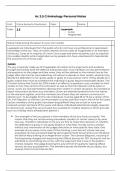
Ac 2.5 Criminology Personal Notes
Unit: Crime Scene to Courtroom Date: Name:
Topic: 2.5 Laypeople
- Juries
- Magistrates
Notes made during the lesson (in your own words)
Laypeople are individuals from the public who do not have any professional or specialised
knowledge of the law. They can either attend criminal cases as magistrates or as members
of the jury. Juries sit in majority of Crown Court cases and other situations such as inquiries
into sudden deaths while magistrates are lay people who have volunteered to help decide
the outcome of a criminal case.
JURIES
The jury is typically made up of 12 laypeople who listen to the arguments and evidence
brought forward by both the defence and prosecution. Jury members are also permitted to
ask questions via the judge and take notes, they will be advised on the relevant law by the
judge. After the trial has concluded they will retreat to decide on their verdict, whether they
decide the defendant is non-guilty, guilty or guilty of a less serious crime. If they decide on a
guilty verdict they must be confident the individual is guilty ‘beyond reasonable doubt’. The
Criminal Justice and Courts Act 2015 made it an offence to question a jury member on their
verdict or how they came to this conclusion as well as this their decision will be taken in
secret. Jurors are only permitted to disclose their verdict in certain situations, for example to
report misconduct by other jury members. {Jurors are selected randomly from the names
on the electoral register, once the members are chosen they will receive a summons to
attend court. To be eligible for this role individuals must be aged 18 to 75, be a citizen of the
UK, Irish Republic or a British Commonwealth country and have lived in the UK for five years.
Certain members of the public have been disqualified if they are on bail or have ever
received a prison sentence of five years and above. Individuals selected are legally required
to attend court unless they are excused, this could be for medical reasons or other grounds
such as a holiday that's already been paid for.}
+ One strength of the jury system is that members of the jury have jury equity. This
means that they are not bound by precedents (verdicts in similar cases) or by what
laws say. Therefore individuals in the jury are free to make their decision on whether
the defendant is guilty or not-guilty based on what feels morally correct and fair,
without any intervention of the judges directions or what specific laws state. One
example of jury equity is the case of Clive Ponting, a civil servant whose case was
acquitted. He was accused of leaking secret government documents to an MP about
the British Navy sinking of an Argentinian cruiser ‘The General Belgrano’, resulting in
Ponting being charged with breaching the Official Secrets Act 1911. During his trial he
admitted to committing this crime, with the argument that it was in the public's
interest. Despite the judge directing the jury to find him guilty for leaking official
secrets, the jury acquitted him. This therefore proves the benefit of jury equity, as it
ensures that criminal trials are fair.
, + Another strength of the jury system is that it makes court trials impartial and fair. This
is because the defendant is being tried by their peers instead of three magistrates or
an individual judge. This is highly important to the fairness of a trial as judges and
magistrates may have particular prejudices such as gender or social class or be
unable to relate to the defendants situation and therefore lack empathy for them. As
well as this, in the majority of criminal cases the jury will be impartial as members are
randomly selected from society making it highly likely that prejudices will be
cancelled out. As well as this, taking the power out of the states hands and giving it to
the public allows our legal system to remain democratic as it allows members of
society to get involved in the administration of justice. This guarantees that the court
remains unbiased and gives each defendant the chance to have a fair and impartial
trial.
- One weakness of the jury system is that there is a risk of biases, such as racial
discrimination. This is because jurors' personal opinions and beliefs surrounding race
can result in unjust verdicts. An example of racial biases affecting the fairness of
criminal trials is the case of Sander vs United Kingdom 2000. Kuldip Sander, an Asian
male on trial for fraud was believed to have been denied the right to a fair trial after
two members of the jury made racist remarks and jokes during his trial. One of the
jurors on his case wrote a letter to the judge explaining what had happened, despite
this the judge allowed the trial to go on. After spending three years in prison Sanders'
appeal that he had not received a fair trial was upheld by the European Court of
Human Rights. Therefore providing evidence that racial biases are highly
disadvantageous in criminal cases as they can result in miscarriages of justice.
- Another weakness of the jury system is that media reports can greatly influence
jurors' verdicts. This means that tabloid articles, social media and other news
platforms can sway the jury's verdict by painting a negative image of the defendant.
Therefore the members of the jury will be basing their decision off of sensationalised
news instead of the evidence that is presented to them in court, which can greatly
affect the equity of criminal cases. An example of the media affecting the fairness of
court trials is the case of Christopher Jefferies. Jefferies was a suspect for the murder
of his female tenant Joanna Yeates in 2010, during this time many news companies
like The Sun and The Daily Mirror wrote harmful prejudicial articles about him. The
Sun described Jefferies as a ‘creepy loner with blue rinsed hair’ and made many other
harmful remarks about his appearance and personality. After police investigations
revealed that the murderer was Yeates' neighbour Vincent Tabak, The Sun and Mirror
were found guilty of contempt of court. This is because the articles that they
produced could have prejudiced a fair trial by tarnishing Jefferies reputation. Thus
highlighting how harmful the jury system can be if they are influenced by the media
Unit: Crime Scene to Courtroom Date: Name:
Topic: 2.5 Laypeople
- Juries
- Magistrates
Notes made during the lesson (in your own words)
Laypeople are individuals from the public who do not have any professional or specialised
knowledge of the law. They can either attend criminal cases as magistrates or as members
of the jury. Juries sit in majority of Crown Court cases and other situations such as inquiries
into sudden deaths while magistrates are lay people who have volunteered to help decide
the outcome of a criminal case.
JURIES
The jury is typically made up of 12 laypeople who listen to the arguments and evidence
brought forward by both the defence and prosecution. Jury members are also permitted to
ask questions via the judge and take notes, they will be advised on the relevant law by the
judge. After the trial has concluded they will retreat to decide on their verdict, whether they
decide the defendant is non-guilty, guilty or guilty of a less serious crime. If they decide on a
guilty verdict they must be confident the individual is guilty ‘beyond reasonable doubt’. The
Criminal Justice and Courts Act 2015 made it an offence to question a jury member on their
verdict or how they came to this conclusion as well as this their decision will be taken in
secret. Jurors are only permitted to disclose their verdict in certain situations, for example to
report misconduct by other jury members. {Jurors are selected randomly from the names
on the electoral register, once the members are chosen they will receive a summons to
attend court. To be eligible for this role individuals must be aged 18 to 75, be a citizen of the
UK, Irish Republic or a British Commonwealth country and have lived in the UK for five years.
Certain members of the public have been disqualified if they are on bail or have ever
received a prison sentence of five years and above. Individuals selected are legally required
to attend court unless they are excused, this could be for medical reasons or other grounds
such as a holiday that's already been paid for.}
+ One strength of the jury system is that members of the jury have jury equity. This
means that they are not bound by precedents (verdicts in similar cases) or by what
laws say. Therefore individuals in the jury are free to make their decision on whether
the defendant is guilty or not-guilty based on what feels morally correct and fair,
without any intervention of the judges directions or what specific laws state. One
example of jury equity is the case of Clive Ponting, a civil servant whose case was
acquitted. He was accused of leaking secret government documents to an MP about
the British Navy sinking of an Argentinian cruiser ‘The General Belgrano’, resulting in
Ponting being charged with breaching the Official Secrets Act 1911. During his trial he
admitted to committing this crime, with the argument that it was in the public's
interest. Despite the judge directing the jury to find him guilty for leaking official
secrets, the jury acquitted him. This therefore proves the benefit of jury equity, as it
ensures that criminal trials are fair.
, + Another strength of the jury system is that it makes court trials impartial and fair. This
is because the defendant is being tried by their peers instead of three magistrates or
an individual judge. This is highly important to the fairness of a trial as judges and
magistrates may have particular prejudices such as gender or social class or be
unable to relate to the defendants situation and therefore lack empathy for them. As
well as this, in the majority of criminal cases the jury will be impartial as members are
randomly selected from society making it highly likely that prejudices will be
cancelled out. As well as this, taking the power out of the states hands and giving it to
the public allows our legal system to remain democratic as it allows members of
society to get involved in the administration of justice. This guarantees that the court
remains unbiased and gives each defendant the chance to have a fair and impartial
trial.
- One weakness of the jury system is that there is a risk of biases, such as racial
discrimination. This is because jurors' personal opinions and beliefs surrounding race
can result in unjust verdicts. An example of racial biases affecting the fairness of
criminal trials is the case of Sander vs United Kingdom 2000. Kuldip Sander, an Asian
male on trial for fraud was believed to have been denied the right to a fair trial after
two members of the jury made racist remarks and jokes during his trial. One of the
jurors on his case wrote a letter to the judge explaining what had happened, despite
this the judge allowed the trial to go on. After spending three years in prison Sanders'
appeal that he had not received a fair trial was upheld by the European Court of
Human Rights. Therefore providing evidence that racial biases are highly
disadvantageous in criminal cases as they can result in miscarriages of justice.
- Another weakness of the jury system is that media reports can greatly influence
jurors' verdicts. This means that tabloid articles, social media and other news
platforms can sway the jury's verdict by painting a negative image of the defendant.
Therefore the members of the jury will be basing their decision off of sensationalised
news instead of the evidence that is presented to them in court, which can greatly
affect the equity of criminal cases. An example of the media affecting the fairness of
court trials is the case of Christopher Jefferies. Jefferies was a suspect for the murder
of his female tenant Joanna Yeates in 2010, during this time many news companies
like The Sun and The Daily Mirror wrote harmful prejudicial articles about him. The
Sun described Jefferies as a ‘creepy loner with blue rinsed hair’ and made many other
harmful remarks about his appearance and personality. After police investigations
revealed that the murderer was Yeates' neighbour Vincent Tabak, The Sun and Mirror
were found guilty of contempt of court. This is because the articles that they
produced could have prejudiced a fair trial by tarnishing Jefferies reputation. Thus
highlighting how harmful the jury system can be if they are influenced by the media