DVA4804 Assignment 6 (100% ANSWERS) 2025
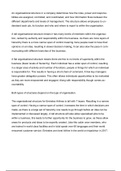
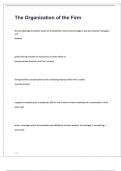
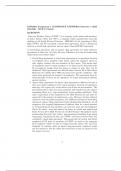
DVA4804 Assignment 6 (100% ANSWERS) 2025 - DUE July 2025Evaluate the impact of climate change on water security, and consequently the three dimensions of food security. Evaluate the impact of climate change on water security, and consequently the three dimensions of food security. Evaluate the impact of climate change on water security, and consequently the three dimensions of food security. What are the main lessons that we can learn from the implementation of China’s environmental policy? Discuss this in three paragraphs. What are the most important environmental implications of the relationship between China and the WTO? In the final article, Niemeijer and Mazzucato (2003) discuss local theories of soil for SD. The limitations of local soil taxonomies are discussed under specific subheadings, before the authors investigate the application of local soil knowledge for SD. Critically analyse the challenges countries in the Global South face in addressing climate change impacts on water resources. Discuss the prospects of a post-Brundtland global order. How does climate change threaten water availability and how does this, in turn, affect household, national, and global food security? Critically assess how climate variability influences the stability, availability, and accessibility of food in low-income regions. In what ways has China's environmental policy contributed to sustainable development, and what can other Global South nations learn from it? Discuss the relationship between trade liberalisation under the WTO and its environmental consequences for rapidly industrialising nations like China. Evaluate the strengths and weaknesses of applying indigenous soil knowledge to sustainable agriculture, using Niemeijer and Mazzucato’s (2003) findings. Examine how climate change is reshaping access to water resources in arid and semi-arid regions of the Global South. What institutional and infrastructural challenges limit the ability of Global South countries to respond effectively to water-related climate crises? Explore how climate-induced water stress influences national food systems and rural livelihoods. Analyse the role of international law in shaping global environmental governance after the Brundtland Report. What are the key barriers to implementing effective water management policies in response to climate change in Africa? How does gender inequality influence the way communities experience and respond to water insecurity caused by climate change? To what extent has urbanisation in the Global South worsened the impact of climate change on water quality and access? Investigate the links between climate change, water resource depletion, and conflict in transboundary river basins. Discuss the role of foreign investment and global trade in driving environmental degradation in developing countries. Evaluate the policy shifts needed to ensure climate resilience in water-stressed agricultural economies. How can traditional knowledge systems be used alongside modern science to manage soil and water sustainably? Assess the role of climate finance in helping low-income countries adapt to water-related impacts of climate change. What are the environmental consequences of globalisation for biodiversity conservation in developing nations? Examine the implications of sea-level rise on freshwater access in coastal regions of the Global South. What role do multilateral organisations play in supporting climate change adaptation in water management? Discuss how integrated water resource management (IWRM) can help countries address the water challenges linked to climate change. How does environmental degradation affect the ability of countries to achieve the Sustainable Development Goals related to water and food? What are the key drivers behind the failure or success of local climate adaptation strategies in managing water scarcity? Analyse how climate change disproportionately affects rural and urban communities with regard to water access. Discuss how legal frameworks at the national level can support or hinder environmental protection in the face of global climate change. What lessons can be drawn from indigenous water conservation techniques in building climate-resilient communities? Evaluate the environmental impact of large-scale infrastructure projects (e.g., dams, mining) on water systems in developing countries. How does climate-induced water stress influence patterns of migration and displacement? Critically assess the potential for a global green economy to reduce climate vulnerability in the Global South. Examine the intersection of human rights and environmental justice in the context of water access and climate change.Critically analyse the challenges countries in the Global South face in addressing climate change impacts on water resources. Assess the role of climate finance in helping low-income countries adapt to water-related impacts of climate change. What are the environmental consequences of globalisation for biodiversity conservation in developing nations? Examine the implications of sea-level rise on freshwater access in coastal regions of the Global South. What role do multilateral organisations play in supporting climate change adaptation in water management? Discuss how integrated water resource management (IWRM) can help countries address the water challenges linked to climate change. How does environmental degradation affect the ability of countries to achieve the Sustainable Development Goals related to water and food? What are the key drivers behind the failure or success of local climate adaptation strategies in managing water scarcity? Analyse how climate change disproportionately affects rural and urban communities with regard to water access. Discuss how legal frameworks at the national level can support or hinder environmental protection in the face of global climate change. What lessons can be drawn from indigenous water conservation techniques in building climate-resilient communities?

Gekoppeld boek
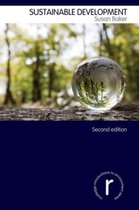
- september 2015
- 9780415522922
- 1
Geschreven voor
- Instelling
- University of South Africa (Unisa)
- Vak
- Sustainable Development (DVA4804)
Documentinformatie
- Geüpload op
- 10 juli 2025
- Aantal pagina's
- 9
- Geschreven in
- 2024/2025
- Type
- Tentamen (uitwerkingen)
- Bevat
- Vragen en antwoorden
Onderwerpen
-
dva4804