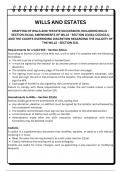
WILLS AND ESTATES
DRAFTING OF WILLS AND TESTATE SUCCESSION, INCLUDING WILLS -
SECTION 2(1)(a); AMENDMENTS OF WILLS - SECTION 2(1)(b); CODICILS;
AND THE COURTS OVERRIDING DISCRETION REGARDING THE VALIDITY OF
THE WILLS - SECTION 2(3).
Requirements for a Valid Will – Section 2(1)(a)
According to Section 2(1)(a) of the Wills Act, a will is valid if it complies with the following
formalities:
The will must be in writing (typed or handwritten).
It must be signed by the testator (or by another person in their presence and at their
direction).
The testator must sign every page of the will (if more than one page).
The signing must occur in the presence of two or more competent witnesses, who
must also sign the will in the presence of the testator. The witnesses must attest and
sign the Will.
Each page of the Will is also signed by the Commissioner of Oaths.
Failure to comply with these requirements may render the will invalid unless a court
exercises its discretion under Section 2(3).
Amendments to Wills – Section 2(1)(b)
Section 2(1)(b) governs the amendment of wills, stating that:
Any alteration, deletion, or addition must be signed by the testator and witnessed by
two competent witnesses.
The testator and witnesses must sign as near as possible to the amended section.
A Commissioner of Oaths must certify on the Will.
Amendments made after the will’s execution without compliance with these
formalities may be deemed invalid.
Codicils
A codicil is a supplementary document that modifies, explains, or adds to a will without
revoking it. It must:
Meet the same formal requirements as a will under Section 2(1)(a).
Clearly reference the existing will to avoid ambiguity.
Codicils are useful for minor changes, such as appointing a new executor or modifying
bequests.
,Court’s Overriding Discretion – Section 2(3)
Section 2(3) grants courts discretionary power to condone a will or amendment that does
not fully comply with formal requirements if:
The document was intended to be the deceased’s will or an amendment.
There is clear and convincing evidence of the testator’s intent.
The omission of formalities does not create uncertainty or contradict the deceased’s
intentions.
, FORMALITIES AND THE EXECUTION OF WILLS, AMENDMENTS OF WILLS,
AND INCORPORATION BY REFERENCE; CAPACITY TO MAKE A WILL AND TO
WITNESS A WILL; CAPACITY TO BENEFIT UNDER A WILL OR ON INTESTACY;
INVALIDITY OF WILLS GENERALLY: MISTAKE, FRAUD, DURESS, AND UNDUE
INFLUENCE; REVOCATION AND REVIVAL; CUSTODY AND REGISTRATION OF
WILLS; APPOINTMENT OF HEIRS AND LEGATEES: DIES, CONDITIONS;
VESTING; SUBSTITUTION; LEGACIES; ACCRUALS
Formalities and the Execution of Wills, Amendments of Wills, and Incorporation
by Reference:
Formalities: For a will to be valid, it must meet certain legal requirements depending
on the jurisdiction:
It should be in writing (handwritten, typed, or printed).
It must be signed by the testator (person making the will) at the end of the
document.
The will must be signed in the presence of two or more witnesses who are not
beneficiaries.
Witnesses must sign the will in the testator’s presence and each other’s presence.
Amendments of Wills: To amend a will, the testator can make a codicil, which is an
addition or modification to the original will. The codicil must follow the same
formalities as the original will to be valid. Alternatively, a testator can draft a new will
that revokes any prior wills.
Incorporation by Reference: This allows the testator to include other documents in
their will by referring to them in the will, provided they meet specific criteria (e.g., the
document must exist at the time the will is executed). It’s commonly used for asset
lists or detailed instructions.
Capacity to Make a Will (Testamentary Capacity):
Mental Capacity: The testator must have the mental ability to understand the nature
of the will and its consequences. This means the testator should:
Understand the extent of their estate (e.g., knowing what property they own).
Know the natural beneficiaries (e.g., knowing who their family members are).
Understand that the will will determine who gets their property after their death.
Age: Most jurisdictions require the testator to be at least 18 years old to create a valid
will. This is the standard legal age for making binding decisions, including the creation
of a will. If a testator is under 18, they may not have the capacity to make a valid will
unless:
They are married or have a civil partnership (in some jurisdictions).
They have been legally emancipated (e.g., by court order, where they are granted
adult status due to specific circumstances like financial independence).
DRAFTING OF WILLS AND TESTATE SUCCESSION, INCLUDING WILLS -
SECTION 2(1)(a); AMENDMENTS OF WILLS - SECTION 2(1)(b); CODICILS;
AND THE COURTS OVERRIDING DISCRETION REGARDING THE VALIDITY OF
THE WILLS - SECTION 2(3).
Requirements for a Valid Will – Section 2(1)(a)
According to Section 2(1)(a) of the Wills Act, a will is valid if it complies with the following
formalities:
The will must be in writing (typed or handwritten).
It must be signed by the testator (or by another person in their presence and at their
direction).
The testator must sign every page of the will (if more than one page).
The signing must occur in the presence of two or more competent witnesses, who
must also sign the will in the presence of the testator. The witnesses must attest and
sign the Will.
Each page of the Will is also signed by the Commissioner of Oaths.
Failure to comply with these requirements may render the will invalid unless a court
exercises its discretion under Section 2(3).
Amendments to Wills – Section 2(1)(b)
Section 2(1)(b) governs the amendment of wills, stating that:
Any alteration, deletion, or addition must be signed by the testator and witnessed by
two competent witnesses.
The testator and witnesses must sign as near as possible to the amended section.
A Commissioner of Oaths must certify on the Will.
Amendments made after the will’s execution without compliance with these
formalities may be deemed invalid.
Codicils
A codicil is a supplementary document that modifies, explains, or adds to a will without
revoking it. It must:
Meet the same formal requirements as a will under Section 2(1)(a).
Clearly reference the existing will to avoid ambiguity.
Codicils are useful for minor changes, such as appointing a new executor or modifying
bequests.
,Court’s Overriding Discretion – Section 2(3)
Section 2(3) grants courts discretionary power to condone a will or amendment that does
not fully comply with formal requirements if:
The document was intended to be the deceased’s will or an amendment.
There is clear and convincing evidence of the testator’s intent.
The omission of formalities does not create uncertainty or contradict the deceased’s
intentions.
, FORMALITIES AND THE EXECUTION OF WILLS, AMENDMENTS OF WILLS,
AND INCORPORATION BY REFERENCE; CAPACITY TO MAKE A WILL AND TO
WITNESS A WILL; CAPACITY TO BENEFIT UNDER A WILL OR ON INTESTACY;
INVALIDITY OF WILLS GENERALLY: MISTAKE, FRAUD, DURESS, AND UNDUE
INFLUENCE; REVOCATION AND REVIVAL; CUSTODY AND REGISTRATION OF
WILLS; APPOINTMENT OF HEIRS AND LEGATEES: DIES, CONDITIONS;
VESTING; SUBSTITUTION; LEGACIES; ACCRUALS
Formalities and the Execution of Wills, Amendments of Wills, and Incorporation
by Reference:
Formalities: For a will to be valid, it must meet certain legal requirements depending
on the jurisdiction:
It should be in writing (handwritten, typed, or printed).
It must be signed by the testator (person making the will) at the end of the
document.
The will must be signed in the presence of two or more witnesses who are not
beneficiaries.
Witnesses must sign the will in the testator’s presence and each other’s presence.
Amendments of Wills: To amend a will, the testator can make a codicil, which is an
addition or modification to the original will. The codicil must follow the same
formalities as the original will to be valid. Alternatively, a testator can draft a new will
that revokes any prior wills.
Incorporation by Reference: This allows the testator to include other documents in
their will by referring to them in the will, provided they meet specific criteria (e.g., the
document must exist at the time the will is executed). It’s commonly used for asset
lists or detailed instructions.
Capacity to Make a Will (Testamentary Capacity):
Mental Capacity: The testator must have the mental ability to understand the nature
of the will and its consequences. This means the testator should:
Understand the extent of their estate (e.g., knowing what property they own).
Know the natural beneficiaries (e.g., knowing who their family members are).
Understand that the will will determine who gets their property after their death.
Age: Most jurisdictions require the testator to be at least 18 years old to create a valid
will. This is the standard legal age for making binding decisions, including the creation
of a will. If a testator is under 18, they may not have the capacity to make a valid will
unless:
They are married or have a civil partnership (in some jurisdictions).
They have been legally emancipated (e.g., by court order, where they are granted
adult status due to specific circumstances like financial independence).