1
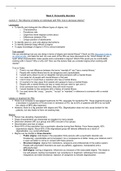
Week 2: Personality disorders
Lecture 3: The influence of stigma on individuals with PDs: how to decrease stigma?
Leerdoelen
To identify and distinguish the different types of stigma, incl:
o Characteristics
o Prevalence rate
o Origin/how these stigmas comes about
o Differences between PDs
o Unique position of adolescents
To identify good vs. poor anti-stigma interventions
To identify potential (neg) effects of stigma
To apply knowledge of stigma in PD to clinical examples
Test yourself
Are you wondering how you are doing in terms of stigma and mental illness? Check out this blog post (Links to
an external site.) and take the test. Go over each of the PDs we have discussed so far. Which biases do you
hold? What characteristics make people extra vulnerable to stigma? Which PDs would you be comfortable
working with in future? Why or why not? How can this lecture help you consider stigma when working with
clients?
True or False:
1. There’s no real difference between the terms “mentally ill” and “has a mental illness.”
2. People with mental illness tend to be dangerous and unpredictable.
3. I would worry about my son or daughter marrying someone with a mental illness.
4. I’ve made fun of people with mental illness in the past
5. I don’t know if I could trust a coworker who has a mental illness.
6. I’m scared of or stay away from people who appear to have a mental illness.
7. People with a mental illness are lazy or weak and just need to “get over it.”
8. Once someone has a mental illness, they will never recover.
9. I would hesitate to hire someone with a history of mental illness.
10. I’ve used terms like “crazy,” “psycho,” “nut job” or “retarded” in reference to someone with a mental
illness
Update on treatment for PDs
There is an increase is specialized treatments for PD, especially for borderline PD. These treatments lead to
a decrease in symptoms of PD and even in remission of PD. Up to 60% of patients with BPD do not fulfill
the criteria of BPD after treatment.
However, there is a big problem with stigma and PDs. Stigmatization does not only cause burden for the
patients, but also leads to them not seeking help.
Stigma
Person has deviating characteristics
These characteristics are interpreted as negative by many people
Distinction between WE (our group) and SHE (not part of our group)
Discrimination and loss of status
About 40% of the population has a psychiatric disorder during their lifetime. From these people, 60%
experiences stigma. About 60% of the stigmatized group will behave differently as a result of
stigmatization, e.g. social withdrawal.
Stigma can be divided in three domains:
o Public stigma: individuals in the population think persons with a psychiatric disorder are
threatening, unpredictable and incompetent. As a consequence is better t keep your distance and it
is seen as better to not be in contact with these persons.
o Structural stigma: stigma from institutions, caregivers and professionals in the justice system.
People with psychiatric disorders are seen as pathetic, aggressive, manipulative and a
difficulty/burden.
o Self-stigma: having a diagnosis, influences you because of the associated stigma. This leads to
low self-esteem, feeling incompetent, low compliance in treatment, withdrawal from societal
integrations and label avoidance: rejection of caregivers to forbade stigmatization.
, 2
Stigma of PD
In the media often only negative messages, e.g. a person murdered someone and this person has antisocial
PD.
Public stigma: the public reacts with anxiety and frustration, are afraid to be manipulated and feel less
sympathy towards people with a PD in comparison to people with other psychiatric disorders. Symptoms of
PD are not recognized by the general populations, which leads to people seeking help because they do not
know they are having a disease. On the other hand, depression and psychotic symptoms are recognized
by the general population.
o Does this account for all PDs?: no, it depends on the type. For example, there is much more
sympathy for people with OCPD, probably because OCD is more recognized as a mental disorder.
For patients with BPD or ASP this is not the case. Another problem is that a lot of people think
personality can’t be treated or fixed.
Structural stigma: even in the field of psychiatry PDs (especially BPD) are often seen as behavior instead
of a symptom of a disorder. The biological basis for PDs is thought to be small, which is not true. Twin
studies prove heritability (e.g. BPD 50%). It is often thought by psychiatrist to not diagnose adolescents
with a PD, because it is a severe diagnosis. But the earlier treatment is given, the better the outcomes.
Even caregivers in the field of psychiatry find it difficult to recognize patients with a PD. This is partly due to
people not seeking help for a PD, but for example because of depression. After treatment of depression
does not work or if troubles occur during treatment, then a PD is considered. Another thing is that self-
mutilation or suicidal behavior is often seen as a cry for attention instead of a cry for help. It is also thought
that treatment of PDs is very difficult, takes a long time or is not even possible.
o Bailey & Shriver (1999): relative to other PD or the typical outpatient, patients with BPD were rated
as especially easily to misinterpret or misremember social interaction, to lie manipulatively and
convincingly, and to have entered destructive sexual relationships, possible even at young ages.
These are severe accusations. Measurement: interview psychologist.
o Less funding available for PDs research.
Self-stigma: the consequences of stigma are huge. They internalize public and structural stigma, which can
lead to shame, depression, difficulties with identity, low self-esteem, about their diagnosis. This leads to
withdrawal from society and social interaction, and not seeking help.
o Catthoor: stigmatization in adolescents is much higher in patients with PD compared to other
psychiatric disorder.
o Juurlink: exploring patients with BPD and their experiences with having work. Facilitators to
improve the work situation: improve emotion regulation and self-reflection by treatment. Implication
of the study was that more cooperation is needed between health care institutions and work
facilitators, and that knowledge about PDs needs to be increased.
How to stop stigma?
Having more knowledge about PDs, which leads to better understanding of behavior of people with PDs.
Window of tolerance:
o Someone without a psychiatric diagnoses has generally a low level of stress. If a stressful event
occurs, the amount of stress will increase but it will decline after time.
o In a women with a BPD, the basic level
of stress is higher. The reaction to a
stressful event is increased in
comparison to people without a
psychiatric diagnosis. If stress reaches
a certain level, you are not able
anymore to think clearly anymore. As a
result this can lead to an anger attack,
self-harm, etc.
o Everyone has a border of stress and if
this is crossed, you lose control.
Patients without psychiatric disorder
seldomly cross this line.
Samen sterk zonder stigma
o Spread knowledge via the media and at schools
o Counselling by experts in experiencing psychiatric disorders
Generieke module (module GGZ standaard)
Week 2: Personality disorders
Lecture 3: The influence of stigma on individuals with PDs: how to decrease stigma?
Leerdoelen
To identify and distinguish the different types of stigma, incl:
o Characteristics
o Prevalence rate
o Origin/how these stigmas comes about
o Differences between PDs
o Unique position of adolescents
To identify good vs. poor anti-stigma interventions
To identify potential (neg) effects of stigma
To apply knowledge of stigma in PD to clinical examples
Test yourself
Are you wondering how you are doing in terms of stigma and mental illness? Check out this blog post (Links to
an external site.) and take the test. Go over each of the PDs we have discussed so far. Which biases do you
hold? What characteristics make people extra vulnerable to stigma? Which PDs would you be comfortable
working with in future? Why or why not? How can this lecture help you consider stigma when working with
clients?
True or False:
1. There’s no real difference between the terms “mentally ill” and “has a mental illness.”
2. People with mental illness tend to be dangerous and unpredictable.
3. I would worry about my son or daughter marrying someone with a mental illness.
4. I’ve made fun of people with mental illness in the past
5. I don’t know if I could trust a coworker who has a mental illness.
6. I’m scared of or stay away from people who appear to have a mental illness.
7. People with a mental illness are lazy or weak and just need to “get over it.”
8. Once someone has a mental illness, they will never recover.
9. I would hesitate to hire someone with a history of mental illness.
10. I’ve used terms like “crazy,” “psycho,” “nut job” or “retarded” in reference to someone with a mental
illness
Update on treatment for PDs
There is an increase is specialized treatments for PD, especially for borderline PD. These treatments lead to
a decrease in symptoms of PD and even in remission of PD. Up to 60% of patients with BPD do not fulfill
the criteria of BPD after treatment.
However, there is a big problem with stigma and PDs. Stigmatization does not only cause burden for the
patients, but also leads to them not seeking help.
Stigma
Person has deviating characteristics
These characteristics are interpreted as negative by many people
Distinction between WE (our group) and SHE (not part of our group)
Discrimination and loss of status
About 40% of the population has a psychiatric disorder during their lifetime. From these people, 60%
experiences stigma. About 60% of the stigmatized group will behave differently as a result of
stigmatization, e.g. social withdrawal.
Stigma can be divided in three domains:
o Public stigma: individuals in the population think persons with a psychiatric disorder are
threatening, unpredictable and incompetent. As a consequence is better t keep your distance and it
is seen as better to not be in contact with these persons.
o Structural stigma: stigma from institutions, caregivers and professionals in the justice system.
People with psychiatric disorders are seen as pathetic, aggressive, manipulative and a
difficulty/burden.
o Self-stigma: having a diagnosis, influences you because of the associated stigma. This leads to
low self-esteem, feeling incompetent, low compliance in treatment, withdrawal from societal
integrations and label avoidance: rejection of caregivers to forbade stigmatization.
, 2
Stigma of PD
In the media often only negative messages, e.g. a person murdered someone and this person has antisocial
PD.
Public stigma: the public reacts with anxiety and frustration, are afraid to be manipulated and feel less
sympathy towards people with a PD in comparison to people with other psychiatric disorders. Symptoms of
PD are not recognized by the general populations, which leads to people seeking help because they do not
know they are having a disease. On the other hand, depression and psychotic symptoms are recognized
by the general population.
o Does this account for all PDs?: no, it depends on the type. For example, there is much more
sympathy for people with OCPD, probably because OCD is more recognized as a mental disorder.
For patients with BPD or ASP this is not the case. Another problem is that a lot of people think
personality can’t be treated or fixed.
Structural stigma: even in the field of psychiatry PDs (especially BPD) are often seen as behavior instead
of a symptom of a disorder. The biological basis for PDs is thought to be small, which is not true. Twin
studies prove heritability (e.g. BPD 50%). It is often thought by psychiatrist to not diagnose adolescents
with a PD, because it is a severe diagnosis. But the earlier treatment is given, the better the outcomes.
Even caregivers in the field of psychiatry find it difficult to recognize patients with a PD. This is partly due to
people not seeking help for a PD, but for example because of depression. After treatment of depression
does not work or if troubles occur during treatment, then a PD is considered. Another thing is that self-
mutilation or suicidal behavior is often seen as a cry for attention instead of a cry for help. It is also thought
that treatment of PDs is very difficult, takes a long time or is not even possible.
o Bailey & Shriver (1999): relative to other PD or the typical outpatient, patients with BPD were rated
as especially easily to misinterpret or misremember social interaction, to lie manipulatively and
convincingly, and to have entered destructive sexual relationships, possible even at young ages.
These are severe accusations. Measurement: interview psychologist.
o Less funding available for PDs research.
Self-stigma: the consequences of stigma are huge. They internalize public and structural stigma, which can
lead to shame, depression, difficulties with identity, low self-esteem, about their diagnosis. This leads to
withdrawal from society and social interaction, and not seeking help.
o Catthoor: stigmatization in adolescents is much higher in patients with PD compared to other
psychiatric disorder.
o Juurlink: exploring patients with BPD and their experiences with having work. Facilitators to
improve the work situation: improve emotion regulation and self-reflection by treatment. Implication
of the study was that more cooperation is needed between health care institutions and work
facilitators, and that knowledge about PDs needs to be increased.
How to stop stigma?
Having more knowledge about PDs, which leads to better understanding of behavior of people with PDs.
Window of tolerance:
o Someone without a psychiatric diagnoses has generally a low level of stress. If a stressful event
occurs, the amount of stress will increase but it will decline after time.
o In a women with a BPD, the basic level
of stress is higher. The reaction to a
stressful event is increased in
comparison to people without a
psychiatric diagnosis. If stress reaches
a certain level, you are not able
anymore to think clearly anymore. As a
result this can lead to an anger attack,
self-harm, etc.
o Everyone has a border of stress and if
this is crossed, you lose control.
Patients without psychiatric disorder
seldomly cross this line.
Samen sterk zonder stigma
o Spread knowledge via the media and at schools
o Counselling by experts in experiencing psychiatric disorders
Generieke module (module GGZ standaard)